Cooking · Profile
Portuguese Spices: Piri-Piri, Massa de Pimentão, Garlic, Bay, Cilantro and Cinnamon
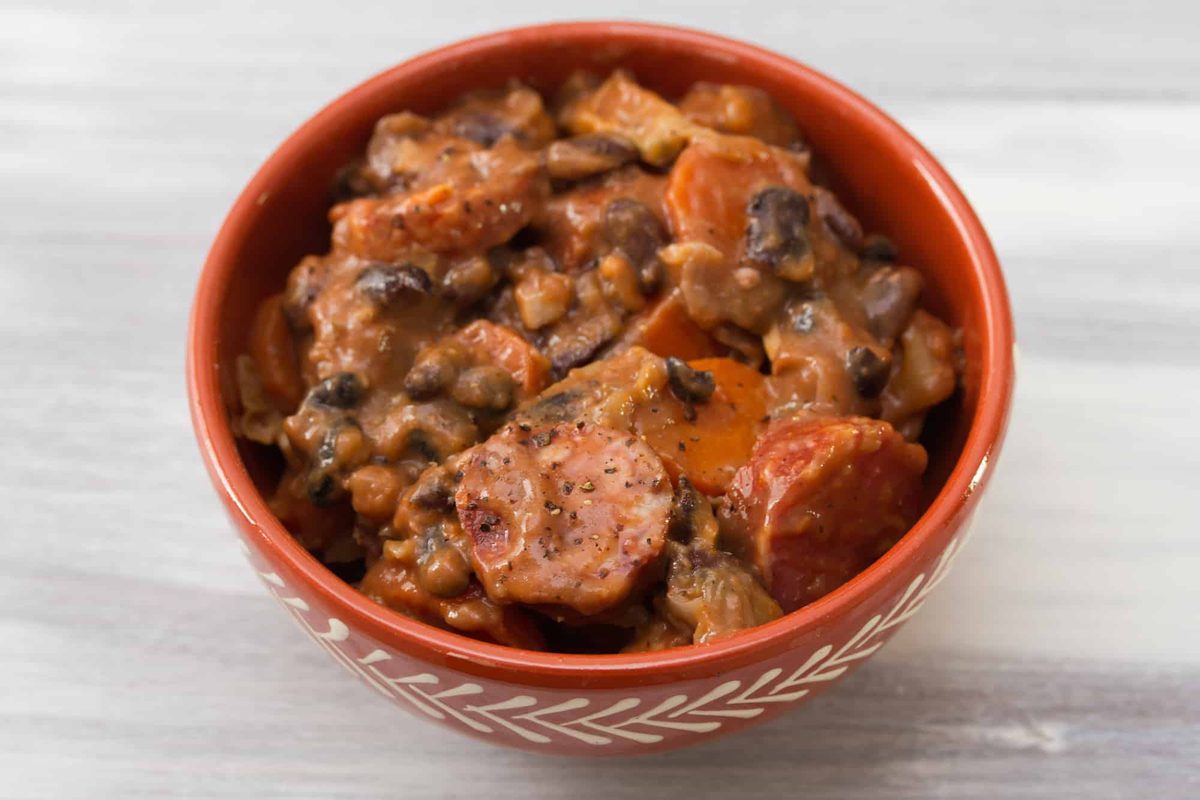
Portuguese cooking is not hot or heavily spiced in the way its history might suggest, but it leans hard on a few seasonings: red pepper in two forms (the fiery piri-piri and the sweet paste massa de pimentão), garlic, white wine, bay leaf and fresh cilantro (coentros). The spice trade left its mark too. The Portuguese reached the Banda Islands, the source of nutmeg, in 1512,1 and occupied Sri Lanka, the home of true cinnamon, in 1536.2
At a glance
| Seasoning | What it is | What it brings | Typical use |
|---|---|---|---|
| Piri-piri | Hot red chile; also the sauce made from it3 | Heat | Hot sauce, chile seasoning3 |
| Massa de pimentão | Red pepper paste | Sweet pepper flavor, color | Marinade for carne de porco à alentejana4 |
| Colorau | Ground sweet paprika | Color, mild pepper flavor | Pork marinades4 |
| Garlic | Fresh cloves | Pungency | Marinades, nearly all savory dishes4 |
| Bay leaf | Dried leaf | Woody, herbal | Marinades with garlic and wine4 |
| Cilantro (coentros) | Fresh leaf | Bright, green | Finishing pork and clam dishes4 |
| Cinnamon | Dried bark | Sweet warmth | Desserts |
Measured values
1 figure, sourced| Measure | Value | Scope | Source |
|---|---|---|---|
| Heat (pungency), "African birdseye" chiles Conventional range | 100,000 to 500,000 Scoville heat units | "African birdseye" chiles as a category on Dave DeWitt's heat scale (2008)A category, not a measurement of Portuguese piri-piri. | fieryfoodscentral.com |
Each figure is quoted as its source states it, with the samples or standard it applies to. Where sources differ, both are shown; nothing is averaged. All measured values
Piri-piri
Piri-piri (or peri-peri) names both a chile and what is made with it. The Dictionary of South African English defines the noun as a hot sauce of red chiles, peppers and lemon juice, or a seasoning of powdered red chiles, and lists the word’s origin as obscure: perhaps Swahili pilipili, perhaps Mozambican Portuguese, possibly from Arabic in the end.3
Which chile counts as piri-piri is less settled than many recipes suggest. Katzer lists piripíri among the Portuguese names for chiles, and writes that in Portugal and its former East African colonies the name peri peri is given to a bell-shaped type of Capsicum baccatum.5 The common claim that piri-piri is always a small bird’s eye type, or a single species, is not supported by the sources we opened. What is certain is that all chiles came from the Americas; the most common species, Capsicum annuum, was domesticated in Mexico.6
Heat varies with the chile. DeWitt’s heat scale places “African birdseye” chiles at 100,000 to 500,000 SHU,7 but that is a category, not a measurement of Portuguese piri-piri. See cayenne pepper and red pepper flakes.
Massa de pimentão and colorau
Teleculinária’s carne de porco à alentejana, the Alentejo dish of pork and clams, marinates the pork in garlic, white wine and colorau (paprika), and uses three tablespoons of massa de pimentão, a red pepper paste.4 Here sweet red pepper, not hot chile, carries the dish. See paprika, paprika vs. cayenne and smoked paprika, the Spanish smoked version.
Garlic and white wine
Garlic and white wine are the base of many Portuguese marinades: the same recipe uses four cloves of garlic and 200 ml of white wine for 700 g of pork.4 See garlic.
Bay leaves
Bay laurel is native to the Mediterranean.8 Teleculinária’s notes suggest a marinade of garlic, bay leaf, white wine and a touch of sweet paprika for the pork.4 See bay leaves, cooking with bay leaves and too much bay leaf.
Cilantro (coentros)
Fresh cilantro finishes the carne de porco à alentejana in Teleculinária’s recipe.4 See cilantro and cooking with cilantro.
Cinnamon
Cinnamon appears mostly in Portuguese desserts, such as rice pudding (arroz doce) and custard tarts; that is common practice. The often-repeated claim that pastéis de nata are traditionally dusted with cinnamon has no source we could find. Portugal’s role in cinnamon’s history is clearer: the Portuguese occupied Sri Lanka in 1536, and the Dutch took over the trade in 1656.2 See cinnamon, Ceylon cinnamon and Ceylon vs. cassia cinnamon.
Related pages
- Spanish spices, Brazilian spices and South African spices
- Garlic powder vs. garlic
- The master list of herbs and spices
Footnotes
-
Myristica fragrans, PROSEA, via Pl@ntUse. uses.plantnet-project.org · Reference work ↩
-
Cinnamomum verum, PROSEA Handbook 13: Spices. prosea.prota4u.org · Reference work ↩ ↩2
-
“peri-peri, piri-piri”, Dictionary of South African English. dsae.co.za · Reference work ↩ ↩2 ↩3
-
“Carne de porco à alentejana”, Teleculinária, 2025. teleculinaria.pt · Publication ↩ ↩2 ↩3 ↩4 ↩5 ↩6 ↩7 ↩8 ↩9
-
Gernot Katzer, Chiles (Capsicum), Gernot Katzer’s Spice Pages. gernot-katzers-spice-pages.com · Reference work ↩
-
“Multiple lines of evidence for the origin of domesticated chili pepper, Capsicum annuum, in Mexico”, PNAS, 2014. escholarship.org · Peer-reviewed ↩
-
Dave DeWitt, “Heat Scale Updated”, Fiery Foods & Barbecue Central, 2008. fieryfoodscentral.com · Publication ↩
-
Laurus nobilis, Plants of the World Online, Royal Botanic Gardens, Kew. powo.science.kew.org · Reference work ↩