Spice Substitutes · Substitutes
Greek Seasoning Substitutes: Homemade, Italian Seasoning, Za’atar and More
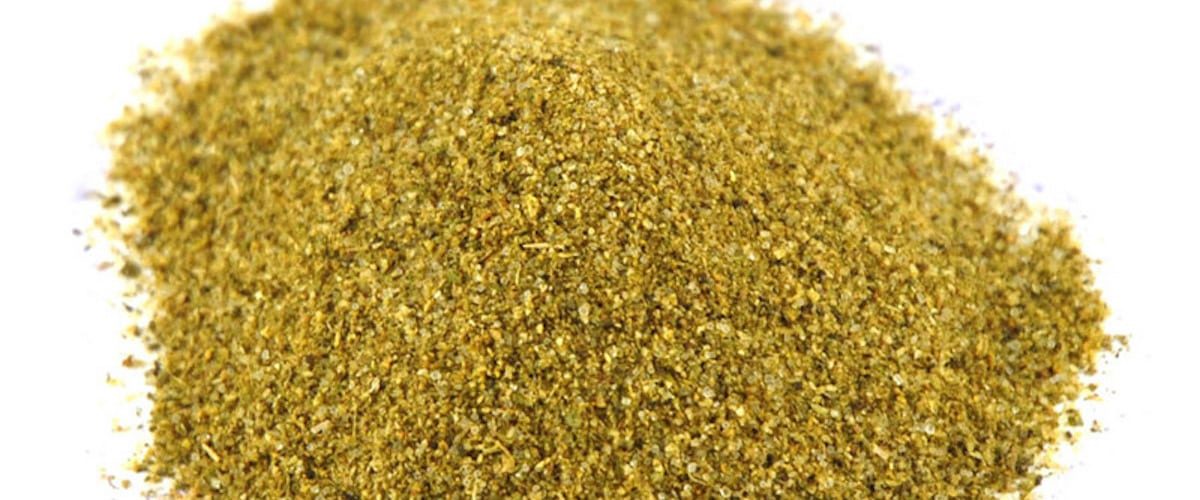
Greek seasoning is an American supermarket blend with no fixed recipe. The best-known brand, Cavender’s, was created in Harrison, Arkansas, from a Greek chef friend’s recipe, and the family began selling it in 1968.1 Its label lists salt, black pepper, corn starch, garlic, monosodium glutamate, oregano, a flavor base, parsley and five other spices.2 McCormick’s Greek seasoning lists salt, spices, garlic, sugar, maltodextrin, onion, autolyzed yeast and lactic acid, and McCormick describes it as oregano, garlic and onion with a touch of mint.3 Oregano, which Britannica calls essential in Greek salads and gyros, is the herb most sources name.234 A substitute has to cover three jobs: salt, garlic and pepper, and an oregano-led herb note.
Quick answer
| What Greek seasoning is doing | Best substitute | Starting amount, per 1 part Greek seasoning | Treatment |
|---|---|---|---|
| Seasoning chicken, lamb, potatoes or a vinaigrette | Homemade: oregano, lemon zest, garlic, salt, pepper | 1 part, plus about 1/3 part table salt to match a salt-first jar | Attributed (formula), Computed (salt) |
| An all-purpose salty shake | Homemade Greek seasoned salt | 1/2 part, then taste | Attributed (formula), Method (amount) |
| Herbs from a jar you already own | Italian seasoning, plus salt and garlic powder | 1/2 part herbs, plus about 2/5 part table salt and a pinch of garlic powder | Method (herbs), Computed (salt) |
| A finishing sprinkle on salads, flatbread or eggs | Za’atar | 1 part, then taste for salt | Method |
| Herb flavor in roasts and stews | Herbes de Provence, plus salt and garlic | 1/2 part, plus salt as for Italian seasoning | Method (herbs), Computed (salt) |
How the ratios on this page are labeled
Every ratio carries one of four labels.
- Computed: based on a measurable physical relationship, with the source named.
- Attributed: a named source publishes this ratio. We quote it as theirs.
- Disputed: named sources give different answers to the same swap. We show each one and do not average them.
- Method: we found no published ratio. We give a direction and a cautious starting point, and say so.
The Computed figures here cover salt only, matched to Cavender’s All Purpose Greek Seasoning, which lists 241 mg of sodium per quarter teaspoon,2 and to Morton table salt at 590 mg per quarter teaspoon.5 We found no credible published ratio for replacing Greek seasoning with another blend.
What you are replacing
Sources disagree about what is in Greek seasoning, which matters when you pick a substitute:
| Source | What it lists |
|---|---|
| Cavender’s label | Salt, black pepper, corn starch, garlic, MSG, oregano, flavor base (hydrolyzed corn soy protein, sugar, onion powder, spice extractives), parsley and five other spices2 |
| McCormick Culinary label and description | Salt, spices, garlic, sugar, maltodextrin, onion, autolyzed yeast, lactic acid; described as oregano, garlic, onion and a touch of mint3 |
| Tasting Table (Michelle Welsch) | Typically parsley, thyme, basil, oregano, cinnamon, black pepper, dill, onion and garlic powders; sometimes salt, rosemary and nutmeg6 |
Neither label checked lists cinnamon, nutmeg or lemon peel,23 though Tasting Table’s general description includes cinnamon and nutmeg.6 The USDA’s purchasing specification for spice blends has no entry for Greek seasoning.7 If your recipe was written for a salt-first jar, the substitute has to bring that salt too.
Oregano’s essential oil is dominated by carvacrol and thymol, about 78 to 85 percent in one review,8 and thyme’s characteristic constituents are the same two compounds.9 That shared chemistry is why thyme-heavy blends such as za’atar and herbes de Provence can carry an oregano-led blend’s character.
If you want the closest match
1. Make your own
Formula (Attributed): America’s Test Kitchen’s homemade Greek seasoning, published in Cook’s Country, uses 2 tablespoons dried oregano, 1 tablespoon grated lemon zest, and 1 teaspoon each of table salt, pepper and garlic powder. It makes about 1/4 cup and keeps at room temperature for up to 1 week; ATK suggests it in salad dressings, on feta, baked potatoes or grilled chicken, and in marinades for chicken or lamb.10
Ratio (Computed salt, Method amount): ATK gives no swap ratio. Its blend is much less salty than Cavender’s: by our arithmetic, a teaspoon holds about 1/12 teaspoon of table salt, roughly 200 mg of sodium, against about 964 mg in a teaspoon of Cavender’s.2105 Use it 1:1 for flavor. If the recipe was written for a salt-first jar, add about 1/3 teaspoon table salt per teaspoon of homemade blend; otherwise salt to taste. McCormick’s sodium figure was not available to us, so these numbers apply to Cavender’s only.
Dried lemon peel can stand in for fresh zest if you want the blend to keep longer; that is our suggestion, not ATK’s.
2. A salt-led version
Formula (Attributed): ATK’s Greek seasoned salt blend is closer in spirit to a salt-first jar: 1/4 cup kosher salt, 1 tablespoon pepper, 1 teaspoon each granulated garlic, onion flakes, dried thyme, dried basil and dried oregano, and 1/4 teaspoon red pepper flakes. It makes about 1/3 cup and keeps for up to six weeks; ATK uses it as a rub for lamb, in vinaigrettes and on eggs.11
Amount (Method): ATK does not name the brand of kosher salt, so we have not worked out its sodium. Start with half as much as the recipe’s Greek seasoning and taste.
If you are using another herb blend
Italian seasoning, plus salt and garlic
Italian seasoning shares the oregano and adds other Mediterranean herbs. McCormick’s lists marjoram, basil, rosemary, thyme, oregano, savory and sage; Simply Organic’s lists oregano, marjoram, thyme, rosemary, basil and sage.1213 Neither contains salt or garlic.1213 Tasting Table’s Michelle Welsch describes Italian blends as more savory and less pungent than Greek seasoning, with fewer ingredients, so you may need to add some.6 Like Greek seasoning, the bottled blend is probably American: Tasting Table’s history calls it “more than likely an American invention.”14
Ratio (Method herbs, Computed salt): Cavender’s lists salt first,2 so a teaspoon of it holds far less herb than a teaspoon of Italian seasoning. Start with about 1/2 teaspoon Italian seasoning per teaspoon of Greek seasoning. To match Cavender’s salt (about 964 mg per teaspoon), add about 2/5 teaspoon table salt.25 Add a pinch of garlic powder and, if you like, some lemon zest, as in ATK’s homemade blend.10 The herb and garlic amounts are our starting points.
Za’atar
Za’atar is a Middle Eastern blend. UC Cooperative Extension’s Master Food Preservers describe it at its most basic as sumac, thyme, oregano and sesame seeds, with marjoram often used in place of or with the oregano.15 Gernot Katzer’s Spice Pages notes that the Arabic name is applied to several native herbs, including oregano, marjoram, thyme and savory, and that in Jordan it usually means a spice mixture of them.16 It shares the oregano-thyme note but adds two things Greek seasoning lacks: sumac, which Katzer describes as tart and sour from organic acids, and toasted sesame.1715
Salt depends on the formula. Susan Belsinger’s article in Fine Gardening quotes a version of 4 parts each Syrian oregano and roasted sesame to 1 part each sumac and salt,18 so check the label or recipe before salting.
Ratio (Method): No published ratio was found. Start 1:1, taste, and add salt and a pinch of garlic powder if your za’atar has none. It suits uses where the sesame and tang are welcome: Belsinger brushes flatbread with olive oil and sprinkles it on, and the UC recipe suggests it with chickpeas, eggs, vegetables and kebabs.1815 Sesame is one of the nine major US food allergens.19
Herbes de Provence, plus salt and garlic
The French Label Rouge version, as specified by Ducros, is rosemary, savory and oregano at 27 percent each and thyme at 19 percent,20 so it shares oregano and thyme with an Italian or Greek-style blend. Outside that label there is no fixed recipe, and The Takeout’s Leah Kaplan notes that some blends add culinary lavender.21 Lavender and a heavy share of rosemary pull it away from Greek flavor; choose a blend without lavender.
Ratio (Method herbs, Computed salt): No published ratio was found. Start with about 1/2 teaspoon per teaspoon of Greek seasoning, plus about 2/5 teaspoon table salt to match Cavender’s salt and a pinch of garlic powder.25 Crumble the rosemary first. The herb amount is our starting point.
What isn’t known
- No credible source we found publishes a ratio for replacing Greek seasoning with any other blend.
- Brands do not publish their proportions, and the sources disagree about whether Greek seasoning typically contains cinnamon, nutmeg or lemon.236
- McCormick’s Greek seasoning sodium figure was not available, so the salt matches here apply to Cavender’s.
- No published measurement compares the herb strength of any of these blends.
Related
- Greek seasoning, oregano, marjoram vs. oregano
- Italian seasoning and Italian seasoning substitutes
- Za’atar and za’atar substitutes, sumac
- Herbes de Provence and herbes de Provence vs. Italian seasoning
- Garlic powder, thyme, mint, lemon pepper, all-purpose seasoning substitutes
Footnotes
-
Cody Lynn Berry, “Cavender’s All-Purpose Greek Seasoning”, CALS Encyclopedia of Arkansas. encyclopediaofarkansas.net · Reference work ↩
-
Cavender’s All Purpose Greek Seasoning, ingredients and nutrition, via Food Lion. foodlion.com · Merchant ↩ ↩2 ↩3 ↩4 ↩5 ↩6 ↩7 ↩8 ↩9 ↩10
-
McCormick Culinary Greek Seasoning, product page, McCormick. mccormick.com · Merchant ↩ ↩2 ↩3 ↩4 ↩5
-
Anoushka Pant, “Oregano”, Encyclopaedia Britannica. britannica.com · Reference work ↩
-
Morton Iodized Table Salt, product page, Morton Salt. mortonsalt.com · Merchant ↩ ↩2 ↩3 ↩4
-
Michelle Welsch, What’s The Difference Between Greek And Italian Seasoning?, Tasting Table, 2025. tastingtable.com · Publication ↩ ↩2 ↩3 ↩4
-
Commercial Item Description A-A-20001C, Spices and Spice Blends, USDA Agricultural Marketing Service, 2023. ams.usda.gov · Regulator ↩
-
Lombrea et al., A Recent Insight Regarding the Phytochemistry and Bioactivity of Origanum vulgare L. Essential Oil, International Journal of Molecular Sciences, 2020. mdpi.com · Peer-reviewed ↩
-
Widodo, Thymus vulgaris (PROSEA), via Pl@ntUse. uses.plantnet-project.org · Reference work ↩
-
Homemade Greek Seasoning, America’s Test Kitchen (Cook’s Country), 2019. americastestkitchen.com · Publication ↩ ↩2 ↩3
-
Greek Seasoned Salt Blend, America’s Test Kitchen, 2013. americastestkitchen.com · Publication ↩
-
McCormick Italian Seasoning, ingredients, via Giant Food Stores. giantfoodstores.com · Merchant ↩ ↩2
-
Simply Organic Italian Seasoning, ingredients, via Giant Food Stores. giantfoodstores.com · Merchant ↩ ↩2
-
Zoë Lourey-Christianson, Why Italian Seasoning Isn’t A Thing In Italy, Tasting Table, 2024. tastingtable.com · Publication ↩
-
Za’atar Spice Blend (Laura Crowley), UC Cooperative Extension Master Food Preservers, UC ANR. ccfruitandnuts.ucanr.edu · Reference work ↩ ↩2 ↩3
-
Oregano (Origanum vulgare L.), Gernot Katzer’s Spice Pages. gernot-katzers-spice-pages.com · Reference work ↩
-
Sumac (Rhus coriaria L.), Gernot Katzer’s Spice Pages. gernot-katzers-spice-pages.com · Reference work ↩
-
Susan Belsinger, Za’atar: An Exotic Herb Blend, Fine Gardening, 2010. finegardening.com · Publication ↩ ↩2
-
“Food Allergies”, U.S. Food and Drug Administration. fda.gov · Regulator ↩
-
Provencal herbs red label, product specification, McCormick for Chefs (Ducros), 2025. mccormickforchefs.com · Merchant ↩
-
Leah Kaplan, What Is Herbs De Provence, Really?, The Takeout, 2025. thetakeout.com · Publication ↩