Spice Substitutes · Substitutes
Italian Seasoning Substitutes: Homemade, Herbes de Provence, Fresh Herbs and More
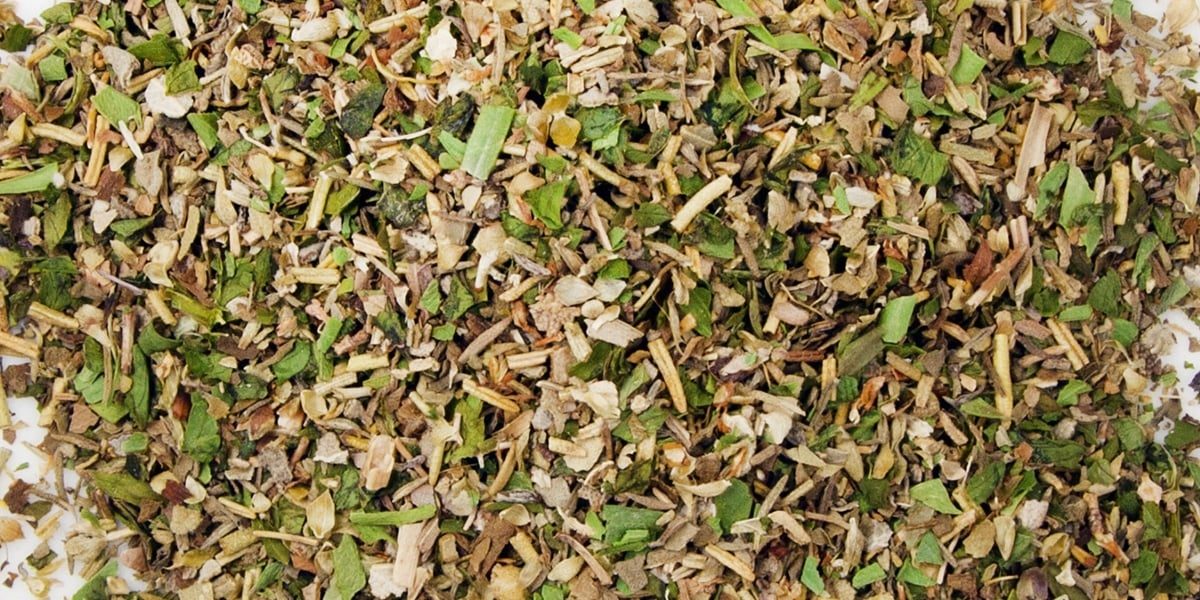
Italian seasoning is a blend of dried herbs with no fixed recipe. McCormick’s lists marjoram, basil, rosemary, thyme, oregano, savory and sage; Simply Organic’s lists oregano, marjoram, thyme, rosemary, basil and sage.12 The USDA’s purchasing specification names thyme, rosemary, sage, oregano and basil as the minimum.3 Neither brand adds salt.12 Despite the name, Tasting Table’s history calls the bottled blend “more than likely an American invention,” and notes that Italian cooks are more likely to reach for fresh herbs.4 So a substitute needs to cover one job, a green, savory herb note, and any mix of the same herbs will do it.
Quick answer
| What Italian seasoning is doing | Best substitute | Starting amount, per 1 part Italian seasoning | Treatment |
|---|---|---|---|
| All-round herb note in sauces, meatballs, soups, dressings | Homemade blend of dried herbs | 1 part | Attributed (formula), Method (amount) |
| The same, from another jar | Herbes de Provence, ideally without lavender | 1 part | Attributed |
| A quick shortcut with two jars | Dried oregano plus basil or thyme | 1 part in total | Method |
| You have fresh herbs | Fresh oregano, thyme, rosemary, basil | 3 parts (1 tablespoon fresh per teaspoon dried) | Computed |
| A salty herb shake is all you have | Greek seasoning | About 1/4 part, and cut the recipe’s salt | Method (herbs), Computed (salt) |
How the ratios on this page are labeled
Every ratio carries one of four labels.
- Computed: based on a measurable physical relationship, with the source named.
- Attributed: a named source publishes this ratio. We quote it as theirs.
- Disputed: named sources give different answers to the same swap. We show each one and do not average them.
- Method: we found no published ratio. We give a direction and a cautious starting point, and say so.
What the herbs contribute
Each herb in the blend brings its own aroma compounds. The figures describe distilled oils from particular samples, not a teaspoon of dried leaf:
| Herb | Key compounds | Source |
|---|---|---|
| Oregano | Carvacrol and thymol, together about 78 to 85% of the oil | Review5 |
| Thyme | Thymol and carvacrol, the oil’s characteristic constituents | PROSEA6 |
| Rosemary | α-pinene 13.5 to 37.7% and 1,8-cineole 16.1 to 29.3% | Oils from plants collected in six countries7 |
| Basil | Methyl chavicol, 53.3% in one French-type oil | PROSEA8 |
| Marjoram | cis-Sabinene hydrate, credited with the sweet marjoram note | Review9 |
Oregano and thyme share the same two phenols,56 which is why either can carry most of the blend’s character when the other is missing. Basil is the odd one out botanically: Kew gives its native range as tropical and subtropical Asia to northern Australia, not the Mediterranean.10
If you want the closest match
1. Make your own
Formula (Attributed): America’s Test Kitchen’s homemade Italian seasoning uses 2 1/2 tablespoons each dried oregano and dried thyme, and 1 tablespoon each dried basil, dried rosemary and dried sage. It makes about 1/2 cup. ATK suggests crushing the rosemary by hand, or pulsing it a few times in a spice grinder, for a finer texture, and calls the blend ideal for pasta, meats and soups.11
Amount (Method): ATK gives no swap ratio, but its blend contains the same herbs as the store versions, so use it 1:1.311 Proportions vary between brands anyway: McCormick lists marjoram first and Simply Organic oregano first, and US labels list ingredients in descending order by weight, so those are each blend’s largest share.1212 Add marjoram or a pinch of savory if you want to move closer to McCormick’s.
2. Herbes de Provence
The French Label Rouge herbes de Provence, as specified by Ducros, is rosemary, savory and oregano at 27 percent each and thyme at 19 percent.13 That shares oregano, thyme and rosemary with Italian seasoning, and savory with McCormick’s blend, but has no basil, marjoram or sage.113 Outside the Label Rouge there is no fixed recipe; The Takeout’s Leah Kaplan lists rosemary, fennel seeds, thyme, marjoram and savory as common, and notes that some blends add culinary lavender.14 The Spice House, writing about the swap in the other direction, says Italian seasoning lacks herbes de Provence’s lavender and savory, so the flavor will be different.15
Ratio (Attributed): The Takeout says herbes de Provence and Italian seasoning “can typically be a 1-to-1 substitute,” especially for grilling fish, marinating meat or roasting vegetables.14 Choose a blend without lavender if you can; that is our advice, based on the Spice House’s point that lavender is what sets herbes de Provence apart.15
If you have the single herbs
Oregano with basil or thyme
Britannica calls oregano essential in Italian pizza and pasta sauces.16 Tasting Table’s history makes the point that Italian recipes do not call for a mix of dried herbs in equal measure.4 Two or three herbs you already have can cover most uses: oregano with basil for tomato sauce and pizza, or oregano with thyme for roasts and soups, since those two share carvacrol and thymol.56
Ratio (Method): No published ratio was found. Use the herbs together at the same total amount as the Italian seasoning, roughly half and half, then taste. This is a starting point, not a measured equivalence.
Fresh herbs
Ratio (Computed): Penn State Extension gives 1 tablespoon of fresh herbs as equal to 1 teaspoon dried.17 America’s Test Kitchen, testing the swap, found that 1 part dried to 3 parts fresh came closest to equal flavor strength.18 So use about 3 times as much chopped fresh herb as the dried blend called for. ATK also found dried thyme, rosemary and sage held up reasonably well in dishes with fairly long cooking times and a good amount of liquid,18 so in a quick sauté fresh herbs are the better swap.
Herbes de la garrigue
World Spice Merchants describes its herbes de la garrigue as similar to herbes de Provence but with the hearty additions of rosemary, fennel, mint and Turkish bay leaf, with rustic flavors from southwestern France.19 Its mint and bay take it further from Italian seasoning than herbes de Provence. No independent source on the blend’s makeup was found.
Ratio (Method): No published ratio was found. Start with about 3/4 as much, because of the bay and mint, and taste. That is our starting point.
If a salty blend is all you have
Greek seasoning
Greek seasoning shares oregano with Italian seasoning but is salt-led: Cavender’s lists salt, black pepper, corn starch, garlic, MSG and oregano first, at 241 mg of sodium per quarter teaspoon.20 Tasting Table’s Michelle Welsch describes Greek seasoning as more pungent than Italian.21
Ratio (Method herbs, Computed salt): A teaspoon of Cavender’s carries about 964 mg of sodium, the salt in about 2/5 teaspoon of Morton table salt (590 mg per quarter teaspoon).2022 Use about 1/4 as much Greek seasoning as the Italian seasoning called for. That quarter teaspoon brings about 241 mg of sodium, the salt in about 1/10 teaspoon of table salt, so cut the recipe’s own salt by that much for each teaspoon of Italian seasoning replaced. The 1/4 is our starting point; the salt figure is arithmetic for Cavender’s only.
What isn’t known
- No published measurement compares the strength of Italian seasoning with any substitute. The Takeout’s 1:1 for herbes de Provence is a cook’s rule of thumb.14
- Brands do not publish their proportions beyond the order of ingredients.
- No source beyond a merchant’s description was found for what herbes de la garrigue contains.
- Some products sold as “Italian” seasoning add garlic, onion, red pepper flakes or fennel;321 read the label if your recipe assumes herbs only.
Related
- Italian seasoning and Italian spices
- Herbes de Provence, herbes de Provence vs. Italian seasoning, herbes de Provence substitutes
- Oregano, basil, thyme, rosemary, marjoram, sage, summer savory
- Basil vs. oregano, dried basil vs. fresh, fresh oregano vs. dried, fresh thyme vs. dried
- Greek seasoning and Greek seasoning substitutes, thyme substitutes, good spices for pizza
Footnotes
-
McCormick Italian Seasoning, ingredients, via Giant Food Stores. giantfoodstores.com · Merchant ↩ ↩2 ↩3 ↩4
-
Simply Organic Italian Seasoning, ingredients, via Giant Food Stores. giantfoodstores.com · Merchant ↩ ↩2 ↩3
-
Commercial Item Description A-A-20001C, Spices and Spice Blends, USDA Agricultural Marketing Service, 2023. ams.usda.gov · Regulator ↩ ↩2 ↩3
-
Zoë Lourey-Christianson, Why Italian Seasoning Isn’t A Thing In Italy, Tasting Table, 2024. tastingtable.com · Publication ↩ ↩2
-
Lombrea et al., A Recent Insight Regarding the Phytochemistry and Bioactivity of Origanum vulgare L. Essential Oil, International Journal of Molecular Sciences, 2020. mdpi.com · Peer-reviewed ↩ ↩2 ↩3
-
Widodo, Thymus vulgaris (PROSEA), via Pl@ntUse. uses.plantnet-project.org · Reference work ↩ ↩2 ↩3
-
Satyal et al., Chemotypic Characterization and Biological Activity of Rosmarinus officinalis, Foods, 2017. mdpi.com · Peer-reviewed ↩
-
Aguilar, Pham and Oyen, Ocimum basilicum (PROSEA), via Pl@ntUse. uses.plantnet-project.org · Reference work ↩
-
Kakouri et al., Origanum majorana Essential Oil: A Review of Its Chemical Profile and Pesticide Activity, Life, 2022. mdpi.com · Peer-reviewed ↩
-
Ocimum basilicum L., Plants of the World Online, Royal Botanic Gardens, Kew. powo.science.kew.org · Reference work ↩
-
Homemade Italian Seasoning, America’s Test Kitchen, 2017. americastestkitchen.com · Publication ↩ ↩2
-
21 CFR 101.4, Food; designation of ingredients, Electronic Code of Federal Regulations. ecfr.gov · Regulator ↩
-
Provencal herbs red label, product specification, McCormick for Chefs (Ducros), 2025. mccormickforchefs.com · Merchant ↩ ↩2
-
Leah Kaplan, What Is Herbs De Provence, Really?, The Takeout, 2025. thetakeout.com · Publication ↩ ↩2 ↩3
-
Herbes De Provence Substitute, The Spice House, 2017. thespicehouse.com · Merchant ↩ ↩2
-
Anoushka Pant, “Oregano”, Encyclopaedia Britannica. britannica.com · Reference work ↩
-
Stacy Reed, Preserving Herbs by Drying, Penn State Extension. extension.psu.edu · Reference work ↩
-
Science: Substituting Dried Herbs for Fresh, America’s Test Kitchen. americastestkitchen.com · Publication ↩ ↩2
-
Herbes de la Garrigue, World Spice Merchants. worldspice.com · Merchant ↩
-
Cavender’s All Purpose Greek Seasoning, ingredients and nutrition, via Food Lion. foodlion.com · Merchant ↩ ↩2
-
Michelle Welsch, What’s The Difference Between Greek And Italian Seasoning?, Tasting Table, 2025. tastingtable.com · Publication ↩ ↩2
-
Morton Iodized Table Salt, product page, Morton Salt. mortonsalt.com · Merchant ↩