Cooking · Profile
Haitian Spices and Seasonings: Epis, Scotch Bonnet, Cloves, Star Anise, Nutmeg and Pikliz
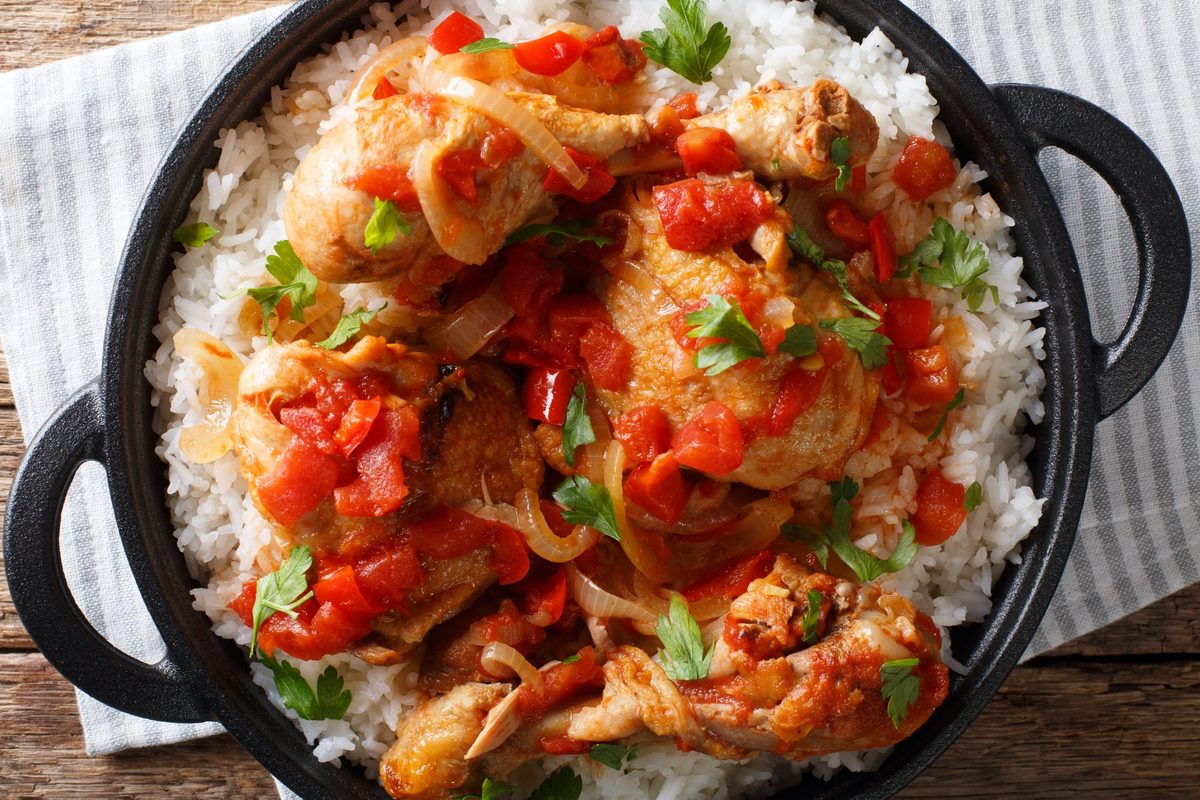
Haitian cooking builds flavor from a fresh green seasoning paste called epis, hot Scotch bonnet chiles, thyme and other herbs, and a few warm spices, cloves, star anise and nutmeg, that show up in both savory dishes and sweet drinks. Pikliz, a fiery pickled slaw, sits on the table. This page covers each, with recipes from named sources and links to our full profiles.
At a glance
| Seasoning | What it is | Where it shows up |
|---|---|---|
| Epis | Blended paste of peppers, fresh herbs and spices1 | Seasoning for meat, fish, soups, stews, rice and beans12 |
| Scotch bonnet | A very hot Capsicum chinense chile3 | Epis;2 habanero in pikliz4 |
| Thyme, parsley, scallions | Fresh herbs | Epis12 |
| Cloves | Dried flower bud; aroma mainly eugenol5 | Some epis recipes1 |
| Star anise | Dried fruit; aroma mainly trans-anethole6 | Cremas7 |
| Nutmeg and cinnamon | Warm sweet spices | Cremas7 |
| Bouillon | Stock cubes or seasoning powder | Optional in some epis recipes12 |
| Pikliz | Spicy pickled cabbage slaw4 | Condiment for almost any meal4 |
Measured values
2 figures, sourced| Measure | Value | Scope | Source |
|---|---|---|---|
| Clove oil: eugenol | 70 to 90 % of the oil | scope not stated on source pageFigure is for clove, one spice discussed on this roundup page | uses.plantnet-project.org |
| Star anise oil: trans-anethole | 70 to 93 % of the oil | scope not stated on source pageFigure is for star anise, one spice discussed on this roundup page | uses.plantnet-project.org |
Each figure is quoted as its source states it, with the samples or standard it applies to. Where sources differ, both are shown; nothing is averaged. All measured values
Epis: the green seasoning base
Epis is a Haitian seasoning mix made from peppers, fresh herbs and spices, and is used to season meat, fish, soups and stews.1 There is no single recipe. Two institutional versions show the range:
| Boston Medical Center Teaching Kitchen1 | University of Rhode Island Community Nutrition2 | |
|---|---|---|
| Herbs | Parsley, green onions and thyme | Cilantro with stems; scallions |
| Aromatics | Onion, 6 garlic cloves, bell pepper | Onion, 4 garlic cloves, bell pepper, celery |
| Chile | 1 to 2 habaneros | 1 Scotch bonnet |
| Acid | Lime juice, white vinegar | Lime juice |
| Spice | Ground cloves (optional) | “Complete seasoning” |
| Other | Oil, water, low-sodium bouillon (optional) | Olive oil, salt, water |
URI describes the “complete seasoning” in its version as a savory blend used in Haitian and other Caribbean cooking that typically includes salt, garlic, onion powder, cumin and herbs.2 It suggests using epis as a marinade for meat or vegetables, or as a base for rice, beans or soups, and freezing extra in small portions.2
Scotch bonnet
URI’s epis uses a Scotch bonnet.2 It belongs to Capsicum chinense, a species Katzer says is mostly associated with the Caribbean, where its extreme heat matters in cooking.3 He describes the Scotch bonnet types as very hot, with a typical flower-like scent.3 The habanero is the same species,3 and the BMC epis and Saveur’s pikliz both call for habaneros.14 See habanero powder and Caribbean spices.
Thyme and other herbs
Thyme, parsley and green onions make up the herb mix in the BMC epis,1 and cilantro and scallions in URI’s.2 The claim that thyme in Haiti is a relic of French colonial rule, and that it goes into specific dishes such as poulet aux noix and tassot, could not be traced. See thyme, thyme uses, cilantro and bouquet garni.
Cloves
Cloves are the dried flower buds of Syzygium aromaticum, and eugenol makes up 70 to 90% of their oil.5 The BMC epis includes half a teaspoon of ground cloves as an option.1 Cloves are also widely added to Haitian rice and beans (diri ak pwa) and to soup joumou; that is common practice, and we found no source for it. A little goes a long way. See cloves, cooking with cloves and too much clove.
Star anise, nutmeg and cinnamon: cremas
The clearest sourced use of the sweet spices is cremas (also spelled kremas), a rich, rum-based holiday drink. Table Magazine’s recipe from Claudy Pierre combines evaporated milk, sweetened condensed milk and cream of coconut with vanilla, almond and star anise extracts, cinnamon, grated nutmeg, lime juice and rum, and notes that the drink most likely emerged around Haitian independence in 1804.7 It is shared with family and friends during the holiday season.7
The main compound in star anise oil is trans-anethole, 70 to 93% of the oil.6 Nutmeg also goes into Haitian sweets such as pen patat (sweet potato pudding), and star anise into akasan, a cornmeal drink; those uses are common practice, not sourced here. See star anise, star anise uses, nutmeg and nutmeg uses.
Bouillon
Both epis recipes above allow for a ready-made savory booster: low-sodium bouillon as an option in the BMC version, and a “complete seasoning” blend in URI’s, which URI says typically includes salt.12 Check labels for sodium and MSG. See cooking with MSG and MSG vs. salt.
Pikliz
Pikliz is a spicy slaw of cabbage and other vegetables, pickled with hot chiles. Saveur’s version uses cabbage, carrot, onion, green bell pepper, garlic and four habaneros in white vinegar and lime juice, and says the key is time; it suggests serving it at breakfast, lunch and dinner on everything from eggs to steak.4 Its acidity and heat cut through fried and rich dishes, much as a salsa does; that is cooking judgment.
Soup joumou
Soup joumou, the pumpkin soup Haitians eat on January 1, Independence Day, was added to UNESCO’s Representative List of the Intangible Cultural Heritage of Humanity in 2021.8 UNESCO describes it as made with giraumon, a variety of pumpkin, plus vegetables, plantains, meat, pasta and spices.8 It was originally reserved for slave owners and became a symbol of freedom after independence; it is also a traditional Sunday breakfast.8 UNESCO does not list the spices, and we found no source for the specific seasonings often named for it, such as Scotch bonnet or cloves.
Related pages
- Caribbean spices, Cuban spices and Jamaican spices
- French spices
- Bajan seasoning, another fresh Caribbean seasoning paste
- The master list of herbs and spices
Footnotes
-
“Epis (Haitian Seasoning Base)”, Teaching Kitchen, Boston Medical Center. bmc.org · Publication ↩ ↩2 ↩3 ↩4 ↩5 ↩6 ↩7 ↩8 ↩9 ↩10 ↩11
-
“Epis (Savory Haitian Seasoning Base)”, Community Nutrition Education, University of Rhode Island, 2025. web.uri.edu · Publication ↩ ↩2 ↩3 ↩4 ↩5 ↩6 ↩7 ↩8 ↩9 ↩10
-
Gernot Katzer, Chiles (Capsicum), Gernot Katzer’s Spice Pages. gernot-katzers-spice-pages.com · Reference work ↩ ↩2 ↩3 ↩4
-
Saveur Editors, “Spicy Haitian Cabbage Slaw (Pikliz)”, Saveur, 2016. saveur.com · Publication ↩ ↩2 ↩3 ↩4 ↩5
-
E.W.M. Verheij and C.H.A. Snijders, Syzygium aromaticum (PROSEA), Plant Resources of South-East Asia. uses.plantnet-project.org · Reference work ↩ ↩2
-
Vu Ngoc Lô, Illicium verum (PROSEA), Plant Resources of South-East Asia. uses.plantnet-project.org · Reference work ↩ ↩2
-
Emma Riva, “Haitian Cremas, a Drink for Special Occasions” (recipe by Claudy Pierre), Table Magazine, 2025. tablemagazine.com · Publication ↩ ↩2 ↩3 ↩4
-
“Joumou soup”, UNESCO Intangible Cultural Heritage, inscribed 2021. ich.unesco.org · Regulator ↩ ↩2 ↩3