Spice Substitutes · Substitutes
Ras el Hanout Substitutes, Ranked by the Job the Blend Is Doing
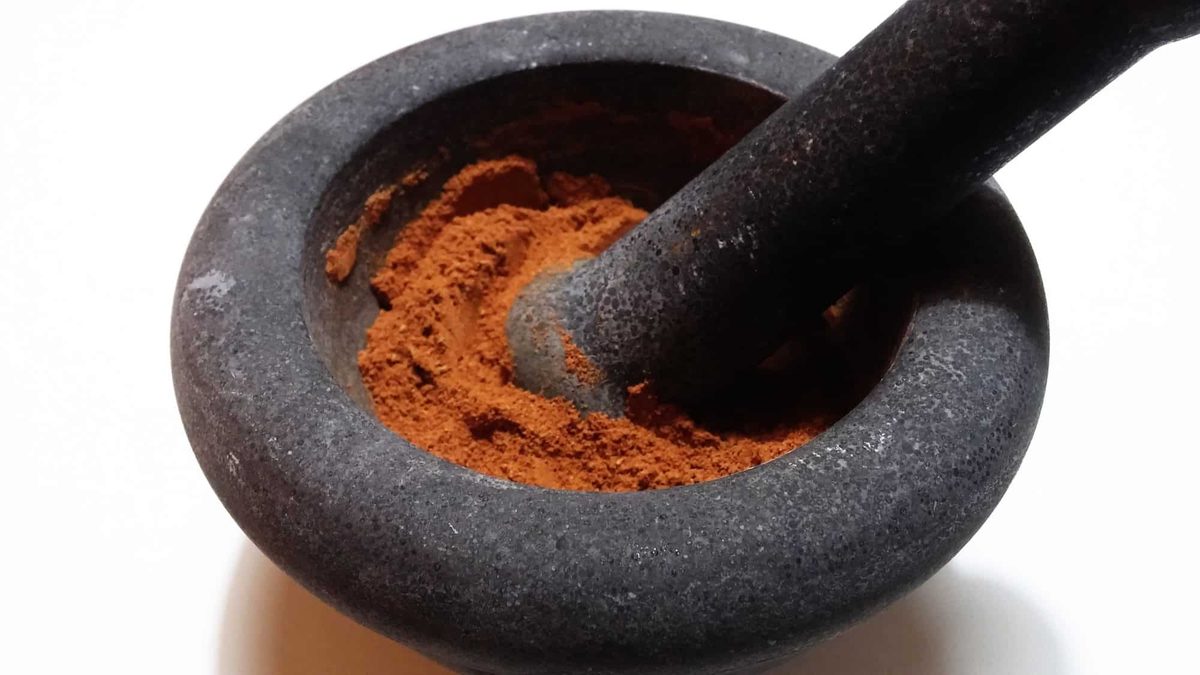
Ras el hanout is a ground North African spice blend, found in varying forms in Morocco, Algeria and Tunisia, and its name means something like “top of the shop.”1 There is no fixed recipe. The Oxford Companion to Food names cumin, coriander seed, turmeric, ginger, cardamom and nutmeg as the standard ingredients, with cinnamon, cayenne, rosebud and oregano usually included.1 Saveur’s version uses just eight spices,2 while World Spice Merchants’ label lists 24, lavender and roses among them.3 So the right stand-in depends on which kind of ras el hanout your recipe expects and what it is doing in the dish.
Quick answer
| What ras el hanout is doing | Best substitute | Starting amount, per 1 part ras el hanout | Treatment |
|---|---|---|---|
| The whole seasoning (tagine, couscous, a rub) | Quick mix: 2 parts cumin, 1 each coriander, ginger and cayenne | 1 part of the mix | Method (formula Attributed) |
| Warm, sweet-peppery spice in a stew, rice or meat | Baharat | 1 part | Attributed |
| The same, from an Indian spice shelf | Garam masala, plus a pinch each of paprika and cayenne | 1 part | Attributed |
| An earthy, yellow base | Curry powder, plus a pinch of cinnamon and allspice | 3/4 part | Attributed |
The rest of the page explains each choice.
How the ratios on this page are labeled
Every ratio carries one of four labels.
- Computed: based on a measurable physical relationship, with the source named.
- Attributed: a named source publishes this ratio. We quote it as theirs.
- Disputed: named sources give different answers to the same swap. We show each one and do not average them.
- Method: we found no published ratio. We give a direction and a cautious starting point, and say so.
The Attributed figures here come from one bylined food writer, Mike Hultquist of Chili Pepper Madness.4 He does not say how he arrived at them, and we found no second published figure for any of these swaps to compare them with. Treat them as a cook’s rules of thumb, not measurements.
Why no single substitute matches
Because ras el hanout varies so much, each substitute matches some versions better than others. Two published versions show the spread:
| Version | What it emphasizes | Source |
|---|---|---|
| Oxford Companion standard list | Cumin, coriander, turmeric, ginger, cardamom, nutmeg; cinnamon, cayenne, rosebud, oregano usually added | 1 |
| Saveur (8 spices) | Allspice, black pepper, coriander, cloves, cumin, cinnamon, ginger and 1 1/2 tablespoons of cayenne; no turmeric, cardamom or nutmeg | 2 |
| World Spice Merchants (24 spices) | Adds grains of paradise, nigella, caraway, two cinnamons, anise, mace, long pepper, chamomile, fenugreek, lavender and roses to the core | 3 |
The compounds behind the main spices are well measured. Coriander seed oil is 60 to 80 percent linalool and related terpene alcohols,5 cuminaldehyde makes up 20 to 72 percent of cumin oil,6 and ginger’s pungency comes from non-volatile gingerols.7 Turmeric’s yellow comes from curcumin.8 What no pantry swap replaces is the floral note of rosebud and lavender in the longer blends.13 No analysis of ras el hanout as a whole was found, so the comparisons below rest on shared ingredients, not on measurements of the blends.
If ras el hanout is the whole seasoning
In a tagine, couscous or a rub, ras el hanout often is the spicing. Saveur’s headnote says the mix is used in virtually every dish of the region.2 Here you want something built on the same base.
1. A quick mix from single spices
Formula (Attributed): The Spice House suggests a simple stand-in of 2 parts cumin, 1 part ground coriander, 1 part ginger and 1 part cayenne pepper.9 It adds that a few more ingredients will give a more robust blend.9 Hultquist’s version is equal parts cumin, coriander, cinnamon, ginger and paprika, with a smaller amount of cloves and black pepper.4
Amount (Method): Neither source says how much of its mix to use. Start with the same amount the recipe gives for ras el hanout, then taste.
Why it works: cumin, coriander and ginger are three of the Oxford Companion’s six standard ingredients.1 Where it falls short: the Spice House formula carries a full part of cayenne, and chile heat comes from capsaicinoids,10 so it can run hotter than a floral, cardamom-led blend. If your ras el hanout is mild, start with half the cayenne. Add a pinch of turmeric if you have it, for the yellow color of blends that include it,18 and a pinch of cardamom, whose oil is led by α-terpinyl acetate and 1,8-cineole.11
For measured recipes, see ras el hanout, which compares published versions.
If ras el hanout is warm, sweet-peppery spice
In stews, rice and meat dishes built on a Saveur-style blend (allspice, cloves, cinnamon, pepper),2 the job is warmth with a peppery edge.
1. Baharat
Suzy Karadsheh of The Mediterranean Dish says there isn’t a great substitute for ras el hanout, but that the next best thing is baharat; she warns that the color will change.12 Hultquist also lists it.4
Why it works: Ottolenghi’s baharat lists pepper, cumin, coriander, clove, cardamom, nutmeg, cinnamon, allspice, paprika, chilli and cayenne,13 which covers most of the Saveur blend and four of the Oxford Companion’s six standard spices.12 Allspice and clove both carry eugenol: it is 50 to 80 percent of allspice berry oil14 and about 85 to 92 percent of clove oil.15 Where it falls short: baharat usually has no turmeric, so the dish will be less yellow, and Katzer describes one common style as consisting mainly of black pepper and allspice,16 which leaves out the cumin and coriander base.
Ratio (Attributed): Hultquist says to substitute baharat 1 for 1.4
2. Garam masala, plus paprika and cayenne
The Spice House and Hultquist both name garam masala.94 Its warm spices overlap with ras el hanout’s sweet side: Bong Eats gives the most basic Bengali garam masala as cardamom, cinnamon and cloves,17 and Madhur Jaffrey’s recipe in Saveur uses a quarter cup of cardamom seeds.18 The “garam” refers to spices thought to warm the body in Ayurvedic medicine, not to chile heat.18
Where it falls short: a basic garam masala has no turmeric, no ginger and no chile, and its versions vary as widely as ras el hanout’s do. Saveur says there are as many versions as there are home cooks.18 A cardamom-heavy jar will taste more perfumed than most ras el hanout.
Ratio (Attributed): Hultquist says to substitute garam masala 1 for 1, and to add a pinch of paprika and a pinch of cayenne to bring it closer.4
If ras el hanout is an earthy, yellow base
When the blend you know is turmeric-colored and cumin-led, as the Oxford Companion’s standard list is,1 a curry powder covers more of it than the sweet blends above.
Curry powder
The Spice House lists curry powder as a substitute.9 The USDA’s purchasing specification says curry powder should include turmeric, coriander, fenugreek, cinnamon, cumin, black pepper, ginger and cardamom.19 That shares five of the Oxford Companion’s six standard ingredients (all but nutmeg).119
Where it falls short: fenugreek is on the USDA list but not on the Oxford Companion’s list or in Saveur’s recipe (World Spice’s label does include it),123 and PROSEA credits fenugreek with a characteristic curry aroma, from sotolon.20 Turmeric will color the dish yellow,8 and the USDA list gives no proportions, so brands differ.19
Ratio (Attributed): Hultquist says to use about 75 percent of the amount called for, so as not to overpower the dish, and to add a pinch of cinnamon and allspice to bring it closer.4
A swap we don’t recommend: Chinese five-spice
Five-spice powder is a different idea. Britannica lists fennel seeds, cassia, cloves, star anise and Sichuan pepper, with licorice-like base notes and a slightly numbing effect from the Sichuan pepper.21 Cloves and cinnamon appear in some ras el hanout,23 but the anise flavor and the numbing would dominate a tagine, and there is no cumin, coriander or ginger. We found no source that recommends it, and no ratio.
What isn’t known
- No study or test kitchen has compared any of these substitutes with ras el hanout. Hultquist’s ratios are the only published figures we found, and he does not say how he arrived at them.
- No pantry swap replaces the rosebud and lavender of the longer, floral blends.13
- Counts of 80 or 100 spices in ras el hanout circulate widely; we found no source for them. The published versions compared here run from 8 to 24 spices.23
- The Spice House and Hultquist give no amount for their homemade mixes, so the 1:1 starting point for a homemade mix is ours.
Related
- Ras el hanout and ras el hanout vs. garam masala
- Baharat seasoning and baharat substitutes
- Garam masala and garam masala substitutes
- Curry powder, Chinese five-spice powder and Moroccan spices
- Cumin, coriander, ginger, cayenne pepper, turmeric, cardamom, cinnamon, allspice, cloves and paprika
- The master list of herbs and spices
Footnotes
-
Alan Davidson, “Ras-el-hanout”, The Oxford Companion to Food, 2014. app.ckbk.com · Reference work ↩ ↩2 ↩3 ↩4 ↩5 ↩6 ↩7 ↩8 ↩9 ↩10 ↩11
-
“Ras el Hanout (North African Spice Mix)”, Saveur, 2012. saveur.com · Publication ↩ ↩2 ↩3 ↩4 ↩5 ↩6 ↩7 ↩8
-
“Ras El Hanout”, World Spice Merchants (product page). worldspice.com · Merchant ↩ ↩2 ↩3 ↩4 ↩5 ↩6 ↩7
-
Mike Hultquist, “Ras El Hanout Recipe (Moroccan Spice Blend + Substitutes)”, Chili Pepper Madness, 2026. chilipeppermadness.com · Publication ↩ ↩2 ↩3 ↩4 ↩5 ↩6 ↩7
-
Al-Khayri et al., “Essential Oil from Coriandrum sativum: A Review”, Molecules, 2023. mdpi.com · Peer-reviewed ↩
-
P.C.M. Jansen, Cuminum cyminum, Plant Resources of South-East Asia (PROSEA). uses.plantnet-project.org · Reference work ↩
-
Sutarno, Hadad and Brink, Zingiber officinale, Plant Resources of South-East Asia (PROSEA). uses.plantnet-project.org · Reference work ↩
-
“Turmeric: Usefulness and Safety”, National Center for Complementary and Integrative Health, 2025. nccih.nih.gov · Regulator ↩ ↩2 ↩3
-
“Ras El Hanout Substitute”, The Spice House, 2020. thespicehouse.com · Merchant ↩ ↩2 ↩3 ↩4
-
Bosland and Walker, “Measuring Chile Pepper Heat”, New Mexico State University, 2010. pubs.nmsu.edu · Reference work ↩
-
Blažeković et al., “Content and Chemical Composition of Essential Oil from Cardamom”, Croatica Chemica Acta, 2025. hrcak.srce.hr · Peer-reviewed ↩
-
Suzy Karadsheh, “What is Ras el Hanout?”, The Mediterranean Dish, 2024. themediterraneandish.com · Publication ↩
-
“Baharat”, Ottolenghi (product page). ottolenghi.co.uk · Merchant ↩
-
D. Sulistiarini, Pimenta dioica, Plant Resources of South-East Asia (PROSEA). uses.plantnet-project.org · Reference work ↩
-
Batiha et al., “Syzygium aromaticum L. (Myrtaceae)”, Biomolecules, 2020. mdpi.com · Peer-reviewed ↩
-
Gernot Katzer, “Paprika (Capsicum annuum)”, Gernot Katzer’s Spice Pages. gernot-katzers-spice-pages.com · Reference work ↩
-
“Bengali Garam Masala”, Bong Eats, 2016. bongeats.com · Publication ↩
-
“Garam Masala” (Madhur Jaffrey’s recipe), Saveur, 2014. saveur.com · Publication ↩ ↩2 ↩3
-
Commercial Item Description A-A-20001C, Spices and Spice Blends, USDA Agricultural Marketing Service, 2023. ams.usda.gov · Regulator ↩ ↩2 ↩3
-
C.S. Tawan and N. Wulijarni-Soetjipto, Trigonella foenum-graecum, Plant Resources of South-East Asia (PROSEA). uses.plantnet-project.org · Reference work ↩
-
Tony Hill, “Five-spice powder”, Encyclopaedia Britannica. britannica.com · Reference work ↩