Spice Substitutes · Substitutes
Baharat Substitutes, Ranked by the Job Baharat Is Doing
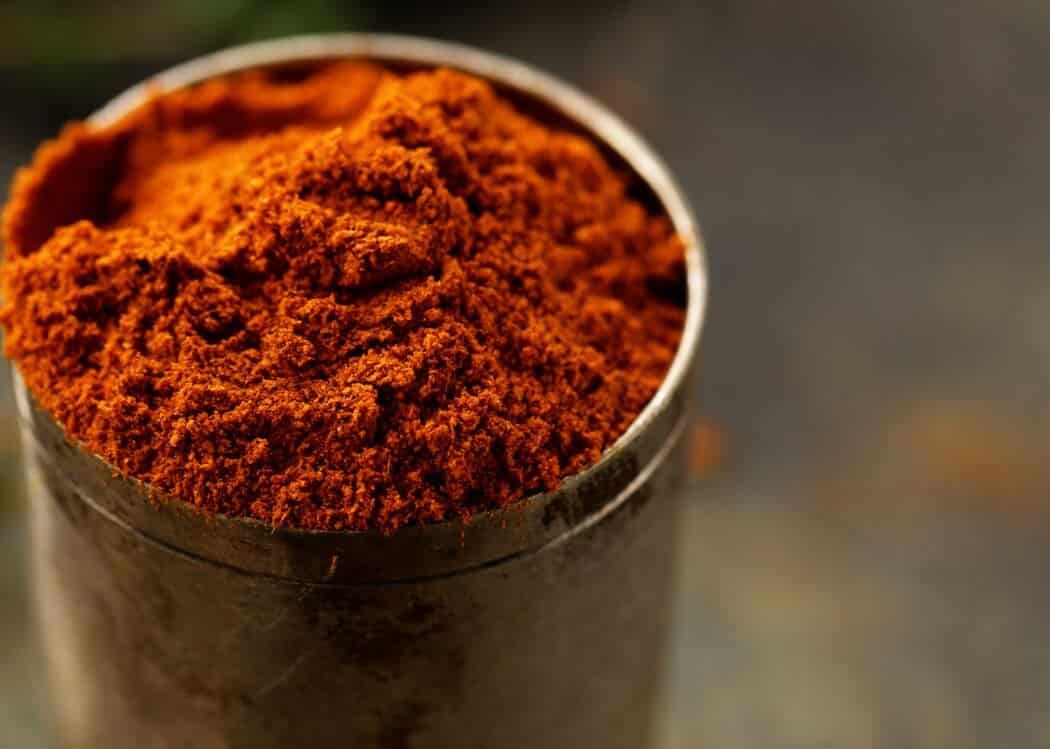
Baharat is a ground blend of pungent and sweet spices with no fixed recipe. Its name is an archaic Arabic plural of bahar, “spice.”1 Katzer describes two main styles: a fiery Gulf blend that mixes black pepper, chiles and paprika with nutmeg, cloves, cinnamon, cardamom, cumin and coriander, and a simpler eastern Mediterranean mix of mainly black pepper and allspice.1 Turkish cooks use a related mix with dried mint.2 Because the blend varies so much, the best stand-in depends on which version your recipe expects and what the baharat is doing in the dish.
Quick answer
| What baharat is doing | Best substitute | Starting amount, per 1 part baharat | Treatment |
|---|---|---|---|
| The whole seasoning (lamb, kofta, kebabs, rubs) | A quick homemade blend | 1 part | Method (formula Attributed) |
| Sweet, peppery warmth (Lebanese “7 spice” style) | Black pepper and allspice, equal parts | 1/2 part, then taste | Method |
| Earthy, complex warmth in stews and rice | Ras el hanout | 3/4 part, then taste | Method |
| Background warmth, in a pinch | Garam masala | 3/4 part, then taste | Method |
| Red color and heat (Gulf style) | Paprika plus a pinch of cayenne, added to any of the above | To taste | Method |
The rest of the page explains each choice.
How the ratios on this page are labeled
Every ratio carries one of four labels.
- Computed: based on a measurable physical relationship, with the source named.
- Attributed: a named source publishes this ratio. We quote it as theirs.
- Disputed: named sources give different answers to the same swap. We show each one and do not average them.
- Method: we found no published ratio. We give a direction and a cautious starting point, and say so.
We found no published ratio for replacing baharat with any other blend. Two bylined food writers name ras el hanout as the closest stand-in, but neither gives an amount.34 Every blend-for-blend starting amount on this page is therefore a Method starting point, not a measured equivalence.
If baharat is the whole seasoning
In kofta, kebabs and lamb dishes, baharat often is the spicing. Katzer says it is mainly used for mutton dishes.1 Here you want something that covers both sides of the blend: the pungent side (black pepper, sometimes chile) and the sweet side (cinnamon, allspice, cloves, nutmeg).
1. Make a quick version from single spices
Formula (Attributed): Mike Hultquist of Chili Pepper Madness suggests mixing equal parts of cinnamon, cumin, coriander, paprika and black pepper, and says the result is a similar warm base rather than an exact match.4
Amount (Method): Use it in the same amount the recipe gives for baharat, then taste. A homemade blend of the same spices stands in for the jar directly; no source tested the swap.
Why it works: each spice brings the compound that defines it. Black pepper’s pungency comes from piperine,5 cumin’s aroma from cuminaldehyde,6 and coriander seed oil is mostly linalool.7 What it lacks is the clove-and-allspice sweetness of many baharat blends. If you have either, a pinch helps: allspice berry oil is 50 to 80 percent eugenol,8 and eugenol makes up about 85 to 92 percent of clove oil.9
For a fuller recipe with measured amounts, see baharat seasoning, which compares five published versions. RecipeTin Eats’ version is, in its author’s words, “uniquely heavy on all-spice and cinnamon,”10 and lists swaps inside its own recipe: mixed spice for the allspice, and more nutmeg if you are out of cloves (or more cloves if you are out of nutmeg).10
2. Lebanese seven spice
RecipeTin Eats presents its baharat as “also known as Lebanese 7 Spice.”10 If you have a jar sold under that name, it belongs to the same family of blends. Check the label for chile and salt.
Ratio (Method): No published ratio. Start with the recipe’s amount and adjust to taste.
If baharat is sweet, peppery warmth
This is the eastern Mediterranean style: Katzer describes it as consisting mainly of black pepper and allspice.1 If your recipe is Lebanese or Levantine and you have those two spices, you already have the core of the blend.
Black pepper and allspice
Allspice brings the sweet, clove-like note through eugenol,8 and black pepper brings the bite.5 Together they lack the cumin and coriander of Gulf-style blends.
Ratio (Method): Katzer gives no proportions. Mix equal parts and start with about half the baharat amount, because both spices are strong on their own. Taste and add more.
If baharat is earthy, complex warmth
In stews, rice and roasted vegetables, the blend works as a rounded background of warm spice.
1. Ras el hanout
Suzy Karadsheh of The Mediterranean Dish says there is no great substitute for baharat but that “the next best thing would be to use ras el hanout.”3 Hultquist calls it “one of the closest alternatives.”4
The overlap is real. The Oxford Companion to Food lists cumin, coriander, turmeric, ginger, cardamom and nutmeg as ras el hanout’s standard ingredients, with cinnamon, cayenne, rosebud and oregano usually included.11 Cumin, coriander, cardamom, nutmeg and cinnamon all appear in baharat recipes.12 The differences matter too. Turmeric’s curcumin gives a yellow color,13 and some blends carry floral notes: World Spice’s label includes lavender.14 Karadsheh warns that the color and flavor “won’t be quite the same.”3
Ratio (Method): No published ratio. Start with about three quarters of the baharat amount, taste, and add more. Add a little black pepper if the dish tastes flat, since pepper leads in many baharat blends.
2. Garam masala
Ottolenghi compares the two directly: “Baharat is to the Middle East what garam masala is to India.”12 Hultquist calls garam masala “a workable stand-in in a pinch.”4
Both blends lean on warm spices. Bong Eats says Bengali garam masala, in its most basic form, is cardamom, cinnamon and cloves,15 and Great British Chefs lists cloves, bay leaf, fennel, cinnamon and cardamom among commonly used spices.16 Madhur Jaffrey’s recipe in Saveur uses a quarter cup of cardamom seeds,17 so some versions are strongly cardamom-forward. Garam masala usually has no allspice and no paprika, so the sweet-peppery and red notes of baharat will be thinner.
The “garam” in the name refers to spices thought to warm the body in Ayurvedic medicine, not to chile heat.17 Hultquist describes garam masala as “typically spicier and a bit more pungent than baharat”;4 that is his tasting judgment, and blends vary.
Ratio (Method): No published ratio. Start with about three quarters of the baharat amount and taste.
3. Madras curry powder, as a last resort
Hultquist notes that “some sources also mention Madras curry powder as a potential substitute.”4 It shares several warm spices with baharat, but it is a different kind of blend. Madras is the former name of Chennai,18 and Britannica says curry powder was a mixture adapted by British settlers in India.19 Julia Fine of Diaspora Co. describes 19th-century Madras curry powders as “laden with turmeric, chili, and/or cayenne pepper.”20 Expect a yellow dish from the turmeric13 and possibly more heat.
Ratio (Method): No published ratio. Start with about half the baharat amount and taste.
If baharat brings red color and heat
Gulf-style baharat can be fiery: Katzer describes it as built partly on chiles and paprika.1 Ottolenghi’s blend lists paprika, chilli and cayenne.12 Ras el hanout, garam masala and black pepper with allspice will not supply that color.
Ratio (Method): No published ratio. Add paprika for color, a teaspoon at a time, and cayenne a pinch at a time, tasting as you go.
If the recipe is Turkish
Saveur’s Turkish baharat karisimi adds dried mint and winter savory to cinnamon, nutmeg, cumin and black pepper.2 Saveur says seasoning mixtures of this kind are common in kitchens throughout Turkey.2 If your recipe expects this herbal style, add a pinch of dried mint to whichever substitute you use (Method; no published ratio).
What isn’t known
- No published ratio was found for replacing baharat with ras el hanout, garam masala, Madras curry powder or any other blend. The bylined writers who name substitutes give no amounts.
- No published aroma analysis compares baharat with any substitute blend. The comparisons above rest on shared ingredients and on the main compounds of each spice, not on measurements of the blends.
- A widely repeated claim says baharat is mainly used as a condiment added to cooked food. We found no source for that; Katzer says the blend is usually fried briefly in oil or clarified butter.1
Related
- Baharat seasoning, hawaij and advieh
- Ras el hanout, ras el hanout substitutes and ras el hanout vs. garam masala
- Garam masala and garam masala substitutes
- Madras curry powder and Madras curry powder vs. curry powder
- Allspice, allspice vs. black pepper, black pepper, cinnamon, cumin, coriander, cloves, paprika, cayenne pepper and mint
- The master list of herbs and spices
Footnotes
-
Gernot Katzer, “Paprika (Capsicum annuum)”, Gernot Katzer’s Spice Pages. gernot-katzers-spice-pages.com · Reference work ↩ ↩2 ↩3 ↩4 ↩5 ↩6
-
“Turkish Herb and Spice Mix (Baharat Karisimi)”, Saveur, 2007. saveur.com · Publication ↩ ↩2 ↩3
-
Suzy Karadsheh, “Baharat Spice Blend”, The Mediterranean Dish, 2024. themediterraneandish.com · Publication ↩ ↩2 ↩3
-
Mike Hultquist, “Baharat”, Chili Pepper Madness, 2025. chilipeppermadness.com · Publication ↩ ↩2 ↩3 ↩4 ↩5 ↩6
-
McNamara, Randall and Gunthorpe, “Effects of piperine at the human vanilloid receptor (TRPV1)”, British Journal of Pharmacology, 2005. pmc.ncbi.nlm.nih.gov · Peer-reviewed ↩ ↩2
-
P.C.M. Jansen, Cuminum cyminum, Plant Resources of South-East Asia (PROSEA). uses.plantnet-project.org · Reference work ↩
-
Al-Khayri et al., “Essential Oil from Coriandrum sativum: A Review”, Molecules, 2023. mdpi.com · Peer-reviewed ↩
-
D. Sulistiarini, Pimenta dioica, Plant Resources of South-East Asia (PROSEA). uses.plantnet-project.org · Reference work ↩ ↩2
-
Batiha et al., “Syzygium aromaticum L. (Myrtaceae)”, Biomolecules, 2020. mdpi.com · Peer-reviewed ↩
-
Nagi Maehashi, “Baharat”, RecipeTin Eats, 2026. recipetineats.com · Publication ↩ ↩2 ↩3
-
“Ras-el-hanout”, The Oxford Companion to Food, Oxford University Press. app.ckbk.com · Reference work ↩
-
“Baharat”, Ottolenghi (product page). ottolenghi.co.uk · Merchant ↩ ↩2 ↩3
-
“Turmeric: Usefulness and Safety”, National Center for Complementary and Integrative Health, 2025. nccih.nih.gov · Regulator ↩ ↩2
-
“Ras El Hanout”, World Spice Merchants (product page). worldspice.com · Merchant ↩
-
“Bengali Garam Masala”, Bong Eats, 2016. bongeats.com · Publication ↩
-
“How to make garam masala”, Great British Chefs, 2025. greatbritishchefs.com · Publication ↩
-
“Garam Masala” (Madhur Jaffrey’s recipe), Saveur, 2014. saveur.com · Publication ↩ ↩2
-
“Chennai”, Encyclopaedia Britannica. britannica.com · Reference work ↩
-
“Curry”, Encyclopaedia Britannica. britannica.com · Reference work ↩
-
Julia Fine, “From Delhi to Durban: The Many Homes of Madras Curry Powder”, Diaspora Co., 2022. diasporaco.com · Merchant ↩