Cooking · Dish guide
The Best Seasonings for Fries, From Salt and Old Bay to Malt Vinegar and Mayo
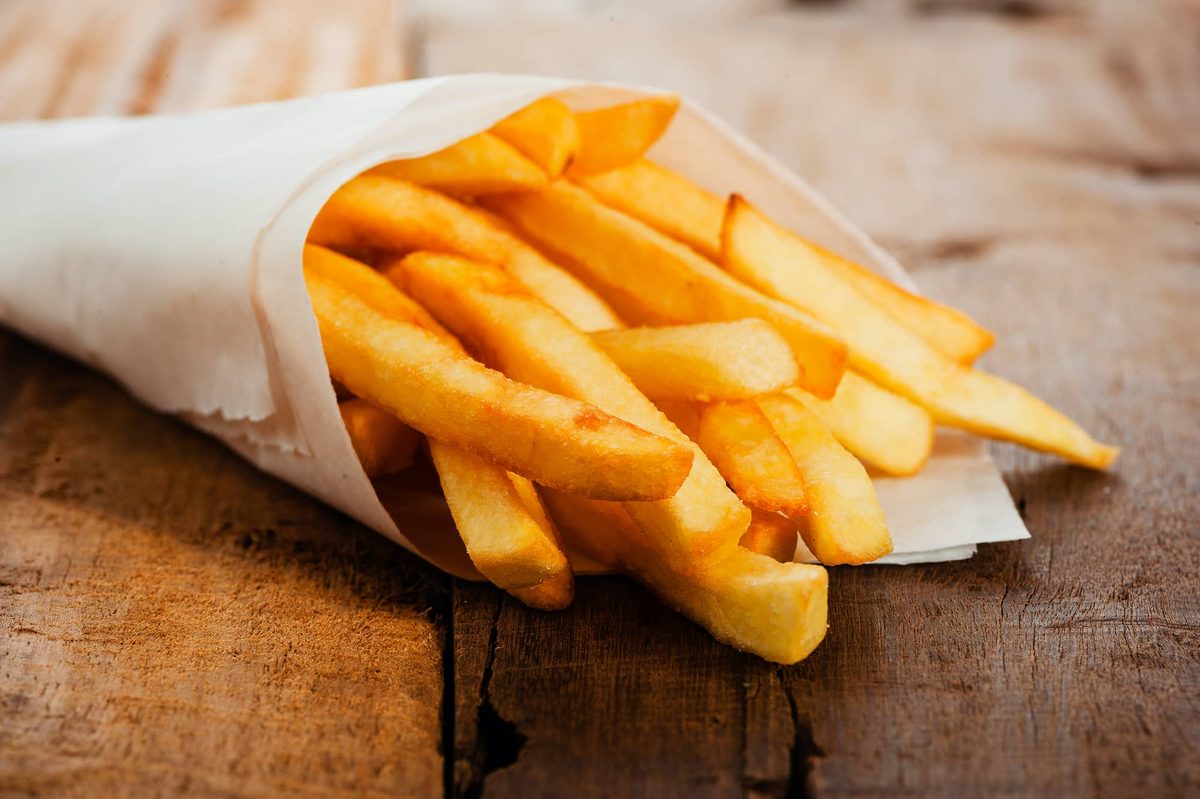
Fries need very little: Britannica notes that they are often salted and served with ketchup, mayonnaise or vinegar.1 Beyond that, the choices split into dry seasonings that go on while the fries are hot (salt, garlic, Parmesan, Old Bay) and wet ones served alongside or poured over (ketchup, mayonnaise, malt vinegar, gravy). Where you are in the world largely decides which. This page covers what each one adds, and where a named source says how it is used.
At a glance
| Seasoning | What it adds | Where it is typical |
|---|---|---|
| Salt | Basic seasoning | Everywhere1 |
| Garlic powder | Savory garlic flavor | US (common practice) |
| Parmesan | Salty, savory depth | US (common practice)2 |
| Old Bay | Celery salt, red and black pepper, paprika | Maryland and beyond; McCormick suggests it for fries3 |
| Ketchup | Sweet, sour, spiced | US and widely14 |
| Mayonnaise | Rich, tangy | Belgium and widely51 |
| Malt vinegar | Sharp acidity | Britain, with fish and chips67 |
| Gravy and cheese | A meal rather than a side | Canada (poutine), New Jersey (disco fries)18 |
Dry seasonings
Salt
Salt is the default seasoning for fries.1 Season them while they are hot, straight out of the fryer or oven, so the salt sticks (common practice). Britannica notes that flavoring fries with salt poses risks to the heart;1 for reference, the FDA’s Daily Value for sodium is less than 2,300 mg a day.9 See table salt, seasoned salt and truffle salt.
Garlic
Garlic powder is the usual way to get garlic onto fries, often mixed with salt; see garlic salt. One caution comes from America’s Test Kitchen, which found that garlic powder stirred dry into mashed potatoes tasted harsh and garlicky but not particularly complex,10 and recommends hydrating the powder in a little water first, since powder straight from the jar has not developed its full flavor.11 ATK did not test fries. A paste of hydrated powder and oil tossed with hot fries is one way to apply that finding (our suggestion, untested). See garlic powder vs. garlic.
Parmesan
Grated Parmesan adds savory depth because it is high in free glutamate. A white paper for the Academy of Nutrition and Dietetics lists Parmigiano-Reggiano at 1,200 to 1,680 mg of free glutamic acid per 100 g, against 182 mg for cheddar; free glutamic acid is what triggers the umami taste receptors.2 Parmesan with garlic is a common pairing on fries. A widely repeated tip says Parmesan can replace salt as a low-sodium option; we found no source that measures that, so taste before adding more salt. See MSG and cooking with MSG.
Old Bay
Old Bay is McCormick’s seafood seasoning, sold as a kitchen staple since 1939.3 Baltimore Heritage traces it to Gustav Brunn’s Baltimore Spice Company, which began developing a crab seasoning around 1940 and named it after the Old Bay steamship line.12 McCormick suggests shaking it onto fries.3
Its label lists celery salt (salt, celery seed), spices including red and black pepper, and paprika; McCormick says it combines celery salt, 18 herbs and spices, and paprika, but does not publish the full list.3 Mustard is often named as an Old Bay ingredient, but it is not on the label. A 1/4-teaspoon serving carries 125 mg of sodium.13 Because celery salt comes first, Old Bay can stand in for plain salt on fries rather than going on top of it. See Old Bay vs. Creole seasoning.
Other shakers
Paprika, chili powder, cayenne and dried herbs all work on fries; we found no named fry recipe to give amounts. See smoked paprika, chili powder and cayenne pepper uses.
Condiments and toppings
Ketchup
Ketchup is the most familiar American partner for fries.1 The FDA’s standard for catsup allows salt, vinegars, nutritive carbohydrate sweeteners, and spices, flavoring, onions or garlic,4 which is where its sweet, sour and spiced character comes from. Against plain salted fries it adds sweetness, acidity and moisture (our description).
Barbecue sauce is a smokier, often sweeter alternative. Recipes and brands vary too much to say what any one contains; check the label.
Mayonnaise
In Belgium, fries and mayonnaise are inseparable, and Belgians do not prefer ketchup on their frites, according to Tasting Table.5 Why mayo became the Belgian standard is unclear; the same article calls the origin murky.5 Under the FDA’s standard, mayonnaise is at least 65 percent vegetable oil by weight, made with egg yolk and acidified with vinegar or lemon or lime juice,14 which gives it richness with a little tang and no added sweetness. See too much mayonnaise.
Malt vinegar
Malt vinegar is Britain’s condiment for fish and chips, where “chips” are fries. A 1983 Christian Science Monitor piece on the dish describes the chips being salted, then sprinkled with malt vinegar.7 Chowhound’s Kim Ranjbar explains that malt vinegar starts as malted barley fermented into alcohol, which bacteria turn into acetic acid, and that its acidity cuts through the fatty fried flavor; she says it reputedly became popular in the late 19th century.6 Salt and vinegar go on together. For a dry version, see vinegar powder.
Gravy and cheese: poutine and disco fries
Poutine is a Canadian dish of fries covered with cheese curds and gravy.1 New Jersey has its own version: disco fries, which Saveur’s Drew Lazor calls one of the state’s classics, are fries soaked in brown gravy and covered in melted mozzarella.8 The two share near-identical ingredients, and Lazor notes that fans of poutine will recognize the combination.8 Poutine is often called Canada’s national dish; Britannica calls it a Canadian dish, and we found no official designation.
When to season
- Hot from the fryer or oven: salt, garlic powder, Parmesan, Old Bay and other dry shakers.
- At the table: malt vinegar, ketchup, mayonnaise.
- Poured over: gravy, with cheese curds or mozzarella.
That timing is common practice; the sources above describe what goes on, not tests of when.
Related
- Spices for hamburgers
- Baked potato spices and hash brown spices
- Old Bay seasoning
- Garlic powder vs. garlic
- The master list of herbs and spices
Footnotes
-
Amy Tikkanen, “French fries”, Encyclopaedia Britannica. britannica.com · Reference work ↩ ↩2 ↩3 ↩4 ↩5 ↩6 ↩7 ↩8 ↩9
-
Kristi Crowe, “Umami in Foods” white paper, Academy of Nutrition and Dietetics Evidence Analysis Library. andeal.org · Reference work ↩ ↩2
-
“OLD BAY Classic Seafood Seasoning”, McCormick. mccormick.com · Merchant ↩ ↩2 ↩3 ↩4
-
21 CFR 155.194, Catsup, U.S. Food and Drug Administration. ecfr.io · Regulator ↩ ↩2
-
Ryan Cashman, “The Potential Reason Belgium Tops Its Frites With Mayo”, Tasting Table, 2022. tastingtable.com · Publication ↩ ↩2 ↩3
-
Kim Ranjbar, “Why Malt Vinegar Is The Standard Condiment For Fish And Chips”, Chowhound, 2025. chowhound.com · Publication ↩ ↩2
-
Marc F. Millon, “Fish and chips: a traditional British fast food favorite”, The Christian Science Monitor, 1983. csmonitor.com · Publication ↩ ↩2
-
Drew Lazor, “There’s No Drunk Food Like Disco Fries”, Saveur, 2016. saveur.com · Publication ↩ ↩2 ↩3
-
“Sodium in Your Diet”, U.S. Food and Drug Administration. fda.gov · Regulator ↩
-
“Experiment: Bringing Out the Best in Garlic Powder”, America’s Test Kitchen. americastestkitchen.com · Publication ↩
-
Carolyn Grillo, “For Great Garlic Bread, Hydrate Your Garlic Powder First”, America’s Test Kitchen, 2021. americastestkitchen.com · Publication ↩
-
“Gustav Brunn’s Baltimore Spice Company”, Baltimore Heritage. explore.baltimoreheritage.org · Reference work ↩
-
Old Bay Seasoning, 16 oz, Nutrition Facts, ShopRite listing. shoprite.com · Merchant ↩
-
21 CFR 169.140, Mayonnaise, U.S. Food and Drug Administration. ecfr.gov · Regulator ↩