Blog · Dish guide
The Best Spices for Tilapia: Paprika, Garlic, Thyme, Cayenne and Lemon
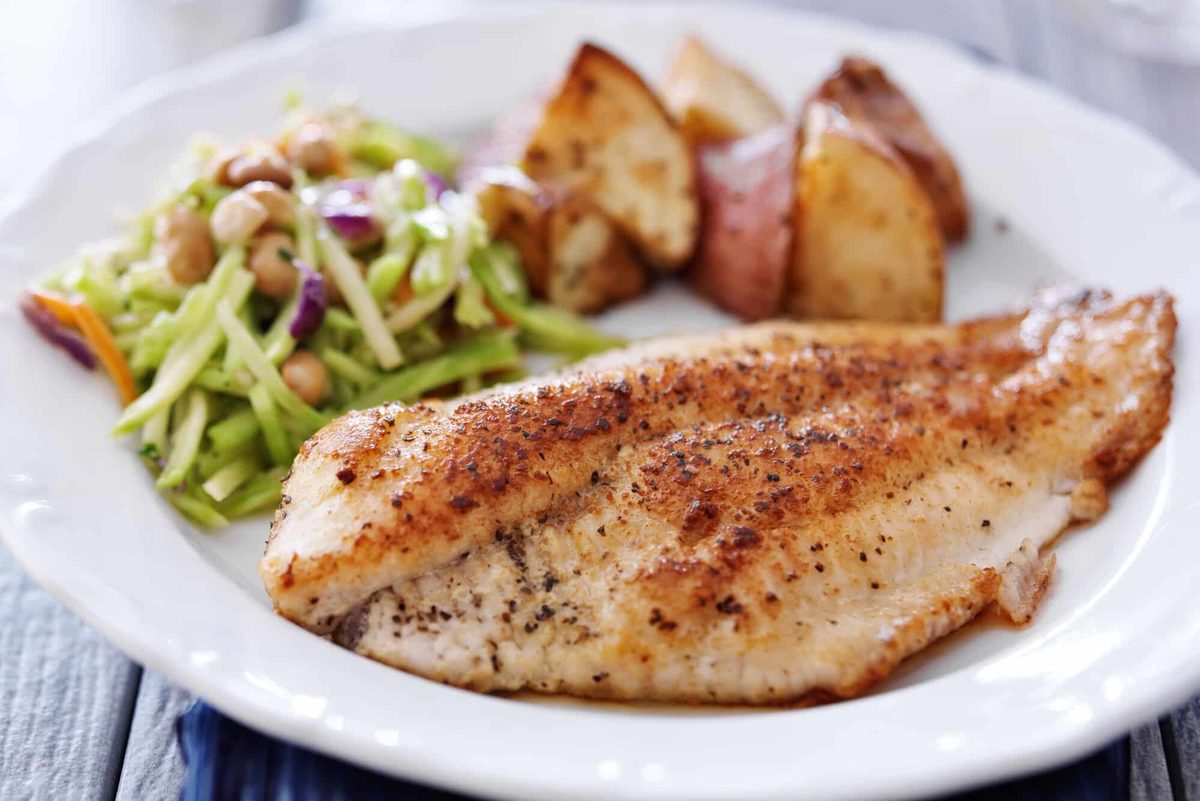
Tilapia is a lean, mild white fish, so the seasoning does most of the work. The NIH Office of Dietary Supplements groups it with lower-fat fish such as bass and cod, which carry far less omega-3 fat than salmon: about 0.11 g of DHA per 3 ounces cooked.1 The two named recipes on this page both coat the fillets in a paprika-led dry rub with garlic, dried herbs, cayenne and black pepper, and one finishes with lemon. Quantities appear only where a named recipe gives them.
At a glance
| Seasoning | Job on the fish | Where it appears |
|---|---|---|
| Paprika or smoked paprika | Red color, mild sweetness, smoke if smoked | Both recipes23 |
| Garlic powder | Savory base | Both recipes23 |
| Thyme and oregano (dried) | Herbal backbone that survives heat | Both recipes23 |
| Cayenne | Heat | Both recipes23 |
| Black pepper | Gentle pungency | Both recipes23 |
| Lemon | Brightness, squeezed over at the end | Texas A&M2 |
| Cumin | Earthy warmth | Budget Bytes3 |
| Basil, tarragon, fennel fronds | Fresh finish | Reference works and a merchant’s suggestion4567 |
The core seasonings and what each does
Paprika: color first
Both recipes lead with paprika: 1 teaspoon of paprika in the Texas A&M AgriLife Extension version and 1 tablespoon of smoked paprika in Beth Moncel’s, where the rub cooks in butter until the spices turn a deep burgundy color.23 The red comes from capsanthin and capsorubin, which JECFA identifies as the main compounds responsible for paprika’s color.8 On a pale fillet, in our judgment, that color is half the point; paprika’s flavor is mild enough to sit behind the sharper spices. See paprika vs. cayenne.
Cayenne: heat
The Texas A&M rub uses ½ teaspoon of cayenne for 2 pounds of fish; Moncel’s uses ¼ teaspoon for four 4-ounce fillets.23 McCormick Science Institute lists seafood among the foods red pepper adds heat and bite to.9 Raise or lower the cayenne to taste (our method); the paprika carries the color either way.
Garlic: the savory base
PROSEA describes garlic as mainly a condiment for flavoring meat, fish and salads.10 Both recipes use garlic powder in the rub (1 teaspoon and ¼ teaspoon) rather than fresh garlic,23 which in our judgment makes sense for a dry coating that has to cling to the fish. See garlic.
Thyme and oregano: herbs that can take heat
PROSEA lists fish among the many foods thyme flavors.11 America’s Test Kitchen classes thyme as a hearty herb whose volatile flavor compounds are somewhat more heat-stable,12 which suits a rub that goes straight into a hot pan or oven. The Texas A&M recipe uses ½ teaspoon each of dried thyme and dried oregano; Moncel’s uses 1 teaspoon of each.23 Lemon thyme is an option if you want a citrus note (our suggestion; neither recipe uses it). See fresh thyme vs. dried and lemon thyme.
Black pepper
Britannica attributes black pepper’s flavor principally to piperine.13 The Texas A&M rub calls for ¾ teaspoon; Moncel asks for freshly cracked pepper, about 20 cranks of the mill.23
Lemon: the finish
The Texas A&M recipe squeezes a medium lemon over the cooked fish.2 Lemon pepper is a one-jar alternative; McCormick’s blend contains salt, black pepper, citric acid, onion and garlic as well as lemon oil, and the company suggests it for seafood, brushed on with melted butter or olive oil.14 Because many lemon pepper blends lead with salt, cut back on other salt if you use one (our advice). See lemon pepper.
Fresh herbs for a lighter finish
For tilapia that is baked or steamed rather than blackened, fresh herbs added at the end are an alternative (our suggestion; neither recipe above uses them):
- Basil. Britannica lists fish among the foods basil flavors.4
- Tarragon. Illinois Extension describes French tarragon’s leaves as having a licorice or anise flavor,5 Britannica calls it an essential ingredient in béarnaise sauce,15 and The Spice House suggests tarragon for fish.6
- Fennel. Illinois Extension says herb fennel has an anise or licorice flavor and is used in fish dishes.7
America’s Test Kitchen counts basil and tarragon among the delicate herbs, which are more volatile,16 and advises adding delicate herbs at the last minute.12 Tilapia fillets cook in minutes, so a fresh herb added as the fish comes off the heat keeps its aroma. See tarragon uses and basil uses.
Two blackened tilapia recipes side by side
| Recipe | Fish | Rub | Cooking |
|---|---|---|---|
| Texas A&M AgriLife Extension, Dinner Tonight2 | 2 lb fillets | 1 tsp paprika, 1 tsp garlic powder, ¾ tsp black pepper, ½ tsp cayenne, ½ tsp dried thyme, ½ tsp dried oregano; 1 lemon to finish | Baked at 350°F about 10 minutes, to 145°F |
| Beth Moncel, Budget Bytes3 | Four 4-oz fillets | 1 tbsp smoked paprika, 1 tsp cumin, 1 tsp thyme, 1 tsp oregano, ¼ tsp cayenne, ¼ tsp garlic powder, ¼ tsp salt, cracked pepper | Butter in a skillet over medium heat, about 2 minutes a side |
These are the named cooks’ recipes, not a house standard. Both call themselves “blackened,” but both cook more gently, in our reading, than the blackened redfish Paul Prudhomme served at K-Paul’s Louisiana Kitchen in New Orleans, which Britannica describes as made by dredging redfish fillets in butter.17 See Cajun seasoning.
Doneness and safety
FoodSafety.gov lists tilapia among the fin fish to cook to 145°F (63°C), or until the flesh is no longer translucent and separates easily with a fork.18 The Texas A&M recipe uses the same test: the fish is done when it flakes with a fork, is opaque and reaches 145°F.2
Related
- Best spices for salmon
- Which spices go well with shrimp
- Dried herbs vs. fresh
- The master list of herbs and spices
Footnotes
-
Omega-3 Fatty Acids: Fact Sheet for Health Professionals, NIH Office of Dietary Supplements. ods.od.nih.gov · Regulator ↩
-
Blackened Tilapia, Dinner Tonight, Texas A&M AgriLife Extension. dinnertonight.tamu.edu · Reference work ↩ ↩2 ↩3 ↩4 ↩5 ↩6 ↩7 ↩8 ↩9 ↩10 ↩11 ↩12 ↩13 ↩14
-
Blackened Tilapia, Beth Moncel, Budget Bytes. budgetbytes.com · Publication ↩ ↩2 ↩3 ↩4 ↩5 ↩6 ↩7 ↩8 ↩9 ↩10 ↩11 ↩12
-
Basil, Encyclopaedia Britannica. britannica.com · Reference work ↩ ↩2
-
Tarragon: French, University of Illinois Extension. extension.illinois.edu · Reference work ↩ ↩2
-
The 8 Best Substitutes for Rosemary, The Spice House. thespicehouse.com · Merchant ↩ ↩2
-
Fennel, University of Illinois Extension. extension.illinois.edu · Reference work ↩ ↩2
-
Red Pepper, McCormick Science Institute. mccormickscienceinstitute.com · Merchant ↩
-
Allium sativum (PROSEA), via Pl@ntUse. uses.plantnet-project.org · Reference work ↩
-
Thymus vulgaris (PROSEA), via Pl@ntUse. uses.plantnet-project.org · Reference work ↩
-
Our Guide to Fresh Herbs, Liz Bomze, America’s Test Kitchen. americastestkitchen.com · Publication ↩ ↩2
-
Black pepper, Encyclopaedia Britannica. britannica.com · Reference work ↩
-
McCormick Lemon & Pepper Seasoning, McCormick & Company. mccormick.com · Merchant ↩
-
Tarragon, Encyclopaedia Britannica. britannica.com · Reference work ↩
-
Science: Substituting Dried Herbs for Fresh, America’s Test Kitchen. americastestkitchen.com · Publication ↩
-
Paul Prudhomme, Encyclopaedia Britannica. britannica.com · Reference work ↩
-
Cook to a Safe Minimum Internal Temperature, FoodSafety.gov. foodsafety.gov · Regulator ↩