Cooking · Dish guide
The Best Spices for Oatmeal: Cinnamon, Nutmeg, Vanilla, Ginger and Warm Spice Blends
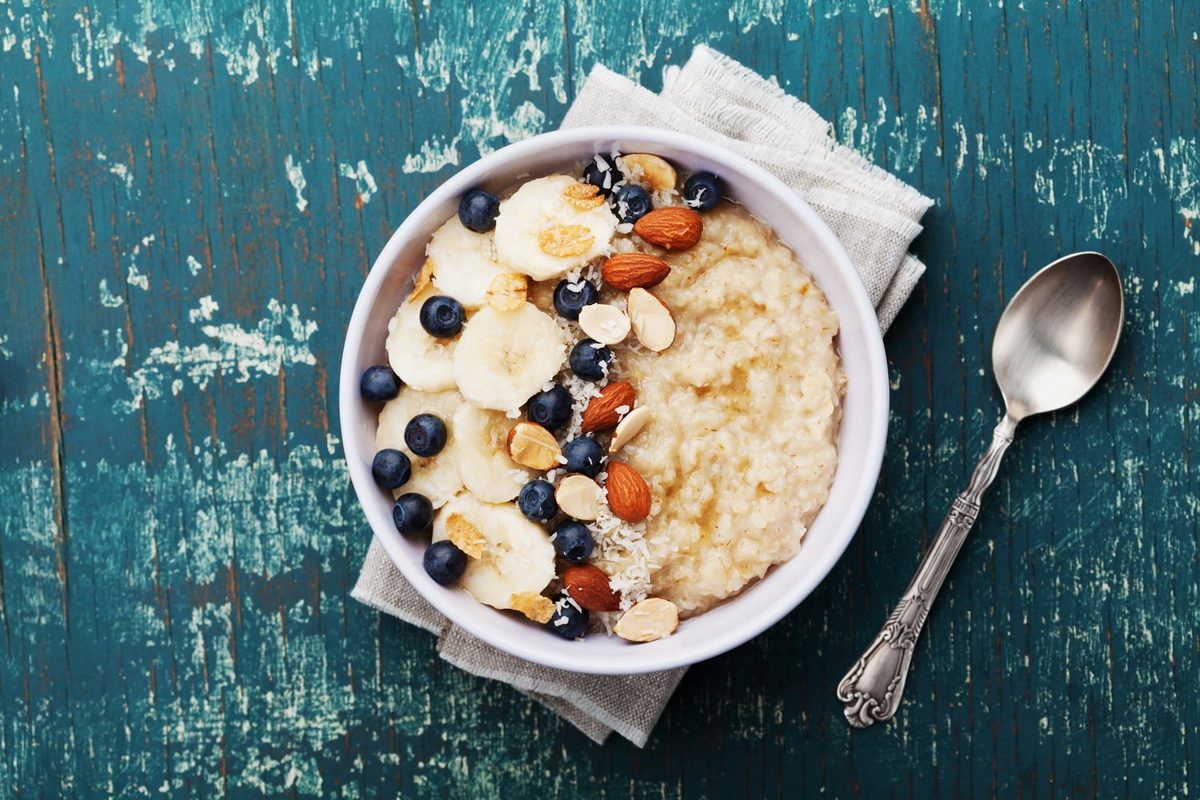
Plain oatmeal is mild, so a small amount of spice changes it a lot. The usual choices are the sweet baking spices: cinnamon first, then vanilla, nutmeg and ginger, or a ready-made blend that combines several. An extension-service oatmeal recipe cited here uses cinnamon, ginger and vanilla, and McCormick names oatmeal as a use for its apple pie spice. This page covers what each spice brings, the blends and what is actually in them, and the one safety point worth knowing about cinnamon. Quantities appear only where a named source gives them.
At a glance
| Spice | What it brings | Where it appears |
|---|---|---|
| Cinnamon | Sweet, warm, woody aroma; the default | Carrot Cake Oatmeal, 1 tsp per ½ cup oats1 |
| Vanilla | Rounded sweetness behind the spice | Carrot Cake Oatmeal, 1 tsp extract1 |
| Ginger | Sharper warmth | Carrot Cake Oatmeal, ¼ tsp ground1 |
| Nutmeg | Warm, nutty note | In McCormick’s apple and pumpkin pie spice blends23 |
| Apple pie spice | Cinnamon, nutmeg and allspice in one | McCormick lists oatmeal among its uses2 |
| Pumpkin pie spice | Cinnamon-led blend with ginger | Blends vary; see below34 |
| Chai spices | Cardamom-led, more complex | Borrowed from masala chai567 |
Why oatmeal takes spice well
Rolled oats, also known as oatmeal, are one of the whole-oat sources the FDA allows to carry a labeled health claim: foods with at least 0.75 g of beta-glucan soluble fiber per serving may tie diets with 3 g or more a day of that fiber to a lower risk of coronary heart disease, using wording such as “may reduce the risk of heart disease.”8 That claim is about the oat fiber, not the spices. Flavor is where spice comes in: in our judgment a little cinnamon or vanilla does more for a bowl of oats than extra sugar.
One recipe, three spices
The University of Delaware Cooperative Extension’s Carrot Cake Oatmeal is a useful starting point because it measures its spices:1
| Ingredient | Amount |
|---|---|
| Rolled oats | ½ cup |
| Almond milk (or other milk alternative) | 1 cup |
| Grated carrots | 1 cup |
| Cinnamon powder | 1 tsp |
| Ginger powder | ¼ tsp |
| Vanilla extract | 1 tsp |
| Maple syrup | 1 tbsp |
| Salt | A pinch |
That is a generous amount of cinnamon for one serving of oats. For plain oatmeal without carrot, starting at about half that and tasting is our suggestion, not a sourced figure.
The core spices
Cinnamon: the default
Two kinds of bark are sold as cinnamon. Ceylon or “true” cinnamon is Cinnamomum verum, native to Sri Lanka; cassia includes Cinnamomum aromaticum, native from southeast China to Vietnam. Both are in the laurel family, Lauraceae.910 The spice is the inner bark of the trees.11 Cassia is the type most often sold in North America, according to NIH’s National Center for Complementary and Integrative Health (NCCIH).12 The Netherlands Enterprise Agency’s CBI market study describes Ceylon as having a milder flavor and being finer.13 In our judgment cassia gives the bold, candy-like cinnamon most Americans expect, and Ceylon a gentler one. See Ceylon vs. cassia cinnamon, Saigon cinnamon and cinnamon vs. nutmeg.
Cinnamon can go in while the oats cook or on top at the end (our judgment); stirred in early, it spreads evenly, while a dusting on top gives a stronger first aroma.
A note on coumarin. Cassia contains coumarin. Germany’s Federal Institute for Risk Assessment (BfR) calculates that a 60 kg adult reaches the tolerable daily intake by eating about 2 g of cassia with average coumarin content a day.14 If you eat heavily cinnamoned oatmeal every morning, measuring it, or switching to Ceylon cinnamon, is our advice. NCCIH’s summary is that research doesn’t clearly support cinnamon for any health condition.12 See too much cinnamon.
Vanilla: the background note
The extension recipe uses 1 teaspoon of vanilla extract.1 Vanilla’s flavor develops in curing: fresh beans contain an odorless vanillin glucoside, and the fully cured fruit holds about 2% vanillin, according to Gernot Katzer’s Spice Pages.15 In the US, a product labeled vanilla extract must contain at least 35% ethyl alcohol by volume.16 Scraped seeds from a pod give visible specks and a fuller flavor; extract is easier to measure (our judgment). See vanilla extract substitutes, vanilla sugar and too much vanilla.
Nutmeg: a little goes a long way
Nutmeg is the seed of Myristica fragrans, native to the Banda Islands in Maluku;17 the same fruit produces a second spice, mace.18 A small grating stirred in near the end is enough for a bowl (our suggestion). Kitchen amounts are not a safety concern: the National Capital Poison Center says none of the foods and flavorings it discusses, nutmeg among them, is dangerous used as recommended.19 See fresh vs. ground nutmeg, cooking with nutmeg and too much nutmeg.
Ginger: sharper warmth
The extension recipe pairs ¼ teaspoon of ground ginger with its cinnamon.1 Ground ginger stirs into hot oatmeal easily; fresh grated ginger is brighter and sharper (our judgment). See fresh ginger vs. ground ginger.
Spice blends
Blends are a shortcut to several warm spices at once, but none of them has a fixed recipe. Read the label.
| Blend | What named sources put in it |
|---|---|
| McCormick Apple Pie Spice | Cinnamon, nutmeg and allspice; McCormick names oatmeal among its uses2 |
| McCormick Pumpkin Pie Spice | Cinnamon, ginger, nutmeg, allspice and sulfiting agents; no cloves3 |
| Food Hero Pumpkin Pie Spice (Oregon State) | 2 tbsp cinnamon, 1 tbsp ginger, 1½ tsp nutmeg, 1½ tsp cloves4 |
| Masala chai spices: Saveur, Dishoom, Culinary Institute of America | All three use green cardamom, cinnamon, ginger and cloves; two add black pepper and two fennel seed567 |
Pumpkin pie spice is cinnamon-led, not clove-led: McCormick’s version has no cloves at all, and the Oregon State recipe uses four times as much cinnamon as cloves.34 For chai, the CIA notes that chai masala mixtures may include cardamom, cinnamon, ginger and peppercorns.7 In oatmeal, a quarter to half teaspoon of any blend per bowl is a reasonable start (our suggestion). See pumpkin pie spice substitutes and apple pie spice substitutes.
Related
Footnotes
-
Carrot Cake Oatmeal, University of Delaware Cooperative Extension. extension.udel.edu · Reference work ↩ ↩2 ↩3 ↩4 ↩5 ↩6
-
McCormick Apple Pie Spice, product page. mccormick.com · Merchant ↩ ↩2 ↩3
-
McCormick Pumpkin Pie Spice, product page. mccormick.com · Merchant ↩ ↩2 ↩3 ↩4
-
Pumpkin Pie Spice, Food Hero, Oregon State University Extension Service. extension.oregonstate.edu · Reference work ↩ ↩2 ↩3
-
Masala Chai, Saveur, 2014. saveur.com · Publication ↩ ↩2
-
Masala chai, from Dishoom: From Bombay with Love, via loveFOOD. lovefood.com · Publication ↩ ↩2
-
Masala Chai, CIA Foodies, The Culinary Institute of America, 2021. ciafoodies.com · Publication ↩ ↩2 ↩3
-
Cinnamomum verum J.Presl, Plants of the World Online, Kew. powo.science.kew.org · Reference work ↩
-
Cinnamomum aromaticum Nees, Plants of the World Online, Kew. powo.science.kew.org · Reference work ↩
-
Ranasinghe et al., “Medicinal properties of ‘true’ cinnamon”, BMC Complementary and Alternative Medicine, 2013. link.springer.com · Peer-reviewed ↩
-
Cinnamon: Usefulness and Safety, NCCIH, 2024. nccih.nih.gov · Regulator ↩ ↩2
-
The European market potential for cinnamon, CBI. cbi.eu · Regulator ↩
-
Cassia cinnamon with high coumarin contents to be consumed in moderation, BfR. bfr.bund.de · Regulator ↩
-
Vanilla (Vanilla planifolia), Gernot Katzer’s Spice Pages. gernot-katzers-spice-pages.com · Reference work ↩
-
Myristica fragrans Houtt., Plants of the World Online, Kew. powo.science.kew.org · Reference work ↩
-
G.B. Marcelle, Production, handling and processing of nutmeg and mace, Introduction, FAO, 1995. fao.org · Reference work ↩
-
Rose Ann Gould Soloway, “Kitchen surprises and cautions”, National Capital Poison Center. poison.org · Reference work ↩