Cooking · Profile
South African Spices: Peri-Peri, Durban Masala, Cape Malay Curry and Bobotie Seasonings
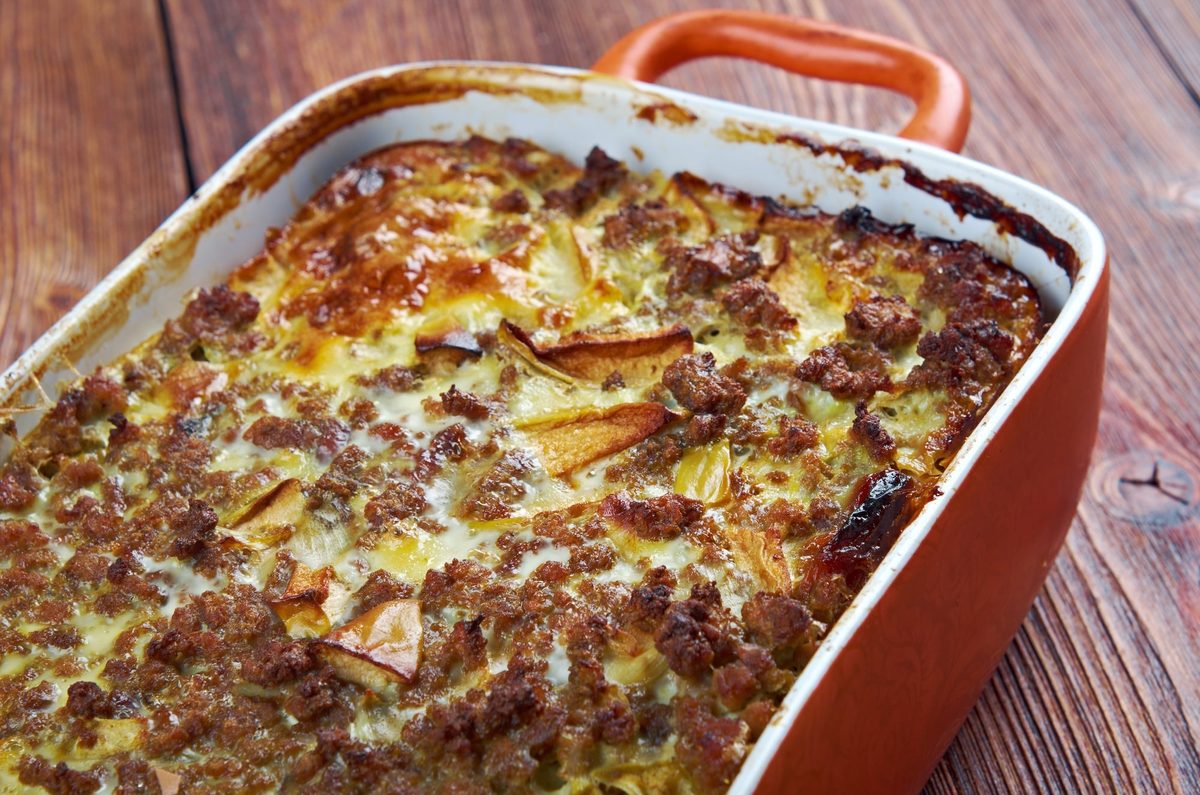
South Africa’s spice cooking comes from several directions at once: peri-peri, a chile seasoning whose name may come from Swahili or Mozambican Portuguese, the curries of Durban’s Indian community, and the mild, sweet-spiced dishes of the Cape Malay kitchen, of which bobotie is the best known. This page covers each, with what the sources say and links to related profiles.
At a glance
| Seasoning | What it is | What it brings | Typical use |
|---|---|---|---|
| Peri-peri | Red chile seasoning or sauce1 | Heat, often with lemon1 | Sauces and dishes named for it1 |
| Durban masala | Merchant-mixed curry blend with cinnamon, cumin and fennel at its core2 | Heat and color | Durban curries2 |
| Cape Malay curry | Mild curry powder3 | Gentle warmth, sweetness from fruit | Bobotie3 |
| Lemon or bay leaves | Whole leaves | Citrus or herbal aroma | Laid on top of bobotie3 |
Measured values
1 figure, sourced| Measure | Value | Scope | Source |
|---|---|---|---|
| Heat (pungency), "African birdseye" chiles Conventional range | 100,000 to 500,000 Scoville heat units | "African birdseye" chiles as a category on Dave DeWitt's heat scale (2008)A category rather than a measured sample. | fieryfoodscentral.com |
Each figure is quoted as its source states it, with the samples or standard it applies to. Where sources differ, both are shown; nothing is averaged. All measured values
Peri-peri
The Dictionary of South African English defines peri-peri (also piri-piri) as a hot sauce of red chiles, peppers and lemon juice, a seasoning of powdered red chiles, or any dish made with it, with its earliest dated quotation from 1959.1 It calls the word’s origin obscure: perhaps Swahili pilipili, perhaps Mozambican Portuguese, with a possible Arabic root behind both.1
Which chile is meant is looser than recipes suggest. “Bird’s eye” is applied to almost any small, pointed, very hot chile,4 and Katzer writes that in Portugal and its former East African colonies the name peri peri goes to a bell-shaped type of Capsicum baccatum.4 DeWitt’s heat scale lists “African birdseye” chiles at 100,000 to 500,000 SHU, as a category rather than a measured sample.5
Dry peri-peri seasonings sold in shops vary by brand; we found no standard formula. See cayenne pepper, red pepper flakes and Portuguese spices.
Durban curry and Durban masala
Durban’s curries come from the city’s Indian community. South African History Online records that nearly 152,184 indentured laborers arrived in Natal from across India between 1860 and 1911, followed by “free” Indians who came mainly as traders, and that Durban has the largest Indian population in sub-Saharan Africa.6 The languages still spoken in the community include Hindi, Tamil, Telugu, Urdu, Punjabi and Gujarati.6
Food writer Tony Jackman describes Durban curry as hot and reddish brown, the color coming from tomato as well as chiles and spices.2 Part of its heat comes from Durban masala, a blend he recommends buying from a KwaZulu-Natal spice merchant rather than in a commercial box, and whose core spices he names as cinnamon, cumin and fennel.2 His own recipe adds whole cinnamon, cardamom, star anise, bay leaves, curry leaves, fenugreek and black mustard seed, ground turmeric, fennel, cinnamon, coriander and cumin, and chile in three forms: chili powder, fresh chiles and masala.2
See curry powder, is curry powder spicy?, curry leaves and Madras curry powder.
Cape Malay curry and bobotie
Bobotie is gentler. In her recipe, South African food writer Jeanne Horak uses a teaspoon of curry powder and says the dish is meant to have a mild curried flavor; it also includes ginger, garlic, apricot jam, dried apricots, raisins and almonds, and she pairs it with turmeric-yellow rice.3 She points to the curry spicing, the yellow rice and the fruit in a meat dish as signs of the dish’s Malay roots, while noting that the origin of the name is unclear.3
Lemon leaves or bay leaves? Horak lays six lemon leaves on top of the bobotie and calls three bay leaves “a poor substitute,” suggesting a little grated lemon rind with them.3 That is one cook’s view, but it reverses the common assumption that bay is the standard and lemon leaf the alternative.
See bay leaves, turmeric and curry spices.
Braai seasonings
Braai (barbecue) salts and spice rubs are sold as house blends. We found no published standard or named recipe to compare, so we cannot say what a “typical” braai salt contains. See BBQ spices, coriander and mustard powder.
Related pages
- Portuguese spices, Indian spices and Nigerian spices
- Cumin, fennel seed and cinnamon
- The master list of herbs and spices
Footnotes
-
“peri-peri, piri-piri”, Dictionary of South African English. dsae.co.za · Reference work ↩ ↩2 ↩3 ↩4 ↩5
-
Tony Jackman, “Throwback Thursday: Durban curry”, Daily Maverick, 2022. dailymaverick.co.za · Publication ↩ ↩2 ↩3 ↩4 ↩5
-
Jeanne Horak, “Bobotie revisited”, Cooksister, 2010. cooksister.com · Publication ↩ ↩2 ↩3 ↩4 ↩5 ↩6
-
Gernot Katzer, Chiles (Capsicum), Gernot Katzer’s Spice Pages. gernot-katzers-spice-pages.com · Reference work ↩ ↩2
-
Dave DeWitt, “Heat Scale Updated”, Fiery Foods & Barbecue Central, 2008. fieryfoodscentral.com · Publication ↩
-
“Indian South Africans”, South African History Online. sahistory.org.za · Reference work ↩ ↩2