Cooking · Dish guide
The Best Spices for Mashed Potatoes: Garlic, Chives, White Pepper and More
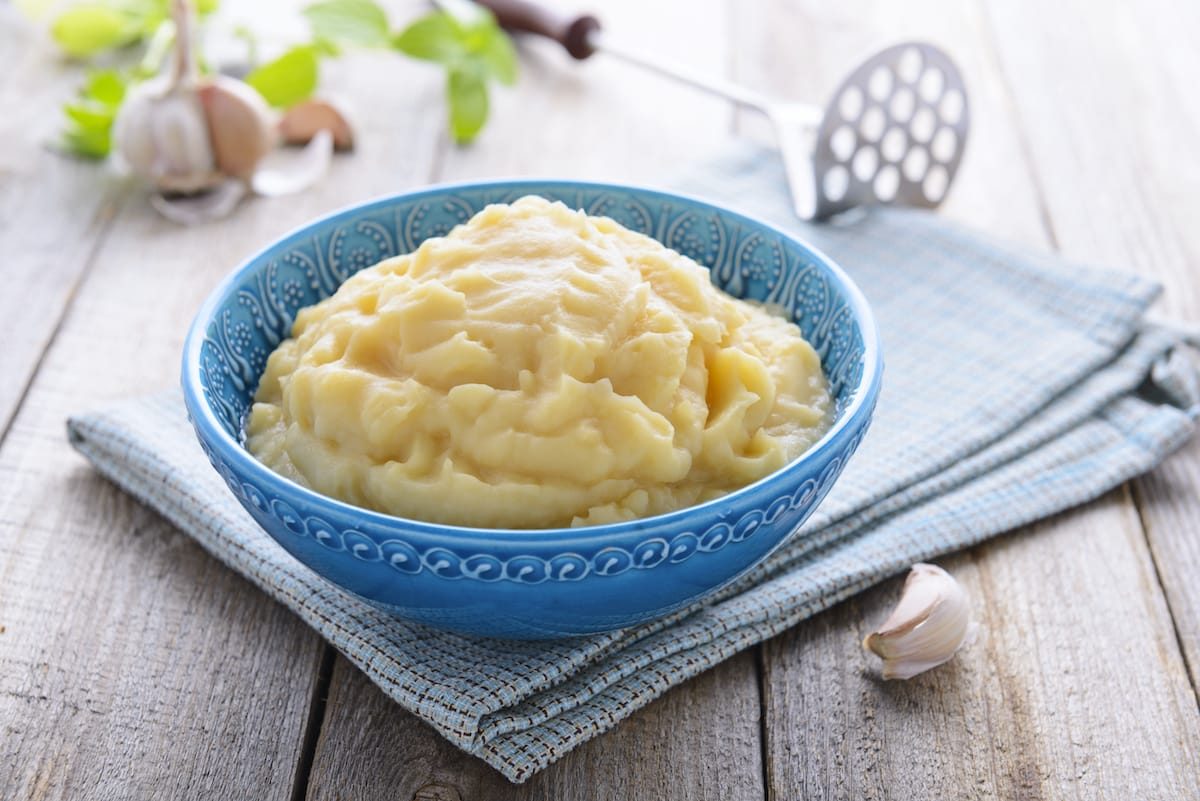
Mashed potatoes take their seasoning from three places: the cooking water, the dairy, and whatever is stirred in at the end. Three named recipes show the range. Tyler Florence infuses garlic, thyme and bay into the cream; Saveur boils a dozen garlic cloves with the potatoes and finishes with chives; Sonja Overhiser folds in prepared horseradish.123 This page covers what each seasoning does, how the recipes add it, and the one tested finding that matters most for garlic powder. Quantities appear only where a named recipe gives them.
At a glance
| Seasoning | Job | How the recipes add it |
|---|---|---|
| Garlic | Savory, rounded depth | Simmered in cream, boiled with the potatoes, or minced123 |
| Garlic powder | Quick garlic flavor | Hydrate in water first (ATK)45 |
| Chives | Mild onion flavor, green flecks | Stirred in at the end12 |
| Thyme and bay leaf | Herbal background | Infused, then strained out1 |
| White pepper | Heat without dark specks | Common practice; often suggested for pale cream dishes6 |
| Horseradish | Sharp, nose-clearing heat | Prepared horseradish folded in at the end3 |
| Salt | Seasoning | In the water, in the mash, or both123 |
| Parsley | Fresh herbal note | At the end7 |
| Parmesan | Salty, savory depth | Stirred in (common practice)8 |
Three recipes side by side
| Tyler Florence, Food Network (serves 4 to 6)1 | Saveur (serves 4 to 6)2 | Sonja Overhiser, A Couple Cooks (serves 8)3 | |
|---|---|---|---|
| Potatoes | 6 to 8 large Yukon Golds | 2 lb waxy plus 1 lb russet | 3 lb Yukon Gold plus 1 lb russet |
| Garlic | 4 cloves, lightly crushed, heated in the cream and strained out | 12 cloves, boiled with the potatoes | 4 to 6 cloves, finely minced |
| Herbs | 3 thyme sprigs and 2 bay leaves in the cream; 2 more bay leaves in the water; 2 tbsp chives | 1/2 tsp fresh winter savory; chives | Chives, for garnish |
| Other seasoning | Freshly ground black pepper | Freshly ground pepper | 2 to 4 tbsp prepared horseradish, to taste |
| Salt | 1 tbsp in the cooking water, then kosher salt to taste | Sea salt to taste, after draining | Kosher salt in the water, plus 1 1/4 tsp in the mash |
| Dairy | 1 cup heavy cream, 1/4 cup butter | Buttermilk, heavy cream, 10 tbsp butter | 6 tbsp salted butter, 3/4 cup milk, 1/2 cup sour cream |
These are the authors’ own recipes, not a house standard. Note how the garlic is always cooked, never added raw at the end.
Garlic
Fresh garlic
The recipes cook their garlic in one of two ways. Florence heats lightly crushed cloves in the cream and butter with thyme and bay, then strains out the solids as the warm cream goes into the potatoes.1 Saveur puts the peeled, crushed cloves into the pot of cold water with the potatoes, so they boil and get mashed in.2 Either way, heat tames the garlic: America’s Test Kitchen found that raising a clove’s temperature to 140°F or above takes much of the harsh bite out.9
Roasted garlic mashed into the potatoes, or a garlic compound butter, are common variations; none of the three recipes uses them. If you make garlic oil to drizzle over the mash, University of California Agriculture and Natural Resources says not to store garlic in oil at room temperature, and to keep homemade garlic oil refrigerated for no more than 4 days.10
Garlic powder: hydrate it first
This is the one seasoning on the page that has been tested in mashed potatoes. America’s Test Kitchen stirred garlic powder dry into mashed potatoes and found it tasted harsh and garlicky but not particularly complex.4 Its advice is to mix the powder with a little water before using it, because garlic powder straight from the jar has not developed its full flavor.5 See garlic powder vs. garlic and too much garlic.
Chives and parsley
Chives have a mild onion flavor and, according to University of Wisconsin Extension, are best sprinkled on food just before serving, as seasoning or garnish.11 Both Florence and Saveur stir them in at the very end, after the dairy.12 Their green flecks against the pale mash are part of the appeal; that is a matter of looks rather than flavor.
Parsley works the same way. The LSU AgCenter counts both chives and parsley among the delicate herbs that should be added a minute or two before the end of cooking.7 See chives and parsley.
Thyme, bay and savory
Florence infuses three sprigs of thyme and bay leaves into the cream and strains them out, and adds two more bay leaves to the cooking water.1 That gives a herbal background without leaves in the mash. Saveur uses a little fresh winter savory, stirred in at the end with the chives.2 Fish out every bay leaf before mashing; see cooking with bay leaves.
White pepper
White pepper is black pepper with the dark outer part of the fruit removed.12 Gernot Katzer notes that it is often suggested for cream-based sauces where black pepper would spoil the color.6 Mashed potatoes are a natural place for it, by common practice, though none of the three recipes here calls for it: Florence uses black pepper, Saveur freshly ground pepper, and Overhiser none.123
The flavor differs a little too. America’s Test Kitchen explains that stripping the skin removes much of pepper’s volatile oils and aroma compounds,13 so white pepper tastes less aromatic. Which of the two is hotter is a question sources answer differently; see white pepper vs. black pepper.
Horseradish
Overhiser’s recipe folds 2 to 4 tablespoons of prepared horseradish into the potatoes along with the sour cream at the end, and says to adjust the amount to taste.3 Adding it last makes sense: horseradish’s pungency comes from an enzyme reaction, and a 2024 study of horseradish sauce found that heat treatment inactivated the enzyme and caused an undesired loss of pungency.14 Whether horseradish reads as “mild” depends entirely on how much you add. See cooking with horseradish.
Salt: in the water, in the mash, or both
The three recipes salt at different points:
| Recipe | In the cooking water | In the finished mash |
|---|---|---|
| Tyler Florence1 | 1 tablespoon salt | Kosher salt to taste |
| Saveur2 | None | Sea salt to taste |
| Sonja Overhiser3 | Kosher salt (amount not given) | 1 1/4 teaspoons kosher salt |
We found no test of which approach seasons mashed potatoes better. A practical starting point (Method, not a measured rule): salt the water lightly, then taste the finished mash and adjust, since salt added at the end is the easiest to control.
If you use kosher salt, know your brand. America’s Test Kitchen weighed a teaspoon of Morton kosher salt at 4.8 grams and a teaspoon of Diamond Crystal at 2.8 grams, so the same spoonful carries very different amounts of salt.15 For salting meat, ATK prefers kosher salt because its larger grains are easier to distribute evenly;16 the same quality makes it easy to sprinkle over a bowl of potatoes (our judgment). See cooking with kosher salt and kosher salt vs. table salt.
Bonus: Parmesan
Parmesan is a cheese, not a spice, but it is a common stir-in. It is high in free glutamate: a white paper for the Academy of Nutrition and Dietetics lists Parmigiano-Reggiano at 1,200 to 1,680 mg of free glutamic acid per 100 g, against 182 mg for cheddar.8 Free glutamic acid is what triggers the umami taste receptors.8 Because Parmesan is salty, add it before the final salt check (common practice). See MSG.
When to add each seasoning
- In the pot: salt and bay leaves in the cooking water; whole garlic cloves if boiling them.12
- In the warm dairy: garlic, thyme and bay, strained out before mixing.1
- At the end: salt and pepper to taste, horseradish, chives and other delicate herbs.1237
Related
- Baked potato spices, hash brown spices and potato soup spices
- White pepper vs. black pepper
- Garlic powder
- The master list of herbs and spices
Footnotes
-
Tyler Florence, “Chive and Garlic Mashed Potatoes”, Food Network. foodnetwork.com · Publication ↩ ↩2 ↩3 ↩4 ↩5 ↩6 ↩7 ↩8 ↩9 ↩10 ↩11 ↩12 ↩13 ↩14
-
“Chive Mashed Potatoes”, Saveur, 2007. saveur.com · Publication ↩ ↩2 ↩3 ↩4 ↩5 ↩6 ↩7 ↩8 ↩9 ↩10 ↩11 ↩12
-
Sonja Overhiser, “Horseradish Mashed Potatoes”, A Couple Cooks, 2025. acouplecooks.com · Publication ↩ ↩2 ↩3 ↩4 ↩5 ↩6 ↩7 ↩8 ↩9
-
“Experiment: Bringing Out the Best in Garlic Powder”, America’s Test Kitchen. americastestkitchen.com · Publication ↩ ↩2
-
Carolyn Grillo, “For Great Garlic Bread, Hydrate Your Garlic Powder First”, America’s Test Kitchen, 2021. americastestkitchen.com · Publication ↩ ↩2
-
Gernot Katzer, “Black Pepper (Piper nigrum L.)”, Gernot Katzer’s Spice Pages. gernot-katzers-spice-pages.com · Reference work ↩ ↩2
-
“Flavorful Herbs”, LSU AgCenter. lsuagcenter.com · Reference work ↩ ↩2 ↩3
-
Kristi Crowe, “Umami in Foods” white paper, Academy of Nutrition and Dietetics Evidence Analysis Library. andeal.org · Reference work ↩ ↩2 ↩3
-
“Taking the Bite out of Garlic”, America’s Test Kitchen. americastestkitchen.com · Publication ↩
-
Linda J. Harris, “Garlic: Safe Methods to Store, Preserve, and Enjoy”, UC Agriculture and Natural Resources, 2016. ccfruitandnuts.ucanr.edu · Reference work ↩
-
Susan Mahr, “Chives, Allium schoenoprasum”, University of Wisconsin Extension. hort.extension.wisc.edu · Reference work ↩
-
“Black pepper”, Encyclopaedia Britannica. britannica.com · Reference work ↩
-
“Substituting Black Pepper for White Pepper”, America’s Test Kitchen. americastestkitchen.com · Publication ↩
-
Bianchi et al., “Substitution of additives in horseradish sauce”, Applied Food Research, 2024. doaj.org · Peer-reviewed ↩
-
Kate Shannon Levine, “The Best Kosher Salt”, America’s Test Kitchen, 2019. americastestkitchen.com · Publication ↩
-
Liz Bomze, “How to Salt Chicken and How to Brine Chicken”, America’s Test Kitchen, 2017. americastestkitchen.com · Publication ↩