Cooking · Dish guide
Good Mexican Spices for Chicken: Chiles, Achiote, Mexican Oregano and Cumin
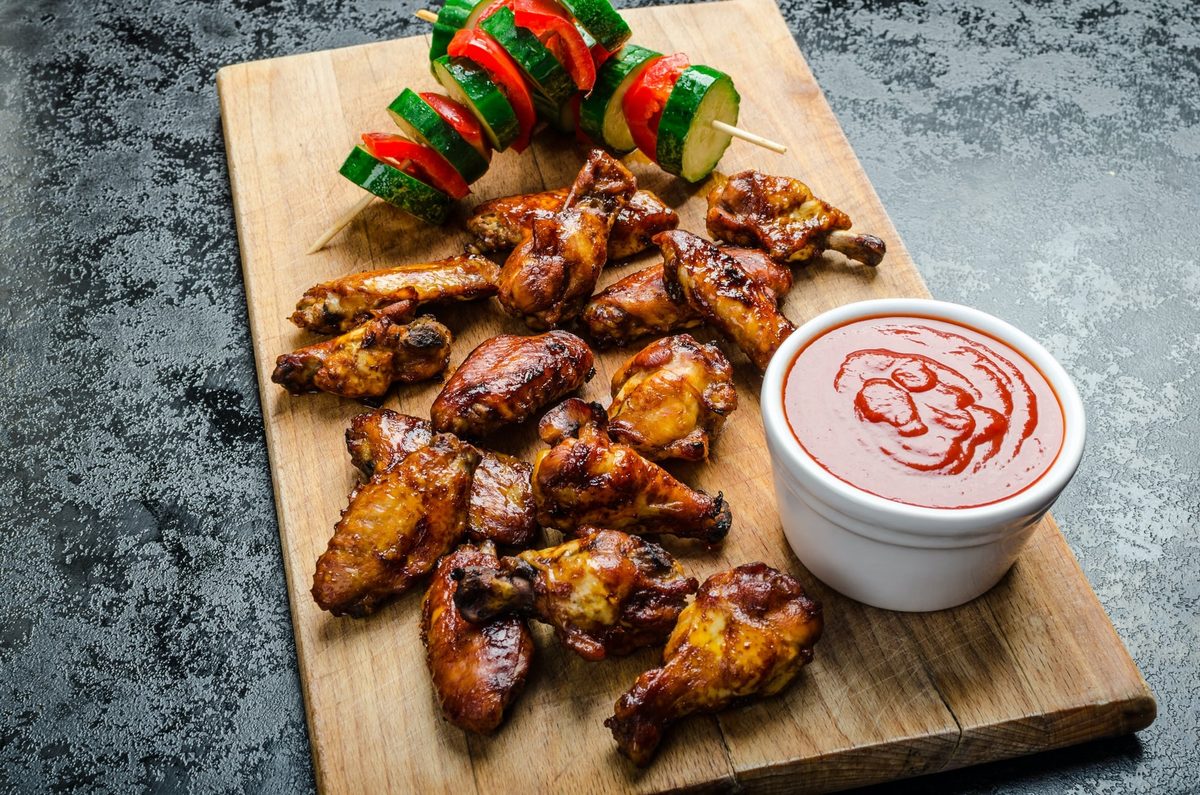
Mexican chicken dishes lean on a short list of seasonings: dried chiles for heat, color and body, garlic and onion for the savory base, Mexican oregano, cumin, and in the Yucatán, achiote. Chicken itself arrived with the Spanish. Archaeologists working in Oaxaca note that people there now rely largely on meat from animals the Spanish brought, such as chicken, beef and pork; the bird that was already domesticated in Mexico, by 400 to 500 AD, was the turkey.1 Both birds now go into the same dishes: the Royal Spanish Academy defines mole, in one sense, as a stew of chicken, turkey or pork made with mole sauce.2
This page covers what each seasoning does, how four named chicken recipes use them, and where amounts come from. Cook chicken to 165°F (73.9°C), the USDA safe minimum for all poultry.3
At a glance
| Seasoning | Job in the dish | Example |
|---|---|---|
| Dried chiles (chipotle, ancho, guajillo, árbol) | Heat, color, smoky or fruity depth | Chipotle in tinga; ancho powder in Bayless’s grilled chicken45 |
| Garlic and onion | Savory base | Garlic in all four recipes below4675 |
| Mexican oregano | Sharp, pungent herbal note | Tinga, pibil, red-chile chicken675 |
| Cumin | Warm, earthy accent | Small amounts in two of the four75 |
| Achiote (annatto) | Red-orange color, little flavor | Pollo pibil7 |
Four chicken recipes side by side
| Chicken tinga (Pati Jinich)4 | Chicken tinga tacos (Rick Bayless)6 | Pollo pibil (Rick Bayless)7 | Red-chile grilled chicken (Rick Bayless)5 | |
|---|---|---|---|---|
| Chicken | 5 cups cooked, shredded | 1 lb boneless thighs | 12 small bone-in thighs | Bone-in breasts and thighs |
| Chile | 2 tbsp chipotle adobo sauce | 3 to 4 pickled or canned chipotles | Not in the lines checked | A 2-oz bottle of pure ancho powder |
| Herbs | 1/2 tsp dried oregano; 1/4 tsp each dried marjoram and thyme | About 1 tsp Mexican oregano | 2 tsp dried Mexican oregano | 1/2 tsp dried oregano, preferably Mexican |
| Cumin | None | None | 1/2 tsp cumin seeds | A big pinch, ground |
| Garlic | 2 cloves | 3 cloves | 10 cloves | 4 cloves |
| Other | Tomatoes, tomatillos, onion | Tomatoes, onion | 2 tbsp achiote seeds; lime and orange juice | 1/4 tsp cinnamon (canela); cider vinegar; black pepper |
These are each cook’s own recipes, not a house standard. Tinga comes from Puebla: Jinich says it is now eaten throughout Mexico, and Bayless notes that pork tinga is the original and that the chicken version has become a taco-stand staple beyond Puebla.46
The core seasonings and what each one does
Dried chiles
Chiles carry most Mexican chicken dishes, and each type does a different job.
- Chipotle gives tinga its smoky heat; Bayless describes the dish as chicken with roasted tomato, caramelized onion and smoky chipotle.6 See chipotle powder.
- Ancho is a dried poblano with sweet, smoky flavors and hints of dried fruit. The Chile Pepper Institute rates it mild, at 1,000 to 2,000 Scoville heat units, and calls it a key ingredient in mole.8 El Universal lists ancho with mulato, pasilla and chipotle in mole poblano.9 Bayless’s grilled chicken uses ancho powder as the base of a quick red chile adobo.5 See ancho powder.
- Guajillo is one of the main Mexican chile types grown for drying, and Mexican researchers use guajillo and mirasol as names for the same chile type.10 Mexico’s agriculture ministry says dried guajillo goes mainly to the artisanal mole industry,11 and INDY Week notes it is often used as a rub on chicken.12 A widely repeated story says the name means “little gourd” because the seeds rattle; no source for it was found. See guajillo powder.
- Chile de árbol is a long, pointed chile of biting heat, and Gernot Katzer notes that it is less aromatic but more pungent than the milder mole chiles it is often combined with.13 Use it for extra heat. See chile de árbol powder.
Garlic and onion
Garlic and onion are both in the amaryllis family, Amaryllidaceae.1415 Garlic appears in all four recipes above, from 2 cloves in Jinich’s tinga to 10 in Bayless’s pibil, and both tinga recipes start by softening onion.4675 Neither is unique to Mexican cooking, but the savory base of most of these dishes starts with them.
Mexican oregano
Mexican oregano (Lippia graveolens) is a different plant from Mediterranean oregano. Kew places it in the verbena family, Verbenaceae, the same family as lemon verbena (Aloysia citrodora), and now treats the name as a synonym of Lippia origanoides.1617 Mediterranean oregano is in the mint family, Lamiaceae.18 PROSEA calls Mexican oregano an important spice in Mexico and Central America and describes its flavor as stronger, sharper and more pungent than that of true oregano.19 Three of the four recipes above call for it.675 Mediterranean oregano will work in a pinch but tastes different; see Mexican oregano substitutes and Mexican oregano vs. oregano.
Cumin
Cumin reached Mexico with Spanish colonists and traders, according to AramcoWorld,20 and Britannica calls it especially popular in Latin American cuisines and a standard part of chili powders.21 In the chicken recipes checked here it is an accent rather than a base: 1/2 teaspoon of seeds in Bayless’s pibil, a big pinch in his grilled chicken, and none in either tinga.4675 See cumin uses and too much cumin.
Achiote (annatto)
Achiote is the Mexican name, from Nahuatl, for annatto, the seeds of Bixa orellana,22 a plant native from Mexico to tropical South America.23 The seeds have been used as a food colorant and spice since before colonial times.24 Katzer notes that the seeds’ weak, perfumed aroma does not carry into the food,22 so achiote’s main job is the red-orange color that pale chicken otherwise lacks. In the Yucatán, meat is marinated in a spice paste called recado, made from annatto, and food cooked that way is called pibil.22 Bayless’s pollo pibil uses 2 tablespoons of achiote seeds with Mexican oregano, cumin, garlic and lime and orange juice, and marinates the chicken for at least 4 hours.7 See cooking with annatto seeds and achiote powder.
Related
Footnotes
-
Kate Golembiewski, “Unearthing Evidence of Turkey Domestication 1,500 Years Ago”, Field Museum, 2016. fieldmuseum.org · Publication ↩
-
“mole”, Diccionario de la lengua española, Real Academia Española. dle.rae.es · Reference work ↩
-
“Safe Minimum Internal Temperature Chart”, USDA Food Safety and Inspection Service, updated 2025. fsis.usda.gov · Regulator ↩
-
Pati Jinich, “Chicken Tinga (Tinga de Pollo)”, patijinich.com. patijinich.com · Publication ↩ ↩2 ↩3 ↩4 ↩5 ↩6
-
Rick Bayless, “Red-Chile Grilled Chicken”, RickBayless.com. rickbayless.com · Publication ↩ ↩2 ↩3 ↩4 ↩5 ↩6 ↩7 ↩8 ↩9
-
Rick Bayless, “Chicken Tinga Tacos”, RickBayless.com. rickbayless.com · Publication ↩ ↩2 ↩3 ↩4 ↩5 ↩6 ↩7 ↩8
-
Rick Bayless, “Pollo Pibil”, RickBayless.com. rickbayless.com · Publication ↩ ↩2 ↩3 ↩4 ↩5 ↩6 ↩7 ↩8 ↩9
-
“Ancho”, Chile Pepper Institute, New Mexico State University. cpi.nmsu.edu · Reference work ↩
-
“Nuestro mero mole…¡el mole poblano!”, El Universal, 2017. eluniversal.com.mx · Publication ↩
-
Santiago-López et al., “HMG14E, híbrido de chile guajillo”, Revista Fitotecnia Mexicana. revistafitotecniamexicana.org · Peer-reviewed ↩
-
“Chile seco”, Secretaría de Agricultura y Desarrollo Rural, Mexico. gob.mx · Regulator ↩
-
Lisa Sorg, “DISH: Tips on which peppers suit which dish”, INDY Week, 2015. indyweek.com · Publication ↩
-
Gernot Katzer, “Paprika and Mexican chiles (Capsicum annuum)”, Gernot Katzer’s Spice Pages. gernot-katzers-spice-pages.com · Reference work ↩
-
“Garlic”, Encyclopaedia Britannica. britannica.com · Reference work ↩
-
“Allium cepa L.”, Plants of the World Online, Royal Botanic Gardens, Kew. powo.science.kew.org · Reference work ↩
-
“Lippia graveolens Kunth”, Plants of the World Online, Royal Botanic Gardens, Kew. powo.science.kew.org · Reference work ↩
-
“Aloysia citrodora Paláu”, Plants of the World Online, Royal Botanic Gardens, Kew. powo.science.kew.org · Reference work ↩
-
Anoushka Pant, “Oregano”, Encyclopaedia Britannica. britannica.com · Reference work ↩
-
H.C. Ong and M. Brink, “Lippia graveolens”, PROSEA, via Pl@ntUse. uses.plantnet-project.org · Reference work ↩
-
Jeff Koehler, “Spice Migrations: Cumin”, AramcoWorld, 2021. aramcoworld.com · Publication ↩
-
“Cumin”, Encyclopaedia Britannica. britannica.com · Reference work ↩
-
Gernot Katzer, “Annatto (Bixa orellana L.)”, Gernot Katzer’s Spice Pages. gernot-katzers-spice-pages.com · Reference work ↩ ↩2 ↩3
-
“Bixa orellana L.”, Plants of the World Online, Royal Botanic Gardens, Kew. powo.science.kew.org · Reference work ↩
-
Rivera-Madrid et al., “Carotenoid Derivates in Achiote (Bixa orellana) Seeds”, Frontiers in Plant Science, 2016. frontiersin.org · Peer-reviewed ↩