Cooking · Uses
Oregano Uses: Pizza and Pasta Sauce, Greek Food, Chimichurri, Chili and More
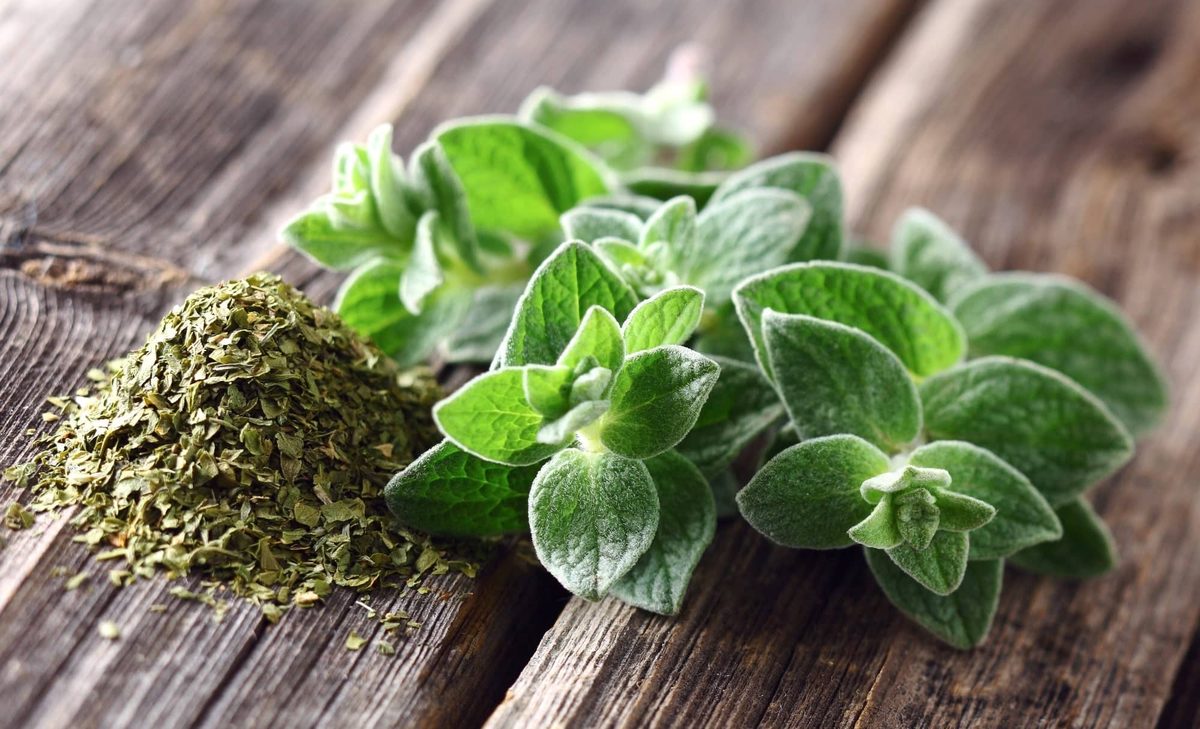
Britannica calls oregano a key ingredient in Mediterranean and Middle Eastern cooking, essential in Italian pizza and pasta sauces, Greek salads and gyros, and notes that it became widely known in the United States only after World War II.1 It is also one of the few herbs cooks often prefer dried: in America’s Test Kitchen’s fresh-versus-dried tests across 24 recipes, chili was the single dish where tasters favored the dried herb.2 This page maps where oregano goes. For timing, amounts and preparation, see cooking with oregano.
At a glance
| Use | Fresh or dried | Example from a named source |
|---|---|---|
| Pizza and pasta sauces | Usually dried | “Essential” (Britannica)1 |
| Greek salad, gyros, Greek seasoning | Dried | 2 teaspoons in gyro meat (Jennifer Segal)3; 2 tablespoons in ATK’s Greek seasoning4 |
| Chili and chili powder | Dried | Cooked with cumin until fragrant (Saveur)5 |
| Chimichurri | Fresh | 3/4 cup chopped fresh oregano (Francis Mallmann)6 |
| Cuban black beans | Fresh sprig | 1 sprig (Saveur)7 |
| Pozole | Dried, at the table | Garnish (Pati Jinich)8 |
| Herbes de Provence | Dried | 26% of the Label Rouge blend9 |
| Dressings, rubs, roast potatoes | Dried | ATK’s Greek seasoning uses4 |
Italian: pizza and pasta sauces
Britannica names Italian pizza and pasta sauces as dishes where oregano is essential.1 It is also one of the five herbs in the USDA’s purchase specification for Italian seasoning, with thyme, rosemary, sage and basil.10 In a cooked tomato sauce, dried oregano is the practical choice: ATK found that dried oregano, rosemary, sage and thyme fared reasonably well in recipes that cooked more than 20 minutes with plenty of liquid.2 ATK also cooked tomato sauce with both Mediterranean and Mexican oregano and noticed minimal differences.11 Fresh leaves scattered over a pizza after baking are a matter of taste (our judgment). See good spices for pizza, Italian seasoning and Italian spices.
Greek and Middle Eastern
- Greek salad and gyros. Both are on Britannica’s short list.1 Jennifer Segal’s home gyro recipe seasons the meat with 2 teaspoons of dried oregano.3 See gyro spices.
- Greek seasoning. America’s Test Kitchen’s homemade blend uses 2 tablespoons of dried oregano and suggests it for salad dressings, feta, baked potatoes and grilled chicken.4 That covers three of the old standbys for oregano in one line: the vinaigrette, the roast potato and the grilled bird. See Greek seasoning.
- Middle Eastern cooking. Britannica lists oregano as a key ingredient there too.1 See Mediterranean spices.
Latin American: chimichurri, chili, beans and pozole
Chimichurri. Britannica describes chimichurri as a sauce of Argentine origin that typically includes parsley, oregano, garlic and red wine vinegar, and links it to the gauchos of the grasslands of present-day Argentina, Uruguay and Paraguay in the 19th century.12 Argentines put little besides salt and pepper on their steaks, Britannica says, and chimichurri is the notable exception.12 In Argentina, fresh parsley, garlic, oregano and chiles form the basis; elsewhere in Latin America, coriander is popular.12 Francis Mallmann’s version in Saveur uses 3/4 cup of finely chopped fresh oregano to 1 cup of parsley, with garlic, chile flakes, olive oil and red wine vinegar, and Saveur pairs it with steak, vegetables and bread off the grill.6 Fresh oregano is what these recipes call for; dried can stand in, but that is our judgment, not a tested swap.
Chili and chili powder. Saveur’s chili con carne cooks oregano with the cumin and flour until fragrant.5 The USDA specification for chili powder lists ground chile, cumin, oregano, salt and garlic powder.10 Chili is also where ATK’s tasters preferred dried oregano to fresh.2 See chili powder.
Black beans. Saveur’s Cuban-style black beans simmer with a single sprig of fresh oregano.7 See Cuban spices.
Pozole. In Pati Jinich’s red pozole, dried oregano is one of the traditional garnishes set out at the table, alongside lime, radish, lettuce, onion, ground dried chile and tostadas.8
Which oregano? Mexican oregano belongs to a different plant family, the Verbenaceae, according to Britannica.1 ATK found it stronger than Mediterranean oregano, with a hint of menthol, but in tomato sauce and mojo-marinated skirt steak it noticed minimal differences between them.11 So use what a recipe names when you have it, and swap freely when you don’t. See Mexican oregano vs. oregano.
French: herbes de Provence
The Label Rouge recipe for herbes de Provence is 26% oregano, with equal shares of savory and rosemary and 19% thyme.9 See herbes de Provence.
Rubs, marinades and dressings
- Dry rubs. The University of Delaware suggests crushing dried herbs first to release some of their oils.13 Rubbing dried oregano between your palms, or grinding it, before mixing it into a rub follows from that; whether a finer grind spreads more evenly is kitchen judgment.
- Marinades. ATK’s oregano comparison used a mojo marinade for skirt steak.11 Chimichurri’s olive oil and red wine vinegar6 make the same kind of base for a marinade (kitchen practice).
- Vinaigrettes. ATK’s Greek seasoning is meant for salad dressings.4
Oregano oil and pesto
Homemade oregano oil and oregano pesto are both herbs in oil. Oregon State University Extension says such mixtures can carry Clostridium botulinum and must be refrigerated and used within 4 days, or frozen.14 An oregano pesto, pounded like basil pesto with garlic, oil and cheese, is kitchen practice; we found no named recipe to cite.
Not yet sourced
- Empanadas as a classic partner for chimichurri.
- Mexican oregano in the “original” chimichurri: Britannica names coriander as the regional variant, not Mexican oregano.
- A named recipe for oregano pesto.
- Whether grinding dried oregano spreads it more evenly in a rub.
Related
- Oregano, cooking with oregano, fresh oregano vs. dried and too much oregano
- Mexican oregano and Mexican oregano substitutes
- Oregano substitutes, marjoram vs. oregano, oregano vs. thyme and basil vs. oregano
- Can you freeze oregano? and how to dry oregano
Footnotes
-
Anoushka Pant, “Oregano”, Encyclopaedia Britannica, 2026. britannica.com · Reference work ↩ ↩2 ↩3 ↩4 ↩5 ↩6
-
“Science: Substituting Dried Herbs for Fresh”, America’s Test Kitchen. americastestkitchen.com · Publication ↩ ↩2 ↩3
-
Jennifer Segal, “Gyros”, Once Upon a Chef, 2023. onceuponachef.com · Publication ↩ ↩2
-
“Homemade Greek Seasoning”, America’s Test Kitchen (Cook’s Country), 2019. americastestkitchen.com · Publication ↩ ↩2 ↩3 ↩4
-
“Chili Con Carne”, Saveur, 2012. saveur.com · Publication ↩ ↩2
-
Francis Mallmann, “Chimichurri”, Saveur, 2023. saveur.com · Publication ↩ ↩2 ↩3
-
“Frijoles Negros (Cuban-Style Black Beans)”, Saveur, 2007. saveur.com · Publication ↩ ↩2
-
Pati Jinich, “Red Pozole with Traditional Garnishes”. patijinich.com · Publication ↩ ↩2
-
Sylvie Carriat, “Les vraies herbes de Provence raniment la flamme”, Réussir Les Marchés, 2008. reussir.fr · Publication ↩ ↩2
-
Commercial Item Description A-A-20001C, Spices and Spice Blends, USDA Agricultural Marketing Service, 2023. ams.usda.gov · Regulator ↩ ↩2
-
“Oregano: Mediterranean and Mexican”, America’s Test Kitchen. americastestkitchen.com · Publication ↩ ↩2 ↩3
-
Ismay Atkins, “Chimichurri”, Encyclopaedia Britannica. britannica.com · Reference work ↩ ↩2 ↩3
-
“Using Herbs and Spices”, University of Delaware Cooperative Extension, 2025. udel.edu · Reference work ↩
-
Raab and Woodburn, “Herbs and Vegetables in Oil” (SP 50-701), Oregon State University Extension Service, 2025. extension.oregonstate.edu · Reference work ↩