Spices · Dish guide
The Best Spices for Rice: Cumin, Bay, Cardamom, Saffron and Garlic
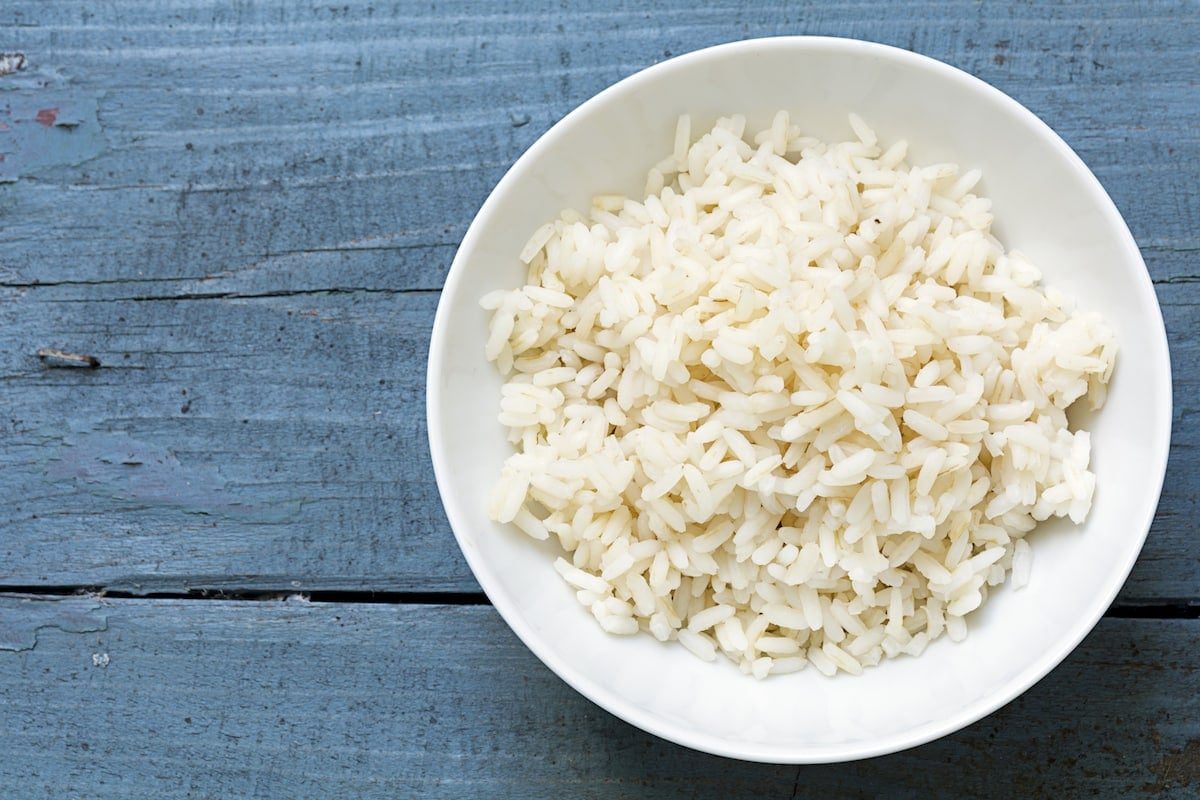
Plain rice takes on the flavor of whatever it cooks with, and most of the classic spiced rices work the same way: whole spices go into hot fat first, then the rice, then the water. Sanjeev Kapoor’s jeera rice fries cumin seeds, a bay leaf, black cardamom and cinnamon in ghee before the rice goes in,1 and Erin Alexander’s Indian pilaf on Food52 does much the same with green cardamom.2 Saffron is the other great rice spice, steeped first and added with the liquid. This page covers what each spice does, the dishes it belongs to, and how to add it. Quantities appear only where a named recipe gives them.
At a glance
| Spice | Job | How it goes in |
|---|---|---|
| Cumin seeds | Warm, earthy aroma | Fried in ghee until they crackle, then the rice1 |
| Bay leaf | Background herbal note | Whole, in the fat or the water12 |
| Cardamom | Floral, resinous aroma | Whole pods fried in fat2 |
| Cinnamon | Sweet warmth | A piece of stick in the fat1 |
| Saffron | Golden color, aroma, slight bitterness | Steeped in water, added with the cooking liquid34 |
| Five-spice powder | Licorice-like warmth | In simmered Chinese rice dishes5 |
| Garlic | Savory, toasty | Fried in oil before the rice, as in sinangag6 |
The whole-spice method
Two named recipes show the pattern:
| Sanjeev Kapoor, jeera rice (serves 4)1 | Erin Alexander, Indian rice pilaf, Food522 | |
|---|---|---|
| Fat | 1 1/2 tbsp ghee | Ghee |
| Rice | 1 1/2 cups basmati | Not recorded in this review |
| Whole spices | 2 tsp cumin seeds, 1 bay leaf, 1 black cardamom, cinnamon stick | 2 green cardamom pods, 2 bay leaves, with cinnamon, cloves, star anise and cumin seeds |
| Order | Spices into hot ghee; rice when the cumin crackles; then 3 cups water | Spices sautéed in ghee 2 to 3 minutes first |
Alexander says the spices are sautéed to release their oils and calls that step the base of the dish.2 Monica Bhide’s NPR guide to Indian tempering describes the same idea: whole or ground spices heated in hot oil or ghee.7 America’s Test Kitchen explains that many spice flavor compounds are fat-soluble, which is why blooming spices in fat brings out more flavor.8
Cumin
PROSEA lists rice among the foods that cumin flavors worldwide, along with soups, meat dishes and stews.9 In jeera rice it is the lead spice: Kapoor uses 2 teaspoons of whole seeds for 1 1/2 cups of rice and adds the rice once the seeds crackle.1
Whole seeds are the usual choice for rice. Ground cumin can work, but America’s Test Kitchen warns that ground spices burn fairly quickly in hot fat, leaving a scorched flavor,8 so stir it in briefly or add it with the water. Bhide’s warning applies to both: there is no saving a burned tadka.7 See cumin seeds vs. ground cumin and cumin uses.
Bay leaf
Both Indian recipes above put whole bay leaves in the fat.12 A bay leaf adds a quiet background note rather than a flavor you can name. Fresh bay is much stronger than dried: Milk Street cooked plain rice with fresh bay laurel, dried Turkish bay and dried Indian bay, and found the fresh leaf easily the most prominent, with a striking eucalyptus-like flavor.10 It advises using half as much when substituting fresh for dried.10 Fish the leaves out before serving (common practice). See cooking with bay leaves.
Cardamom and cinnamon
PROSEA notes that cardamom plays an important role in Asian spiced rice, vegetable and meat dishes.11 Alexander’s pilaf uses 2 whole green cardamom pods;2 Kapoor’s jeera rice uses a single black cardamom,1 which is a different spice; see black cardamom vs. green. Leaving the pods whole keeps the flavor gentle and lets you remove them; that is common practice rather than a tested rule. See cooking with cardamom, cardamom pods vs. seeds and black cardamom.
Kapoor adds a piece of cinnamon stick to the ghee,1 and Alexander’s pilaf uses cinnamon too.2 Together, cumin, bay, cardamom and cinnamon fried in ghee are the base of Kapoor’s jeera rice.1
Saffron
Britannica says saffron colors and flavors many Mediterranean and Asian dishes, particularly rice and fish.12 Its golden color comes from crocin,12 and it has a strong aroma and a bitter taste.12 Gernot Katzer notes that saffron matters more in Central Asia and northern India than in today’s Europe, and is used extensively there for rice dishes.3
How to add it. Steep it first. Katzer says the dry spice releases its fragrance too slowly, and that the threads can be soaked overnight in water and the water then added to the dish.3 A University of Vermont recipe for Persian jeweled rice sprinkles 1 teaspoon of threads, about half a gram, into 1/4 cup of hot water and sets it aside.4 The infusion then goes in with the cooking liquid. Katzer warns against prolonged cooking, which costs aroma.3 See cooking with saffron.
Where it is used. Saffron rice dishes span several cuisines:
- Paella: Britannica describes it as saffron-flavored rice cooked with meats, seafood and vegetables.13 See paella spices.
- Risotto alla milanese: Katzer’s example from Italy.3
- Biryani: a rice dish of Persian origin that became a celebratory dish in South Asia; one Hyderabad version is seasoned with coconut and saffron.14
- Persian jeweled rice: the Vermont recipe above.4
A common claim calls saffron the most popular spice for rice, or says it is mostly used with basmati. We found no source that ranks it or ties it to one variety. See saffron uses.
Five-spice powder
Britannica describes five-spice powder as usually fennel seeds, cassia, cloves, star anise and Szechuan pepper, and says many variations exist.5 The Woks of Life lists additions such as ginger, nutmeg, licorice, orange peel and galangal.15 So it usually is five spices, though versions with more exist. Britannica says it flavors the full range of Chinese dishes, from roast meats to simmered rice.5 Use it sparingly in rice, since a little goes far; that is our judgment, not a tested amount. A widely repeated suggestion says it suits brown rice especially well; we found no source for that. See Chinese five-spice powder, star anise and Szechuan pepper.
Garlic
Garlic rice is a dish in its own right in the Philippines. Lalaine Manalo’s sinangag cooks a minced head of garlic in 1/4 cup of oil over low heat until golden brown, so that it infuses the oil before browning, then fries 4 cups of cold, cooked rice in it with salt and pepper.6 She calls for leftover rice because it is drier and firmer.6
In sinangag the garlic oil is made and used in one go. If you make garlic oil ahead for rice, the storage rules matter. University of California Agriculture and Natural Resources says not to store garlic in oil at room temperature, and to refrigerate homemade garlic oil and use it within 4 days, because garlic in oil can support the growth of Clostridium botulinum.16 Garlic powder stirred into the cooking water is the other easy route (common practice). See garlic powder and too much garlic.
Related
- Cumin uses and cooking with cardamom
- Saffron uses and paella spices
- Do spices go bad?
- The master list of herbs and spices
Footnotes
-
Sanjeev Kapoor, “Jeera Rice”, sanjeevkapoor.com. sanjeevkapoor.com · Publication ↩ ↩2 ↩3 ↩4 ↩5 ↩6 ↩7 ↩8 ↩9 ↩10
-
Erin Alexander, “Indian Rice Pilaf With Tomato-Onion Raita & Crispy Papad”, Food52. api.food52.com · Publication ↩ ↩2 ↩3 ↩4 ↩5 ↩6 ↩7 ↩8
-
Gernot Katzer, “Saffron (Crocus sativus L.)”, Gernot Katzer’s Spice Pages. gernot-katzers-spice-pages.com · Reference work ↩ ↩2 ↩3 ↩4 ↩5
-
Margaret Skinner, “A Sample of Saffron Delicacies”, University of Vermont, 2021. uvm.edu · Reference work ↩ ↩2 ↩3
-
Tony Hill, “Five-spice powder”, Encyclopaedia Britannica. britannica.com · Reference work ↩ ↩2 ↩3
-
Lalaine Manalo, “Sinangag (Garlic Fried Rice)”, Kawaling Pinoy. kawalingpinoy.com · Publication ↩ ↩2 ↩3
-
Monica Bhide, “The Crackling Spices of Indian Tempering”, NPR, 2011. npr.org · Publication ↩ ↩2
-
“How to Bloom Spices”, America’s Test Kitchen, 2023. americastestkitchen.com · Publication ↩ ↩2
-
P.C.M. Jansen, “Cuminum cyminum”, PROSEA. uses.plantnet-project.org · Reference work ↩
-
“What’s the Deal with Bay Leaves and Do You Actually Have to Use Them?”, Milk Street, 2020. 177milkstreet.com · Publication ↩ ↩2
-
T.H. Wardini and A. Thomas, “Elettaria cardamomum”, PROSEA. uses.plantnet-project.org · Reference work ↩
-
“Saffron”, Encyclopaedia Britannica. britannica.com · Reference work ↩ ↩2 ↩3
-
“Paella”, Encyclopaedia Britannica. britannica.com · Reference work ↩
-
Gregory Lewis McNamee, “Biryani”, Encyclopaedia Britannica. britannica.com · Reference work ↩
-
“Five Spice Powder”, The Woks of Life, 2020. thewoksoflife.com · Publication ↩
-
Linda J. Harris, “Garlic: Safe Methods to Store, Preserve, and Enjoy”, UC Agriculture and Natural Resources, 2016. ccfruitandnuts.ucanr.edu · Reference work ↩