Spices · Profile
Hungarian Spices: Paprika, Caraway, Marjoram, Bay and Garlic, and What the Sources Say
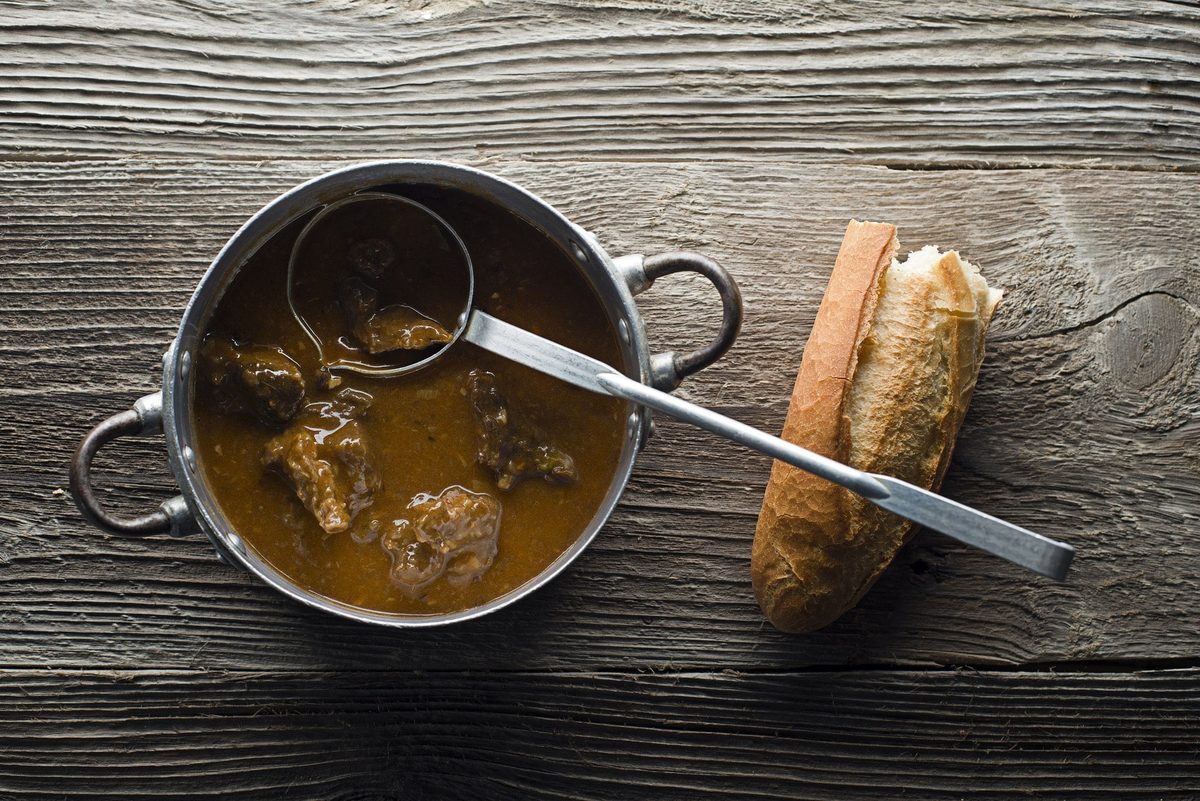
Hungarian cooking is built on paprika. Around it sit a handful of other seasonings: caraway, which Hungarians call kömény, plus marjoram, bay leaf and garlic. This page covers each one, what the sources actually say about its role in Hungarian food, and where to go for the full profile.
At a glance
| Spice | What it is | Hungarian uses in the sources | Full profile |
|---|---|---|---|
| Paprika | Ground dried Capsicum annuum pods, domesticated in Mexico12 | Goulash, paprikash, fish soup34 | Paprika |
| Caraway | Fruit of Carum carvi, carrot family (Apiaceae)5 | Stirred in with paprika in a published Hungarian recipe4 | Caraway seeds |
| Marjoram | Origanum majorana, native to southern Türkiye and Cyprus6 | No Hungarian-specific source found | Marjoram |
| Bay leaf | Laurus nobilis, native to the Mediterranean7 | No Hungarian-specific source found | Bay leaves |
| Garlic | Allium sativum, native to Central Asia to northeastern Iran8 | No Hungarian-specific source found | Garlic |
| Cumin | Cuminum cyminum; in Hungarian római kömény9 | Easily confused with caraway (below) | Cumin |
Measured values
2 figures, sourced| Measure | Value | Scope | Source |
|---|---|---|---|
| Capsaicin, maximum (non-pungent paprika) Limit | 100 mg/kg | Szegedi paprika PDO single document | dfat.gov.au |
| Ground paprika adulterated with red lead | 5.8 % of samples | 3,432 random samples of Hungarian ground paprika, 1994 reportHistorical adulteration finding, 1994 | lead.org.au |
Each figure is quoted as its source states it, with the samples or standard it applies to. Where sources differ, both are shown; nothing is averaged. All measured values
Paprika
Paprika is the ground, dried fruit of Capsicum annuum.2 The plant was domesticated in Mexico; a 2014 study combining four lines of evidence points to central-east Mexico.1 Peppers reached Europe through Spain after the voyages to the Americas, and reached Hungary through the Turks.10 Sharon Hudgins dates pepper cultivation in Hungary to the Turkish occupation of the sixteenth and seventeenth centuries.4
The word itself is Hungarian. The Online Etymology Dictionary records it in English from 1839 and explains it as a Hungarian diminutive of the Serbo-Croatian papar, pepper, which goes back to Latin piper.11
When paprika became the Hungarian spice
Paprika did not become central overnight. Hudgins writes that it was found only in peasant dishes at first and gained widespread acceptance in Hungarian food only in the late eighteenth century, gradually moving into the cooking of the gentry and nobility.4 A 2026 Telex survey of goulash recipes finds that beef recipes in cookbooks before 1876 did not know paprika at all, and treats Rézi néni’s Szegedi szakácskönyv (1876) as the first known written recipe for goulash, under the name gulyáshús, sprinkled with paprika.12
The paprika itself has also changed. According to the Hungarikum Committee, Hungarian paprika was hot until the 1940s.13 Sweet varieties were selected from non-pungent plants that Ferenc Horváth found in Kalocsa in the 1930s.10
Where it goes
Michelin’s guide to Hungarian paprika names goulash and paprikash as the key traditional dishes, and quotes a Budapest chef who uses ground paprika for goulash and fish soup, and several kinds of fresh peppers for lecsó, which the article calls a Hungarian version of ratatouille.3 Hudgins gives a paprika fish soup, sometimes called “the bouillabaisse of Hungary,” that she says began with fishermen cooking over campfires.4 A widely repeated claim that Hungarian fish soup is one of the hottest native dishes in Europe could not be traced to any source.
Grades and heat
Hungarian paprika is sold by grade, not just as sweet, hot or smoked. Michelin counts eight traditional grades, from mild to pungent, and says édesnemes (noble sweet) is the most commonly used in Hungarian cooking; rozsdás (rusty) is the one with a more pronounced, smoky flavor.3 Hungary’s Food Codex sets four heat classes by capsaicinoid content, from non-pungent to very hot (nagyon csípős).14
Two producing regions hold EU protected designations of origin. Szeged’s PDO sets a capsaicin limit of 100 mg/kg for non-pungent paprika and records that the Szeged area was declared a restricted paprika zone in 1934.15 Kalocsa’s PDO notes that the area’s first paprika drying plant was built in 1880.16
A safety episode worth knowing
In 1994, Hungarian ground paprika was adulterated with red lead. A report from that year says 5.8% of 3,432 random samples tested were adulterated,17 and a clinical paper on the outbreak describes 53 patients with symptoms and signs of lead poisoning.18 See the paprika profile for current contaminant limits and adulteration testing.
See also smoked paprika, paprika vs. cayenne, paprika vs. chili powder and paprika substitutes.
Caraway (kömény)
Caraway is the fruit of Carum carvi, a member of the carrot family (Apiaceae) whose native range Kew gives as temperate Eurasia.5 Britannica describes an aroma reminiscent of anise and a warm, slightly sharp taste;19 PROSEA names carvone and limonene as the main components of the oil.20 Hungary is one of the main producers of winter-type caraway, along with the Netherlands, Poland and Russia.20
Katzer calls caraway a spice loved mostly in Northern, Central and Eastern Europe, and lists its Hungarian names as köménymag and kömény.21 In Hudgins’s Hungarian recipes, caraway seeds are stirred in with the paprika and salt.4 Caraway is often said to belong in goulash, vegetable stews (főzelék) and caraway seed soup; that is plausible, and the soup’s Hungarian name (köménymagos leves) contains the word for caraway seed, but no source opened for this page documents those dishes.
See caraway seeds, cooking with caraway seeds and caraway substitutes.
Cumin, and the kömény mix-up
In Hungarian, the plain word kömény means caraway; cumin is római kömény (“Roman caraway”) or egyiptomi kömény.9 Katzer notes that many languages lack a separate word for caraway and use the word for cumin instead,21 and that poor distinction between the two names can lead to troublesome confusion in cooking.9 He also says cumin is of little importance as a traditional flavoring in most of Northern and Eastern Europe.9
That matters when reading English-language Hungarian recipes. A claim that cumin is essential to Hungarian stuffed cabbage could not be traced; where an English recipe calls for “cumin” in a Hungarian dish, check whether the original said kömény, which is caraway. See caraway seeds vs. cumin.
Marjoram
Marjoram (Origanum majorana) is a mint-family herb native, according to Kew, to southern Türkiye and Cyprus.6 Britannica describes its flavor as warm, aromatic, slightly sharp and bitterish,22 and a 2022 review credits its sweet note to cis-sabinene hydrate.23 Marjoram is commonly mentioned as a goulash and tokány seasoning, but no source opened for this page confirms either use. See marjoram, cooking with marjoram and marjoram vs. oregano.
Bay leaves
Bay leaves come from Laurus nobilis, native to the Mediterranean.7 Atlas Obscura describes their flavor as herbal, bitter and slightly piney.24 Bay is often listed for Hungarian stuffed cabbage (töltött káposzta) and Jókai bean soup, but no source for its Hungarian use was found. See bay leaves, cooking with bay leaves and bay leaf substitutes.
Garlic
Garlic (Allium sativum) is native to Central Asia to northeastern Iran,8 and Britannica describes its powerful onionlike aroma and pungent taste.25 Its place in Hungarian food is widely assumed, and Hudgins’s recipes include it,4 but claims that it arrived in Hungary in the 1400s, or that it is essential to particular dishes, could not be traced. See garlic and garlic powder.
Related pages
- Paprika and smoked paprika
- Caraway seeds and caraway vs. cumin
- German spices, a neighboring caraway-and-marjoram cuisine
- The master list of herbs and spices
Footnotes
-
Multiple lines of evidence for the origin of domesticated chili pepper, Capsicum annuum, in Mexico (PNAS 111(17), 2014), Proceedings of the National Academy of Sciences (via eScholarship, University of California). escholarship.org · Peer-reviewed ↩ ↩2
-
Standard for Dried or Dehydrated Chilli Pepper and Paprika (CXS 353-2022, amended 2025), Codex Alimentarius Commission, FAO/WHO. fao.org · Standard ↩ ↩2
-
Paprika: why this smoky spice plays a crucial role in Hungarian cuisine (2023), MICHELIN Guide. guide.michelin.com · Publication ↩ ↩2 ↩3
-
Paprika: Hungary’s Red Gold (Sharon Hudgins, 2008), Fiery Foods & Barbecue Central. fieryfoodscentral.com · Publication ↩ ↩2 ↩3 ↩4 ↩5 ↩6 ↩7
-
Carum carvi L., Plants of the World Online, Royal Botanic Gardens, Kew. powo.science.kew.org · Reference work ↩ ↩2
-
Origanum majorana L., Plants of the World Online, Royal Botanic Gardens, Kew. powo.science.kew.org · Reference work ↩ ↩2
-
Laurus nobilis L., Plants of the World Online, Royal Botanic Gardens, Kew. powo.science.kew.org · Reference work ↩ ↩2
-
Allium sativum L., Plants of the World Online, Royal Botanic Gardens, Kew. powo.science.kew.org · Reference work ↩ ↩2
-
Cumin (Cuminum cyminum L.), Gernot Katzer’s Spice Pages. gernot-katzers-spice-pages.com · Reference work ↩ ↩2 ↩3 ↩4
-
La conservación y producción de Capsicum en Hungría y la cooperación científica España-Hungría en la mejora del pimiento para pimentón (paprika) (Pék et al.), Ministerio de Agricultura, Pesca y Alimentación (Spain), library archive. mapa.gob.es · Reference work ↩ ↩2
-
paprika (n.), Online Etymology Dictionary. etymonline.com · Reference work ↩
-
Magyar ételek legrégebbi és legújabb receptje: a gulyás (Ács Bori, 16 Jul 2026), Telex. telex.hu · Publication ↩
-
Ground paprika from Szeged, Hungarikum Committee (Collection of Hungarikums). hungarikum.hu · Reference work ↩
-
MÉ 2-108: Megkülönböztető minőségi jelöléssel ellátott fűszerpaprika-őrlemény (Hungarian Food Codex directive, 2013), Magyar Élelmiszerkönyv Bizottság (Hungarian Food Codex Committee). elelmiszerlanc.kormany.hu · Standard ↩
-
Szegedi fűszerpaprika-őrlemény / Szegedi paprika: PDO single document, European Union PDO application (copy hosted by Australian Department of Foreign Affairs and Trade). dfat.gov.au · Regulator ↩
-
Kalocsai fűszerpaprika-őrlemény: PDO single document (OJ C 303, 14.10.2011), European Union PDO application (copy hosted by Australian Department of Foreign Affairs and Trade). dfat.gov.au · Regulator ↩
-
Adulteration of Paprika in Hungary (from Analysis Europa, December 1994), LEAD Action News, Vol 3 No 3 (The LEAD Group). lead.org.au · Publication ↩
-
Lead intoxication epidemic caused by ingestion of contaminated ground paprika (Kákosy, Hudák, Náray; J Toxicol Clin Toxicol 34(5):507-511, 1996), FAO AGRIS record. agris.fao.org · Peer-reviewed ↩
-
Caraway, Encyclopaedia Britannica. britannica.com · Reference work ↩
-
Carum carvi (PROSEA), H. Toxopeus and J.H. Lubberts, Plant Resources of South-East Asia, via Pl@ntUse. uses.plantnet-project.org · Reference work ↩ ↩2
-
Caraway (Carum carvi L.), Gernot Katzer’s Spice Pages, Gernot Katzer. gernot-katzers-spice-pages.com · Reference work ↩ ↩2
-
Marjoram (revised by Sohini Dasgupta), Encyclopaedia Britannica. britannica.com · Reference work ↩
-
Origanum majorana Essential Oil: A Review of Its Chemical Profile and Pesticide Activity (Kakouri et al., Life 12(12):1982, 2022), Life (MDPI). mdpi.com · Peer-reviewed ↩
-
What Is a Bay Leaf, Exactly? (Andrew Coletti, 2023), Atlas Obscura. atlasobscura.com · Publication ↩
-
Garlic (Britannica Editors, revised by Michele Metych, updated 12 Sep 2026), Encyclopaedia Britannica. britannica.com · Reference work ↩