Spices · Profile
Italian Herbs and Spices: Garlic, Basil, Oregano, Rosemary, Sage and the Rest
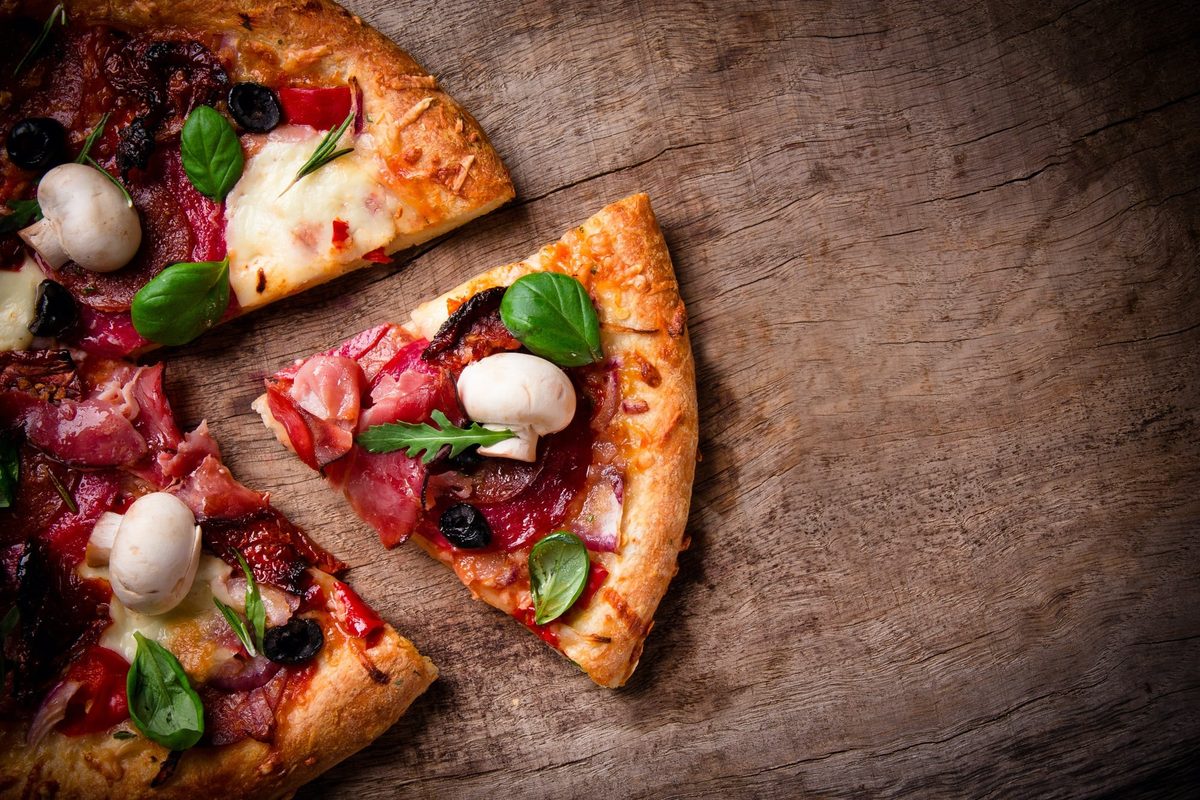
Italian kitchens are more likely to reach for fresh herbs than dried blends.1 The herbs covered here are basil, oregano, rosemary, sage, bay leaf and marjoram, along with garlic, dried chile and fennel pollen. This page covers what the sources say about each, with links to our full profiles.
At a glance
| Herb or spice | Botanical source | Italian uses in the sources | Full profile |
|---|---|---|---|
| Garlic | Allium sativum, native Central Asia to NE Iran2 | Grows wild in Italy3 | Garlic |
| Basil | Ocimum basilicum, mint family45 | Pizza, pasta, chicken and cheese dishes, pesto6 | Basil |
| Oregano | Origanum vulgare | Pizza and pasta sauces7 | Oregano |
| Rosemary | Salvia rosmarinus, native to the Mediterranean8 | Meats, vegetables, soups9 | Rosemary |
| Sage | Salvia officinalis, native SW Germany to southern Europe10 | Saltimbocca alla romana11 | Sage |
| Bay leaf | Laurus nobilis, native to the Mediterranean12 | Long-cooked dishes, removed before serving | Bay leaves |
| Marjoram | Origanum majorana13 | Close cousin of oregano | Marjoram |
| Chile flakes | Dried Capsicum | Finishing sprinkle for pizza and pasta14 | Red pepper flakes |
| Fennel pollen | Pollen of wild fennel | Hand-gathered from wild fennel in northern Italy15 | Fennel pollen |
Measured values
2 figures, sourced| Measure | Value | Scope | Source |
|---|---|---|---|
| Oregano essential oil: carvacrol and thymol combined | 78 to 85 % of the essential oil (roughly) | scope not stated on source pageFigure is for oregano, one herb on this roundup page | mdpi.com |
| Oregano samples suspicious of adulteration | 48 % of samples | EU-wide coordinated control plan, oregano samplesMostly adulterated with olive leaves | publications.jrc.ec.europa.eu |
Each figure is quoted as its source states it, with the samples or standard it applies to. Where sources differ, both are shown; nothing is averaged. All measured values
A note on “Italian seasoning”
The jar labeled Italian seasoning is an American product. A Tasting Table piece says you would be hard-pressed to find a bottle labeled “Italian seasoning” in Italy, and that Italian kitchens are far more likely to use fresh herbs than dried.1 The USDA’s purchasing specification for the blend lists thyme, rosemary, sage, oregano and basil.16 See Italian seasoning, Italian seasoning substitutes and herbes de Provence vs. Italian seasoning.
Garlic
Garlic is native to Central Asia to northeastern Iran,2 but Britannica notes that it now grows wild in Italy and southern France, and describes a powerful onionlike aroma and pungent taste.3 Its use is ancient: ancient medical texts from Egypt, Greece, Rome, China and India mention it.17 Whether it is the single most important Italian seasoning is a judgment, not something a source measures.
Garlic burns easily. America’s Test Kitchen warns that it turns acrid and bitter if it goes into hot oil too soon.18 On health, NCCIH’s summary is cautious; for example, eating garlic does not seem to reduce the risk of stomach cancer.19 See garlic, fresh garlic substitutes and too much garlic.
Basil
Sweet basil (Ocimum basilicum) is a mint-family herb5 whose native range Kew gives as tropical and subtropical Asia to northern Australia.4 PROSEA says that in Italian cooking the leaves go into pizzas, pasta, chicken and cheese dishes, and the famous pesto.6 Britannica describes dried basil’s flavor as warm, sweet, aromatic and mildly pungent.5 It is a delicate herb: the LSU AgCenter advises adding it a minute or two before the end of cooking.20
Pesto takes its name from the Italian verb pestare, to crush, and its best-known form, from Genoa, combines basil, pine nuts, garlic, grated Parmesan and olive oil.21 Italy’s tourism site dates the first official recipe to 1865.22 Basilico Genovese, the protected basil for pesto, can be grown only on the Tyrrhenian side of Liguria under its PDO specification.23 The German risk assessor BfR notes that basil pesto may contain high amounts of methyleugenol and estragole, compounds that are carcinogenic in animal studies, but it has not issued a consumer recommendation.24
See basil, Genovese basil, dried vs. fresh basil and too much basil.
Oregano
Britannica calls oregano essential in Italian pizza and pasta sauces, and describes a strong aroma and warm, pungent taste.7 The sharp flavor comes from carvacrol and thymol, which make up roughly 78 to 85% of the essential oil.25 It became widely known in the United States after World War II, when soldiers returning from Italy made it popular.7
Dried oregano is the form most Americans know. The University of Delaware’s extension service notes that dried herbs are stronger than fresh,26 so the common claim that fresh oregano is too pungent to cook with does not hold as a rule. Buy from a trusted source: an EU-wide check found 48% of oregano samples suspicious of adulteration, mostly with olive leaves.27 See oregano, fresh vs. dried oregano, oregano vs. marjoram and good spices for pizza.
Rosemary
Rosemary, now classified as Salvia rosmarinus, is native to the Mediterranean.8 Britannica describes a pungent, slightly bitter taste and lists meats, vegetables and soups among its uses.9 America’s Test Kitchen classes rosemary as a hearty herb to add early in cooking, because its flavor compounds are somewhat more heat-stable than those of delicate herbs.28 See rosemary, cooking with rosemary and rosemary vs. sage.
Sage
Kew gives the native range of common sage as southwestern Germany to southern Europe.10 PROSEA lists its main spice uses as sausages, stuffings and soups, and credits its strong smell to thujones.29 In Rome, sage is one of the three main ingredients of saltimbocca alla romana, with veal and prosciutto; Saveur calls the dish a mainstay of Roman trattorias.11 Sage is also widely paired with gnocchi and risotto, though no source opened for this page documents those uses. Thujone is why NCCIH says sage may be unsafe in pregnancy, though food amounts are likely safe.30 See sage, fresh vs. dried sage and too much sage.
Bay leaves
Bay laurel (Laurus nobilis) is native to the Mediterranean.12 The leaves go in early and come out before serving. J. Kenji López-Alt’s reason is texture: dried bay leaves are tough.31 There is a safety reason too: whole leaves are rigid and can have sharp points and margins, and a published case report describes a bay leaf perforating the bowel.32 See bay leaves, cooking with bay leaves and too much bay leaf.
Marjoram
Marjoram (Origanum majorana) is in the same genus as oregano,13 and Britannica describes its flavor as warm, aromatic, slightly sharp and bitterish.33 Its particular uses in Italian cooking were not documented by any source opened for this page. See marjoram and marjoram vs. oregano.
Chile and fennel pollen
Dried chile flakes are a finishing sprinkle for pizza and pasta.14 Fennel pollen, a more specialized ingredient, has long been hand-harvested from wild fennel by cooks in northern Italy,15 and the food writer Faith Willinger introduced it to an American audience, bringing American chefs to a Tuscan butcher shop in the 1990s.34 See red pepper flakes and fennel pollen.
Related pages
- Mediterranean spices
- Dried herbs vs. fresh
- Flat-leaf vs. Italian parsley
- The master list of herbs and spices
Footnotes
-
Why Italian Seasoning Isn’t A Thing In Italy (And Where It Actually Came From) (Zoë Lourey-Christianson, 24 Dec 2024), Tasting Table. tastingtable.com · Publication ↩ ↩2
-
Allium sativum L., Plants of the World Online, Royal Botanic Gardens, Kew. powo.science.kew.org · Reference work ↩ ↩2
-
Garlic (Britannica Editors, revised by Michele Metych, updated 12 Sep 2026), Encyclopaedia Britannica. britannica.com · Reference work ↩ ↩2
-
Ocimum basilicum L., Plants of the World Online, Royal Botanic Gardens, Kew. powo.science.kew.org · Reference work ↩ ↩2
-
Basil (revised by Sohini Dasgupta, updated 19 Sep 2026), Encyclopaedia Britannica. britannica.com · Reference work ↩ ↩2 ↩3
-
Ocimum basilicum (PROSEA), N.O. Aguilar, Pham Truong Thi Tho and L.P.A. Oyen, Plant Resources of South-East Asia, via Pl@ntUse. uses.plantnet-project.org · Reference work ↩ ↩2
-
Oregano, by Anoushka Pant (updated 1 Oct 2026), Encyclopaedia Britannica. britannica.com · Reference work ↩ ↩2 ↩3
-
Salvia rosmarinus Spenn., Plants of the World Online, Royal Botanic Gardens, Kew. powo.science.kew.org · Reference work ↩ ↩2
-
Rosemary (revised by Anoushka Pant, updated 4 Sep 2026), Encyclopaedia Britannica. britannica.com · Reference work ↩ ↩2
-
Salvia officinalis L., Plants of the World Online, Royal Botanic Gardens, Kew. powo.science.kew.org · Reference work ↩ ↩2
-
Veal Saltimbocca (Saltimbocca alla Romana) (SAVEUR Editors, 3 Sep 2019), Saveur. saveur.com · Publication ↩ ↩2
-
Laurus nobilis L., Plants of the World Online, Royal Botanic Gardens, Kew. powo.science.kew.org · Reference work ↩ ↩2
-
Origanum majorana L., Plants of the World Online, Royal Botanic Gardens, Kew. powo.science.kew.org · Reference work ↩ ↩2
-
Red Pepper, McCormick Science Institute. mccormickscienceinstitute.com · Merchant ↩ ↩2
-
Fennel Pollen: What It Is & How to Use It (Join the Fennel Pollen Fan Club), America’s Test Kitchen. americastestkitchen.com · Publication ↩ ↩2
-
Commercial Item Description A-A-20001C: Spices and Spice Blends (28 Aug 2023), USDA Agricultural Marketing Service. ams.usda.gov · Regulator ↩
-
Historical perspective on the use of garlic (Rivlin, Journal of Nutrition 131(3 Suppl):951S-954S, 2001), abstract, Memorial Sloan Kettering Cancer Center research repository. synapse.mskcc.org · Peer-reviewed ↩
-
Why You Should Wait to Add Garlic (Liz Bomze, 2023), America’s Test Kitchen. americastestkitchen.com · Publication ↩
-
Garlic: Usefulness and Safety (last updated February 2025), National Center for Complementary and Integrative Health, NIH. nccih.nih.gov · Regulator ↩
-
Flavorful Herbs, LSU AgCenter. lsuagcenter.com · Reference work ↩
-
Pesto (Gregory Lewis McNamee), Encyclopaedia Britannica. britannica.com · Reference work ↩
-
Pesto Genovese in Liguria, Italia.it, official tourism website of Italy (ENIT / Ministry of Tourism). italia.it · Publication ↩
-
Basilico Genovese DOP, disciplinare di produzione (product specification), European Commission, eAmbrosia geographical indications register. webgate.ec.europa.eu · Regulator ↩
-
Alkenylbenzenes in food: how large is the health risk? (BfR Communication No. 22/2022, 2 August 2022), German Federal Institute for Risk Assessment (BfR). bfr.bund.de · Regulator ↩
-
A Recent Insight Regarding the Phytochemistry and Bioactivity of Origanum vulgare L. Essential Oil (Lombrea et al., Int J Mol Sci 21(24):9653, 2020), International Journal of Molecular Sciences (MDPI). mdpi.com · Peer-reviewed ↩
-
Using Herbs and Spices (revised by Diane Oliver, August 2025), University of Delaware Cooperative Extension. udel.edu · Reference work ↩
-
Results of an EU wide coordinated control plan to establish the prevalence of fraudulent practices in the marketing of herbs and spices (Maquet et al., EUR 30877 EN, 2021), European Commission, Joint Research Centre. publications.jrc.ec.europa.eu · Regulator ↩
-
Our Guide to Fresh Herbs (Liz Bomze, 2019), America’s Test Kitchen. americastestkitchen.com · Publication ↩
-
Salvia officinalis (PROSEA), U.A. Dasuki, Plant Resources of South-East Asia, via Pl@ntUse. uses.plantnet-project.org · Reference work ↩
-
Sage (last updated April 2025), National Center for Complementary and Integrative Health, NIH. nccih.nih.gov · Regulator ↩
-
Bay leaves are an optional ingredient, ‘but things are definitely better with them’ (David Leite with J. Kenji López-Alt, 2014), The Splendid Table. splendidtable.org · Publication ↩
-
Bay leaf perforation of Meckel’s diverticulum (Bell CD, Mustard RA, Can J Surg 40(2):146–147, 1997), Canadian Journal of Surgery. canjsurg.ca · Peer-reviewed ↩
-
Marjoram (revised by Sohini Dasgupta), Encyclopaedia Britannica. britannica.com · Reference work ↩
-
Eat This Word: Fennel Pollen (20 June 2011), James Beard Foundation. jamesbeard.org · Publication ↩