Cooking · Dish guide
Mulling Spices for Apple Cider: Cinnamon, Cloves, Allspice, Citrus and the Optional Extras
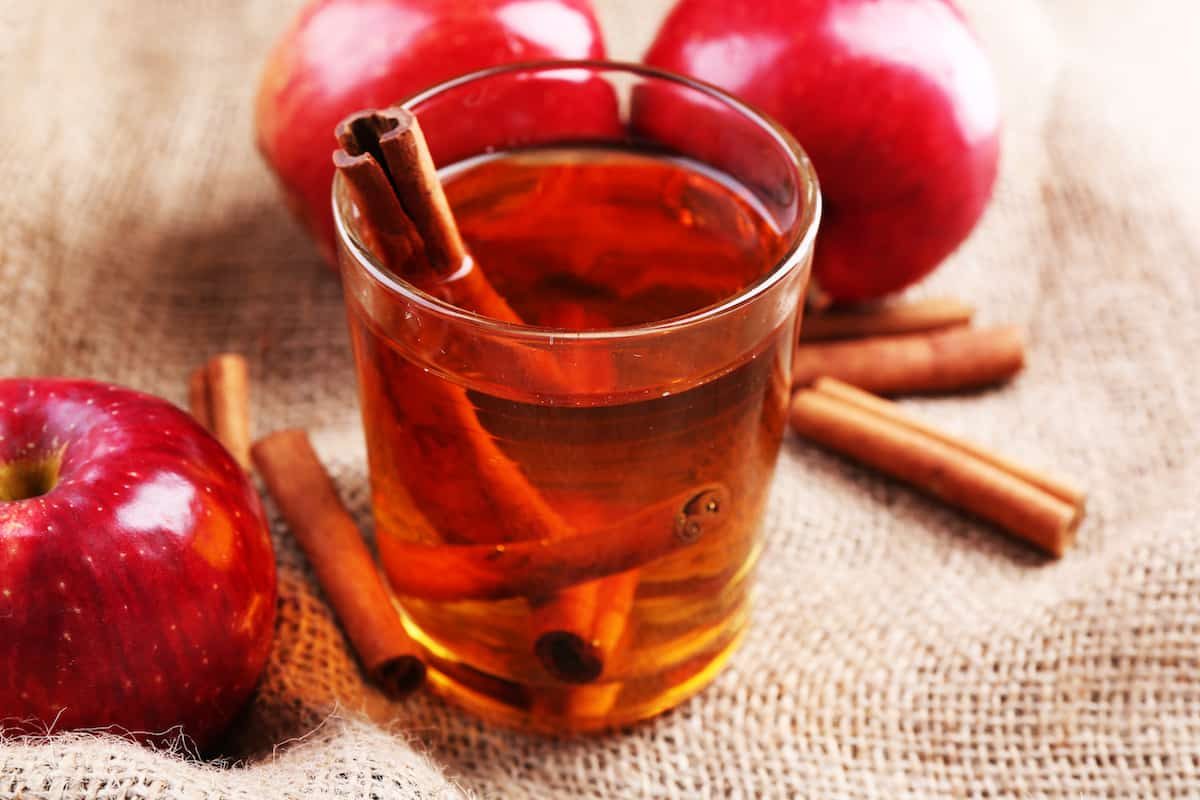
Mulled cider is apple cider or juice heated slowly with whole spices and, usually, citrus. The two recipes compared here agree on two spices, cinnamon sticks and whole cloves, and then go separate ways: one adds allspice, the other ginger and star anise. That pairing has deep roots: European Union law defines Glühwein, the German mulled wine, as flavored mainly with cinnamon and/or cloves.1 This page covers the job each spice does, how much the named recipes use, and the two safety points worth knowing. Quantities appear only where a named recipe gives them.
At a glance
| Spice | What it brings | In the recipes cited |
|---|---|---|
| Cinnamon sticks | Sweet, woody warmth | Both23 |
| Cloves | Strong, hot, pungent aroma | Both23 |
| Allspice | Clove-like warmth with a peppery edge | Food Hero (Oregon State)2 |
| Orange (and other fruit) | Citrus brightness | Both: halved oranges in one; orange, lemon and apple slices in the other23 |
| Ginger | Pungent bite | Thatchers3 |
| Star anise | Licorice-like sweetness | Thatchers3 |
| Nutmeg | Warm, slightly sweet note | Neither; an optional extra |
| Cardamom | Floral, camphor-like lift | Neither; an optional extra |
Two recipes side by side
| Recipe | Liquid | Spices | Fruit | Heat |
|---|---|---|---|---|
| Hot Apple Orange Cider, Food Hero, Oregon State University Extension2 | 8 cups 100% apple juice plus 4 cups water | 6 cinnamon sticks, 12 whole cloves, 2 whole allspice | 2 oranges, halved | Bring to a boil, then simmer 2 hours |
| Mulled Cider, Thatchers Cider3 | 2 liters hard cider | 2 cinnamon sticks, 5 cloves, 8 slices ginger, 2 star anise, plus 5 tbsp soft brown sugar | 1 orange, 1 lemon, 1 apple, sliced | Simmer gently 30 minutes; do not boil |
These are the named makers’ recipes, not a house standard. The Food Hero version is nonalcoholic and simmers long; the Thatchers version uses alcoholic cider and tells you not to let it boil.23 Thatchers also gives ground alternatives: ½ teaspoon ground cinnamon for the two sticks, ½ teaspoon ground cloves for the five cloves, and 1 teaspoon ground ginger for the eight slices.3
Where spiced drinks come from
Spiced wine is far older than mulled cider. According to Apollo, a cookbook compiled in fifth-century Rome but attributed to the first-century gourmet Apicius includes a spiced wine, conditum paradoxum, and a travelers’ wine with honey and pepper.4 The same article traces the medieval spiced wine hippocras, whose name probably comes from Hippocrates.4 The sources found for this page do not trace when the practice moved from wine to cider, so that history is left out here.
The core spices and what each does
Cinnamon: the backbone
Both recipes use cinnamon sticks.23 Most of cinnamon’s sweet, warm smell comes from cinnamaldehyde, which a systematic review of true (Ceylon) cinnamon puts at roughly 49.9 to 62.8% of the bark oil.5 The cinnamon most often sold in North America is cassia, according to NIH’s National Center for Complementary and Integrative Health (NCCIH).6 Either works in cider; cassia gives the bolder, candy-like flavor most Americans know, Ceylon a gentler one (our judgment). See Ceylon vs. cassia cinnamon and cinnamon sticks vs. ground cinnamon.
In our judgment, sticks are the better choice here: they flavor the liquid steadily, they lift out cleanly, and the cider stays clear. Ground cinnamon tends to cloud the drink and settle at the bottom of the cup.
Cloves: the other half of the classic pair
Both recipes use whole cloves, 12 in about three quarts of liquid for Food Hero and five in two liters for Thatchers.23 Britannica describes cloves as strong in aroma and hot and pungent in taste.7 Most of that aroma is eugenol, 70 to 90% of clove bud oil according to PROSEA.8 Because cloves are strong, a few go a long way, and studding them into the orange halves makes them easy to remove (common practice). See ground vs. whole cloves and too much clove.
Allspice: one berry, several flavors
Food Hero adds two whole allspice berries.2 Allspice is a single spice, the dried berry of Pimenta dioica; Britannica says it is so named because its flavor resembles a combination of cinnamon, nutmeg and cloves.9 It reinforces the cinnamon-and-clove pairing rather than adding something new (our judgment). See allspice vs. cloves.
Orange and other fruit: brightness
Both recipes simmer citrus with the spices: two halved oranges for Food Hero; a sliced orange, lemon and apple for Thatchers.23 In our judgment, the pith turns bitter with long simmering, so for a two-hour simmer, zest strips or halves you can lift out are easier to control than thin slices.
Ginger: heat with a bite
Thatchers uses eight slices of fresh ginger.3 Ginger’s pungency comes from non-volatile phenolic compounds, the gingerols, according to PROSEA, which also notes that ginger oleoresin flavors ginger beer and ginger ale.10 Fresh slices give a cleaner, sharper heat than ground ginger in our judgment. See fresh ginger vs. ground ginger and cooking with ginger.
Star anise: the licorice note
Thatchers adds two star anise.3 The chief constituent of star anise oil is trans-anethole, 70 to 93%, which gives the anise-like smell.11 Buy star anise as a food spice, not as a decorative item: Japanese star anise, a related plant, is toxic,12 and in 2003 the FDA linked teas made with star anise to illnesses affecting about 40 people.13 See star anise uses and cloves vs. star anise.
Optional extras
Nutmeg
Neither recipe uses nutmeg. Britannica describes its taste as warm and slightly sweet.14 A whole nutmeg cracked into pieces infuses without clouding the cider; a little grated nutmeg on top of each cup is the other option (our suggestion). Kitchen amounts are not a safety concern: the National Capital Poison Center says nutmeg is not dangerous used as recommended, though very large amounts can cause hallucinations.15 See fresh vs. ground nutmeg and too much nutmeg.
Cardamom
Cardamom is not in either recipe. PROSEA notes it is used to flavor coffee and tea, and that its essential oil is mainly 1,8-cineole (20 to 60%) and α-terpinyl acetate.16 A few lightly crushed green pods add a cool, floral note; in our judgment more than a few will dominate. See cardamom pods vs. seeds and too much cardamom.
Safety
Cassia and coumarin. Cassia cinnamon contains coumarin. Germany’s Federal Institute for Risk Assessment (BfR) calculates that a 60 kg adult reaches the tolerable daily intake by eating about 2 g a day of cassia with average coumarin content.17 How much coumarin moves from a steeped stick into cider has not been measured in any source found, so no figure is given here. A cup now and then is not the concern the BfR describes; daily heavy cassia use is. See too much cinnamon.
Japanese star anise. See the star anise section above.1213
Related
- Christmas spices
- Pumpkin soup spices
- Cranberry sauce spices
- Cloves vs. cinnamon
- The master list of herbs and spices
Footnotes
-
Regulation (EU) No 251/2014, Annex II, EUR-Lex. eur-lex.europa.eu · Regulator ↩
-
Hot Apple Orange Cider, Food Hero, Oregon State University Extension Service. extension.oregonstate.edu · Reference work ↩ ↩2 ↩3 ↩4 ↩5 ↩6 ↩7 ↩8 ↩9 ↩10
-
Mulled Cider, Thatchers Cider. thatcherscider.co.uk · Merchant ↩ ↩2 ↩3 ↩4 ↩5 ↩6 ↩7 ↩8 ↩9 ↩10 ↩11 ↩12 ↩13
-
Christina Makris, “Mulling it over”, Apollo, 2022. apollo-magazine.com · Publication ↩ ↩2
-
Ranasinghe et al., “Medicinal properties of ‘true’ cinnamon”, BMC Complementary and Alternative Medicine, 2013. link.springer.com · Peer-reviewed ↩
-
Cinnamon: Usefulness and Safety, NCCIH, 2024. nccih.nih.gov · Regulator ↩
-
Clove, Encyclopaedia Britannica. britannica.com · Reference work ↩
-
Verheij and Snijders, “Syzygium aromaticum”, PROSEA. uses.plantnet-project.org · Reference work ↩
-
Allspice, Encyclopaedia Britannica. britannica.com · Reference work ↩
-
Sutarno, Hadad and Brink, “Zingiber officinale”, PROSEA. uses.plantnet-project.org · Reference work ↩
-
Vu Ngoc Lô, “Illicium verum”, PROSEA. uses.plantnet-project.org · Reference work ↩
-
Illicium verum Hook.f., Plants of the World Online, Royal Botanic Gardens, Kew. powo.science.kew.org · Reference work ↩ ↩2
-
“Teas Made from Star Anise Were Associated With Illnesses Including Seizures”, FDA, 2003. fda.gov · Regulator ↩ ↩2
-
Nutmeg, Encyclopaedia Britannica. britannica.com · Reference work ↩
-
Rose Ann Gould Soloway, “Kitchen surprises and cautions”, National Capital Poison Center. poison.org · Reference work ↩
-
Wardini and Thomas, “Elettaria cardamomum”, PROSEA. uses.plantnet-project.org · Reference work ↩
-
Cassia cinnamon with high coumarin contents to be consumed in moderation, BfR. bfr.bund.de · Regulator ↩