Cooking · Profile
Mediterranean Herbs and Spices: Oregano, Thyme, Rosemary, Saffron, Cumin and Cinnamon
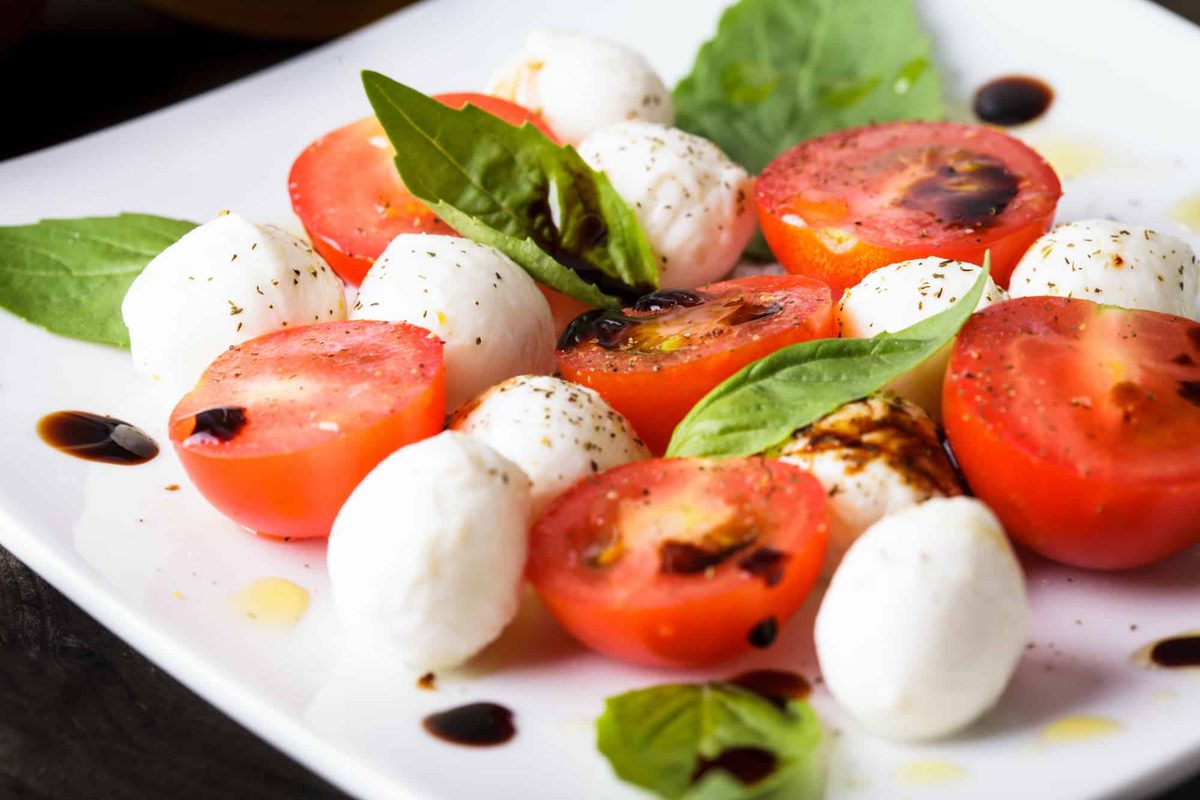
“Mediterranean” covers many cuisines, from Spain and Italy to Greece, Türkiye and North Africa, so no single spice list fits all of them. Several of the herbs these cuisines share are native to the region, among them thyme, rosemary and bay; saffron is a cultigen from Greece; and cumin and cinnamon are native farther east.123456 This page covers the most widely used ones, with what the sources say and links to our full profiles.
At a glance
| Herb or spice | Native range (Kew) | Mediterranean uses in the sources | Full profile |
|---|---|---|---|
| Thyme | SW Europe and SE Italy1 | Condiment and culinary herb, fresh and dried7 | Thyme |
| Rosemary | The Mediterranean2 | Meats, vegetables, soups; Valencian paella89 | Rosemary |
| Bay leaf | The Mediterranean3 | Long-cooked dishes | Bay leaves |
| Oregano | Macaronesia to China10 | Pizza and pasta sauces, Greek salads, gyros11 | Oregano |
| Basil | Tropical and subtropical Asia to N Australia12 | Pizza, pasta; grown commercially in the Mediterranean13 | Basil |
| Saffron | A cultigen from Greece4 | Paella, bouillabaisse1415 | Saffron |
| Cumin | Iraq to Afghanistan5 | Andalusian spinach with chickpeas16 | Cumin |
| Cinnamon | Sri Lanka (Ceylon); SE China to Vietnam (one cassia)617 | Same Andalusian dish16 | Cinnamon |
Oregano
Britannica calls oregano a key ingredient in Mediterranean and Middle Eastern cooking, essential in Italian pizza and pasta sauces, Greek salads and gyros, with a strong aroma and warm, pungent taste.11 Kew’s native range for Origanum vulgare is much wider than the Mediterranean, from Macaronesia to China.10 “Oregano” is also a trade name applied to other species and even to other genera such as Thymus, Satureja and Lippia, which is why oreganos differ so much in flavor.18 The University of Delaware’s extension service notes that dried herbs are stronger than fresh.19 See oregano, Mexican oregano vs. oregano, marjoram vs. oregano and Greek seasoning.
Thyme
Common thyme is native to southwestern Europe and southeastern Italy, according to Kew; PROSEA places its origin in the European Mediterranean, from Portugal to Greece.17 PROSEA names thymol and carvacrol as the characteristic constituents of its oil, the same pair that dominates oregano oil.718 It is used fresh and dried as a condiment and culinary herb.7 America’s Test Kitchen classes it as a hearty herb to add early in cooking.20 The common claim that thyme is used in the region as a preservative because of its antimicrobial properties could not be traced to a source on culinary practice. See thyme, fresh vs. dried thyme, oregano vs. thyme and rosemary vs. thyme.
Rosemary
Rosemary, now Salvia rosmarinus, is native to the Mediterranean.2 Its leaves are narrow and leathery, 1 to 5 cm long and only 1 to 2 mm wide.21 Britannica describes a pungent, slightly bitter taste and says the leaves, dried or fresh, are commonly used to season meats, vegetables and soups.8 PROSEA attributes its warm, piny scent to α-pinene.21 Rosemary turns up in at least one version of Valencian paella: a recipe that Qué! attributes to the Valencian agriculture department and the Arroz de Valencia designation-of-origin council calls for four sprigs, two for cooking and two for garnish.9 Its use in Italian and Greek lamb dishes is widely described but was not documented by a source opened for this page. See rosemary, dried vs. fresh rosemary and spices for lamb.
Saffron
Saffron is the dried stigmas of Crocus sativus, which Kew lists as a cultigen from Greece.415 Its history in the region is long: frescoes of cultivated saffron, influenced by the Minoan civilization, date to 1700 to 1500 BCE.22 Britannica still calls it the most expensive spice in the world, describes a strong aroma and bitter taste, and names crocin as its coloring matter.15 It is an important ingredient in bouillabaisse,15 and Britannica defines paella as saffron-flavored rice cooked with meats, seafood and vegetables.14 The Valencian paella recipe above includes a teaspoon of saffron.9 See saffron, cooking with saffron, saffron substitutes and paella spices.
Basil
Basil is not native to the Mediterranean; Kew gives tropical and subtropical Asia to northern Australia.12 It is now grown commercially mainly in the Mediterranean, the United States and Madagascar, and in Italian cooking goes into pizzas, pasta, chicken and cheese dishes.13 Britannica describes dried basil as warm, sweet, aromatic and mildly pungent.23 Basil’s use in Greek tomato sauces and in some gazpachos is often mentioned but was not documented by a source opened for this page. See basil, Genovese basil and Italian spices.
Cumin
Where cumin comes from is unsettled. Kew gives its native range as Iraq to Afghanistan,5 while PROSEA says its origin is not known exactly.24 Britannica says it is especially popular in Asian, North African and Latin American cooking,25 and PROSEA describes its flavor as strong, warm, pungent and persistent.24 In Spain it appears in espinacas con garbanzos, the spinach and chickpea dish that America’s Test Kitchen calls a specialty native to Seville with strong Moorish influence; the ATK recipe uses a teaspoon of ground cumin with smoked paprika.16 Its use in the Greek greens pie hortopita could not be confirmed. See cumin, cumin vs. caraway and cumin substitutes.
Cinnamon
Cinnamon is an Asian spice: Ceylon cinnamon (Cinnamomum verum) is native to Sri Lanka, and one of the cassia species, C. aromaticum, to southeastern China and Vietnam.617 The same ATK recipe for Andalusian spinach and chickpeas adds an eighth of a teaspoon of cinnamon,16 an example of cinnamon in savory Mediterranean cooking. Specific claims about Greek bulgur pilaf and Apulian cinnamon cookies could not be traced. See cinnamon and Ceylon vs. cassia cinnamon.
Related pages
- Italian spices and Greek seasoning
- Za’atar and sumac
- Dried herbs vs. fresh
- The master list of herbs and spices
Footnotes
-
Thymus vulgaris L., Plants of the World Online, Royal Botanic Gardens, Kew. powo.science.kew.org · Reference work ↩ ↩2 ↩3
-
Salvia rosmarinus Spenn., Plants of the World Online, Royal Botanic Gardens, Kew. powo.science.kew.org · Reference work ↩ ↩2 ↩3
-
Laurus nobilis L., Plants of the World Online, Royal Botanic Gardens, Kew. powo.science.kew.org · Reference work ↩ ↩2
-
Crocus sativus L., Plants of the World Online, Royal Botanic Gardens, Kew. powo.science.kew.org · Reference work ↩ ↩2 ↩3
-
Cuminum cyminum L., Plants of the World Online, Royal Botanic Gardens, Kew. powo.science.kew.org · Reference work ↩ ↩2 ↩3
-
Cinnamomum verum J.Presl, Plants of the World Online, Royal Botanic Gardens, Kew. powo.science.kew.org · Reference work ↩ ↩2 ↩3
-
Thymus vulgaris (PROSEA), S.H. Widodo, Plant Resources of South-East Asia, via Pl@ntUse. uses.plantnet-project.org · Reference work ↩ ↩2 ↩3 ↩4
-
Rosemary (revised by Anoushka Pant, updated 4 Sep 2026), Encyclopaedia Britannica. britannica.com · Reference work ↩ ↩2
-
Paella: la receta del BOE para hacerla perfecta (Florian Salazar, 3 Jun 2021), Qué!. que.es · Publication ↩ ↩2 ↩3
-
Origanum vulgare L., Plants of the World Online, Royal Botanic Gardens, Kew. powo.science.kew.org · Reference work ↩ ↩2
-
Oregano, by Anoushka Pant (updated 1 Oct 2026), Encyclopaedia Britannica. britannica.com · Reference work ↩ ↩2
-
Ocimum basilicum L., Plants of the World Online, Royal Botanic Gardens, Kew. powo.science.kew.org · Reference work ↩ ↩2
-
Ocimum basilicum (PROSEA), N.O. Aguilar, Pham Truong Thi Tho and L.P.A. Oyen, Plant Resources of South-East Asia, via Pl@ntUse. uses.plantnet-project.org · Reference work ↩ ↩2
-
Paella, Encyclopaedia Britannica. britannica.com · Reference work ↩ ↩2
-
Saffron, Encyclopaedia Britannica. britannica.com · Reference work ↩ ↩2 ↩3 ↩4
-
Espinacas con Garbanzos (Andalusian Spinach and Chickpeas) (Andrea Geary, 1 Feb 2021), America’s Test Kitchen. americastestkitchen.com · Publication ↩ ↩2 ↩3 ↩4
-
Cinnamomum aromaticum Nees, Plants of the World Online, Royal Botanic Gardens, Kew. powo.science.kew.org · Reference work ↩ ↩2
-
A Recent Insight Regarding the Phytochemistry and Bioactivity of Origanum vulgare L. Essential Oil (Lombrea et al., Int J Mol Sci 21(24):9653, 2020), International Journal of Molecular Sciences (MDPI). mdpi.com · Peer-reviewed ↩ ↩2
-
Using Herbs and Spices (revised by Diane Oliver, August 2025), University of Delaware Cooperative Extension. udel.edu · Reference work ↩
-
Our Guide to Fresh Herbs (Liz Bomze, 2019), America’s Test Kitchen. americastestkitchen.com · Publication ↩
-
Rosmarinus officinalis (PROSEA), C.C. de Guzman, Plant Resources of South-East Asia, via Pl@ntUse. uses.plantnet-project.org · Reference work ↩ ↩2
-
Ancient Artworks and Crocus Genetics Both Support Saffron’s Origin in Early Greece (Kazemi-Shahandashti et al., Frontiers in Plant Science 13:834416, 2022), Frontiers. frontiersin.org · Peer-reviewed ↩
-
Basil (revised by Sohini Dasgupta, updated 19 Sep 2026), Encyclopaedia Britannica. britannica.com · Reference work ↩
-
Cuminum cyminum (PROSEA), P.C.M. Jansen, Plant Resources of South-East Asia, via Pl@ntUse. uses.plantnet-project.org · Reference work ↩ ↩2
-
Cumin, Encyclopaedia Britannica (revised by Sohini Dasgupta, updated 14 Aug 2026). britannica.com · Reference work ↩