Spices · Substitutes
Poultry Seasoning Substitutes: Your Own Sage Blend, Italian Seasoning and More
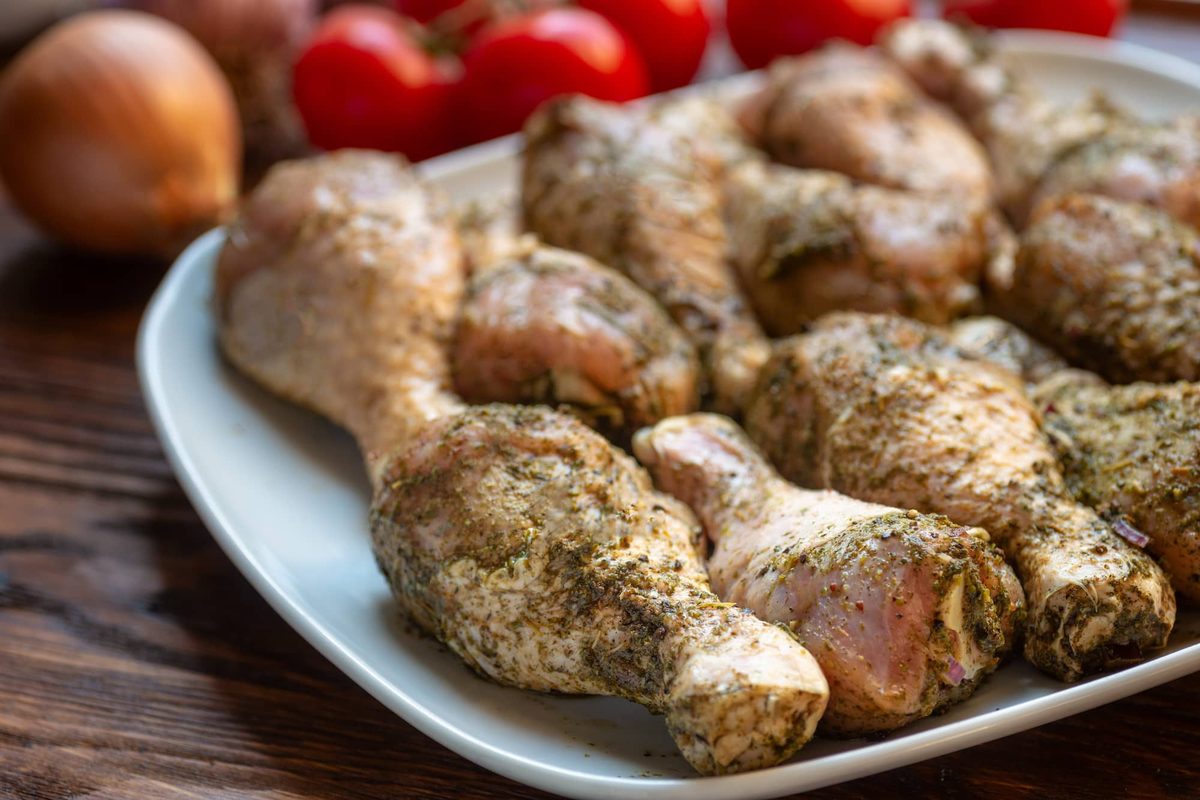
Poultry seasoning has no fixed recipe. McCormick’s culinary blend lists thyme, sage, marjoram, rosemary, black pepper and nutmeg,1 and Bell’s, the New England classic, is described as a salt-free mix of rosemary, oregano, sage, ginger, marjoram, thyme and pepper.2 Sage and thyme are the common core. PROSEA credits sage’s strong characteristic smell to its thujones,3 and names thymol and carvacrol as the characteristic constituents of thyme oil.4 A good substitute brings back that sage-and-thyme pair; the rest is detail.
Quick answer
| What the poultry seasoning is doing | Best substitute | Starting amount, per 1 part poultry seasoning | Treatment |
|---|---|---|---|
| Flavoring stuffing, dressing or sausage | Your own mix of dried sage and thyme, plus marjoram and pepper | 1 part | Disputed (proportions), Method (amount) |
| Seasoning roast turkey or chicken | Italian seasoning, which already contains sage | 1 part | Method |
| Gravy, soup or pot pie, when Italian seasoning is out | Herbes de Provence plus a pinch of sage | 3/4 part blend, 1/4 part sage | Method |
| You have fresh herbs, not dried | Fresh sage and thyme, chopped | 3 parts fresh | Computed |
How the ratios on this page are labeled
Every ratio carries one of four labels.
- Computed: based on a measurable physical relationship, with the source named.
- Attributed: a named source publishes this ratio. We quote it as theirs.
- Disputed: named sources give different answers to the same swap. We show each one and do not average them.
- Method: we found no published ratio. We give a direction and a cautious starting point, and say so.
No maker publishes the proportions in its poultry seasoning, and we found no published ratio for replacing it with another blend. Most amounts below are Method starting points.
If it is flavoring stuffing, dressing or sausage
PROSEA lists stuffings and sausages among sage’s main uses as a spice,3 and this is where poultry seasoning matters most. A sage-led herb mix is the closest match.
1. Your own blend
Two published recipes give a base:
| Source | Recipe |
|---|---|
| Food Network Kitchen (dried herbs) | 1/4 cup dried sage, 1/4 cup dried thyme, 2 tbsp celery seed, 2 tbsp dried marjoram, 1 tsp black pepper, 1/4 tsp nutmeg, optional 1/4 tsp cayenne5 |
| Saveur (fresh herbs) | 3 tbsp each chopped fresh thyme, rosemary and sage; 1 tbsp fresh marjoram; 1/2 tbsp black pepper; 1 tsp each celery seed, nutmeg, ground ginger and smoked paprika; keeps refrigerated about 3 days6 |
Proportions (Disputed): Sources disagree on how much of the blend should be sage.
| Source | How much sage |
|---|---|
| Food Network Kitchen | Equal amounts of sage and thyme5 |
| Caitlin MacDougall, Food52 | “at least two-thirds sage”7 |
| McCormick Culinary label | Thyme listed before sage1; US labels list ingredients by descending weight,8 so this blend has more thyme than sage |
Starting point (Method): Mix equal parts dried sage and thyme with a smaller amount of marjoram and a pinch of black pepper, then taste a pinch. If you want the sage-forward style Food52 describes, double the sage. Use the finished mix in the same amount as the poultry seasoning in your recipe. That 1:1 swap is our starting point; no source tests it.
2. Sage and thyme alone
If that is all you have, the pair still covers the core flavor of the blends above.125 Add black pepper if you have it.
Ratio (Method): No published ratio. Use equal parts sage and thyme to make up the full amount of poultry seasoning, then adjust.
3. Fresh herbs
Ratio (Computed): Penn State Extension equates 1 tablespoon of fresh herbs with 1 teaspoon dried,9 a 3-to-1 ratio. America’s Test Kitchen tested the swap and found that 1 part dried to 3 parts fresh came closest to equal flavor strength.10 So use about three times as much chopped fresh sage and thyme as the poultry seasoning called for. ATK also found that dried thyme, rosemary and sage hold up as well as fresh in dishes with more than 20 minutes of cooking and a good amount of liquid,10 which describes most stuffings and braises.
If it is seasoning roast turkey or chicken
1. Italian seasoning
This is the nearest ready-made blend, and it already contains sage. The USDA’s purchasing specification lists thyme, rosemary, sage, oregano and basil for Italian seasoning.11 McCormick’s version lists marjoram, basil, rosemary, thyme, oregano, savory and sage,12 and Simply Organic’s lists oregano, marjoram, thyme, rosemary, basil and sage.13 Tasting Table calls the bottled blend “more than likely an American invention.”14
Where it differs: oregano and basil, which none of the McCormick, Food Network or Saveur poultry blends list,156 and sage sitting last on both retail labels, so in smaller amounts than the herbs before it.81213 Expect a more Mediterranean, less sage-heavy result.
Ratio (Method): No published ratio. Start 1:1. For stuffing, add a pinch of extra sage.
2. Za’atar, for roast chicken only
UC Cooperative Extension Master Food Preservers describe za’atar at its most basic as sumac, thyme, oregano and sesame seeds, with marjoram often used in place of or with the oregano.15 The thyme and marjoram overlap with poultry seasoning. The sumac does not: Gernot Katzer describes it as tart and sour,16 and the sesame adds a nutty crunch. Some versions are salted; one ratio published by Susan Belsinger in Fine Gardening is 4 parts each za’atar herb and roasted sesame to 1 part each sumac and salt.17
Ratio (Method): No published ratio. Start with 3/4 the amount, check whether your jar contains salt, and reduce the recipe’s salt if it does. We would not use it in a bread stuffing, where its sourness and sesame stand out.
If it is in gravy, soup or pot pie
Herbes de Provence plus sage
Herbes de Provence shares thyme and rosemary with poultry seasoning but, in its strictest form, no sage. The French Label Rouge version made by Ducros is rosemary, savory and oregano at 27 percent each and thyme at 19 percent.18 The Takeout lists rosemary, fennel seeds, thyme, marjoram and savory as common herbs in other blends, and says lavender was added to some to appeal to tourists.19 Food52’s MacDougall says herbes de Provence “works beautifully in any poultry dish.”7
Ratio (Method): No published ratio. Use 3/4 of the amount as herbes de Provence and make up the last 1/4 with dried sage. If your jar lists lavender, use a little less, since its floral note is nothing like poultry seasoning.
What isn’t known
- No poultry seasoning maker publishes its proportions, so no homemade blend can be shown to match one.
- Sources disagree on how sage-heavy the blend should be (above). We found no tasting or sensory study that settles it.
- No credible source gives a ratio for Italian seasoning, herbes de Provence or za’atar in place of poultry seasoning.
- A common claim says poultry seasoning is “almost always” dominated by sage. McCormick’s label lists thyme first,1 so that does not hold for every blend.
Related
- Poultry seasoning, sage, thyme, marjoram, rosemary
- Italian seasoning, herbes de Provence, herbes de Provence vs. Italian seasoning, za’atar
- Sage substitutes, thyme substitutes, marjoram substitutes, Italian seasoning substitutes
- Fresh sage vs. dried sage, fresh thyme vs. dried
- Good stuffing spices, spices for turkey, turkey gravy spices, spices for chicken soup
- Too much sage, too much thyme
Footnotes
-
Poultry Seasoning, 12 oz, McCormick Culinary, McCormick & Company. mccormick.com · Merchant ↩ ↩2 ↩3 ↩4 ↩5
-
Aimee Tucker, “Bell’s Seasoning: A New England Thanksgiving Classic”, Yankee Magazine, 2021. newengland.com · Publication ↩ ↩2
-
U.A. Dasuki, Salvia officinalis (PROSEA), via Pl@ntUse. uses.plantnet-project.org · Reference work ↩ ↩2
-
S.H. Widodo, Thymus vulgaris (PROSEA), via Pl@ntUse. uses.plantnet-project.org · Reference work ↩
-
Homemade Poultry Seasoning, Food Network Kitchen, Food Network. foodnetwork.com · Publication ↩ ↩2 ↩3 ↩4
-
Homemade Fresh Poultry Seasoning, Saveur, 2014. saveur.com · Publication ↩ ↩2
-
Caitlin MacDougall, “The best poultry seasoning substitutes”, Food52, via Salon, 2021. salon.com · Publication ↩ ↩2
-
21 CFR 101.4, Food; designation of ingredients, eCFR. ecfr.gov · Regulator ↩ ↩2
-
Stacy Reed, Preserving Herbs by Drying, Penn State Extension. extension.psu.edu · Reference work ↩
-
Science: Substituting Dried Herbs for Fresh, America’s Test Kitchen. americastestkitchen.com · Publication ↩ ↩2
-
Commercial Item Description A-A-20001C, Spices and Spice Blends, USDA Agricultural Marketing Service, 2023. ams.usda.gov · Regulator ↩
-
McCormick Italian Seasoning, ingredients, via Giant Food Stores. giantfoodstores.com · Merchant ↩ ↩2
-
Simply Organic Italian Seasoning, ingredients, via Giant Food Stores. giantfoodstores.com · Merchant ↩ ↩2
-
Zoë Lourey-Christianson, “Why Italian Seasoning Isn’t A Thing In Italy”, Tasting Table, 2024. tastingtable.com · Publication ↩
-
Za’atar Spice Blend, UC Cooperative Extension Master Food Preservers of El Dorado County. ccfruitandnuts.ucanr.edu · Reference work ↩
-
Gernot Katzer, Sumac, Gernot Katzer’s Spice Pages. gernot-katzers-spice-pages.com · Reference work ↩
-
Susan Belsinger, “Za’atar: An Exotic Herb Blend”, Fine Gardening, 2010. finegardening.com · Publication ↩
-
Provencal herbs red label, product specification, McCormick for Chefs (Ducros), 2025. mccormickforchefs.com · Merchant ↩
-
Leah Kaplan, “What Is Herbs De Provence, Really?”, The Takeout, 2025. thetakeout.com · Publication ↩