Blog · Dish guide
The Best Spices for Spaghetti Sauce: Garlic, Oregano, Basil, Pepper and a Little Sugar
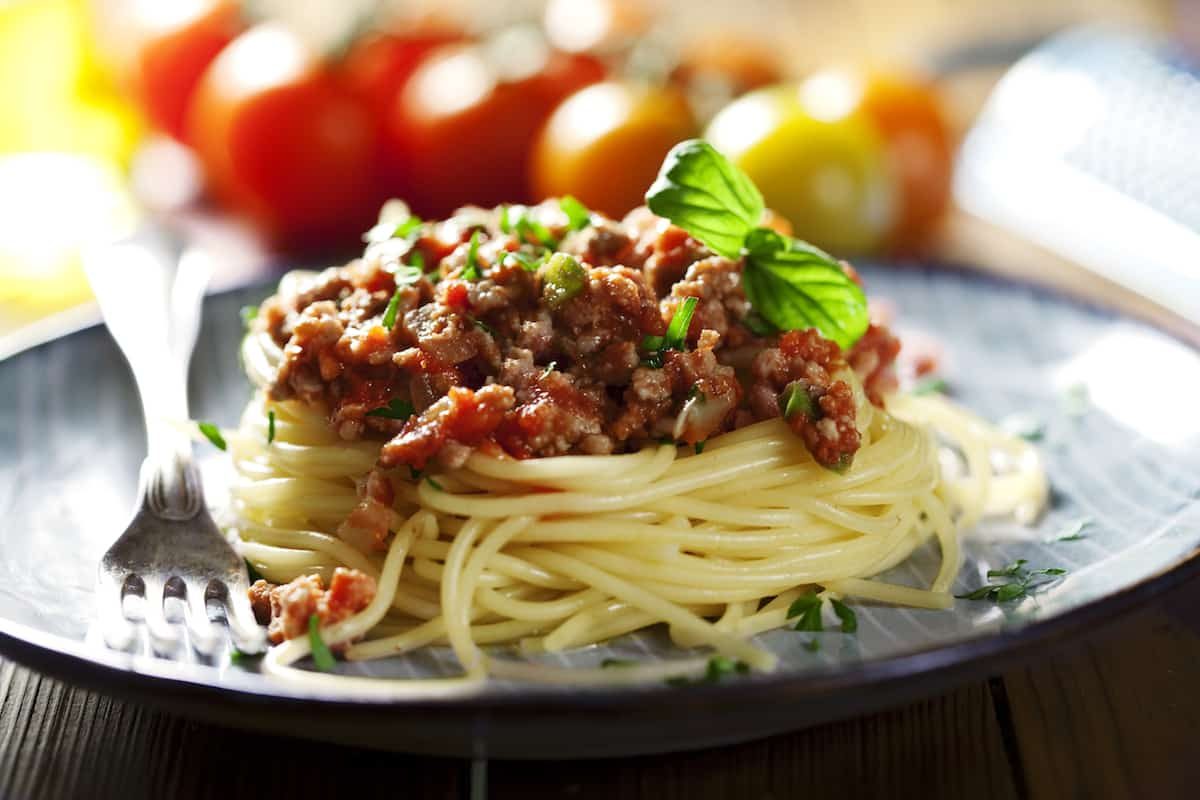
A good spaghetti sauce needs fewer seasonings than most people think. Marcella Hazan’s tomato sauce with onion and butter uses only onion, butter and salt,1 while a tested American canning recipe from the National Center for Home Food Preservation (NCHFP) adds garlic, oregano, parsley, black pepper and brown sugar.2 Between those two lie most home sauces. This page covers what each seasoning does, how much the named recipes use, and when to add it.
At a glance
| Seasoning | Job in the sauce | In the recipes cited |
|---|---|---|
| Garlic or garlic powder | Savory, pungent depth | NCHFP and Oregon State; not in Hazan’s231 |
| Onion or onion powder | Sweet, savory base | NCHFP and Hazan21 |
| Oregano | Warm, pungent herb backbone | NCHFP, Oregon State, King Arthur234 |
| Basil | Sweet herb note that suits tomato | Oregon State, King Arthur no-cook34 |
| Parsley | Fresh, green note | NCHFP2 |
| Black pepper | Mild heat | NCHFP; “to taste” in Oregon State and King Arthur234 |
| Sugar (brown or white) | Rounds off tomato acidity | NCHFP, Oregon State, King Arthur; not Hazan2341 |
| Salt | Seasoning | All2134 |
| Red pepper flakes or cayenne | Heat | A pinch, optional, in Oregon State3 |
Two very different baselines
| Marcella Hazan, tomato sauce with onion and butter1 | NCHFP spaghetti sauce with meat (about 5 quarts)2 | |
|---|---|---|
| Tomatoes | 2 lb fresh, or 2 cups canned Italian plum tomatoes | 30 lb |
| Fat or meat | 5 tbsp butter | 2 1/2 lb ground beef or sausage |
| Onion | 1 medium, halved, removed before serving | 1 cup chopped |
| Garlic | None | 5 cloves, minced |
| Herbs | None | 2 tbsp oregano, 4 tbsp minced parsley |
| Pepper | None | 2 tsp black pepper |
| Sugar | None | 1/4 cup brown sugar |
| Salt | To taste | 4 1/2 tsp |
| Other | 1 cup celery or green pepper; 1 lb mushrooms, optional | |
| Cooking | Very slow simmer, 45 minutes | Simmered until reduced by nearly half |
Hazan’s sauce shows that a good sauce does not depend on garlic or dried herbs: the onion is halved, simmered with the tomatoes and butter, and thrown away.1 The NCHFP version is a fuller American-style sauce, written for canning.
If you plan to can it: the NCHFP recipe requires a pressure canner.2 If you plan to can sauce, follow that recipe and its processing instructions as published rather than adapting it with the ideas on this page.
The core seasonings and what each one does
Garlic
Garlic is in most American recipes: 5 cloves in the NCHFP batch and 2 in the Oregon State sauce.23 It is not essential: Hazan’s sauce has none.1 Timing matters more than amount. America’s Test Kitchen warns that garlic added too early to a hot pan burns quickly and turns acrid and bitter, so add it once the onions have softened.5 Garlic powder is the easy swap; an Iowa State extension recipe trades 1 teaspoon of garlic powder for 2 minced cloves.6 See garlic powder vs. garlic and too much garlic powder.
Onion
Both baselines use onion,21 and Hazan builds the whole sauce on it. Chopped onion stays in the NCHFP sauce; Hazan’s halved onion flavors the sauce and comes out. Onion powder gives the flavor without pieces, which helps if you want a smooth sauce; that is a matter of texture preference. See onion powder vs. onion.
Oregano and basil
Britannica calls oregano essential in Italian pizza and pasta sauces.7 The NCHFP sauce uses a generous 2 tablespoons for its large batch; the smaller Oregon State sauce pairs 1/2 teaspoon of dried oregano with 1 teaspoon of dried basil.23 Basil has a special affinity with tomatoes, according to the PROSEA plant handbook.8
Dried herbs suit a simmered sauce. America’s Test Kitchen found dried herbs held up in dishes with fairly long cooking times (more than 20 minutes) and a good amount of liquid.9 Dried herbs are also stronger than fresh: the University of Delaware’s extension guide counts 3/4 to 1 teaspoon of dried crumbled herb as equal to 2 to 3 teaspoons of fresh, and for long-simmered dishes advises adding herbs during the last 45 minutes.10 Fresh basil and parsley are delicate herbs that the LSU AgCenter says go in a minute or two before the end.11 See basil vs. oregano and Italian seasoning.
Black pepper (and white pepper for cream sauces)
The NCHFP sauce uses 2 teaspoons of black pepper; the smaller recipes leave it to taste.234 For a white sauce such as Alfredo, Gernot Katzer notes that white pepper is often suggested for cream-based sauces where black pepper could spoil the color.12 The reason is looks, not flavor. See white pepper vs. black pepper and too much pepper.
Sugar, brown or white
Sugar is the usual way to round off a sharp, acidic sauce. America’s Test Kitchen compared sugar with baking soda for that job, and the baking-soda sauce was judged a little flat in comparison.13 Brown sugar brings molasses, which Domino says adds flavor and color.14 How much sugar is a matter on which the recipes differ:
| Recipe | Sugar | Per quart of sauce |
|---|---|---|
| Marcella Hazan1 | None | None |
| King Arthur Zesty pizza sauce (about 1 quart)4 | 1 to 2 tsp granulated, plus more to taste | 1 to 2 tsp |
| Oregon State pizza sauce (28-oz can plus 6-oz can of paste)3 | 1 1/2 tsp | Not stated (makes enough for 2 large pizzas) |
| NCHFP spaghetti sauce (about 5 quarts)2 | 1/4 cup brown sugar | About 2 1/2 tsp (our arithmetic: 12 tsp over 5 quarts) |
A common rule of thumb says a teaspoon per quart; these recipes run from none to about two and a half. A practical starting point (Method): add 1 teaspoon per quart, simmer, taste, and add more only if the sauce still tastes sharp.
Salt
Every recipe salts the sauce; Hazan’s simply says to taste and correct.1 The NCHFP batch uses 4 1/2 teaspoons for about 5 quarts.2 If you start from a jarred sauce, check the label first, since many already contain salt. See table salt and too much salt.
Heat: red pepper flakes or cayenne
The Oregon State sauce allows an optional pinch of crushed red pepper.3 Ground cayenne is typically hotter than flakes, so start with less.15 See cayenne pepper uses.
When to add each seasoning
- Onion, then garlic: onion first; garlic after the onion softens so it does not burn.5
- Dried herbs, sugar and salt: NCHFP adds the spices, salt and sugar together once the tomato and the meat mixture are combined, then simmers.2 For a long simmer, the Delaware guide’s timing is the last 45 minutes.10
- Fresh basil and parsley: at the end.11
- Salt: taste and correct at the end, as Hazan does.1
Related
- Good spices for pizza
- Good spices for meatballs and Italian spices
- Tomato soup spices
- The master list of herbs and spices
Footnotes
-
Marcella Hazan, “Tomato Sauce with Onion and Butter”, Essentials of Classic Italian Cooking (1992), via PBS Food. pbs.org · Publication ↩ ↩2 ↩3 ↩4 ↩5 ↩6 ↩7 ↩8 ↩9 ↩10 ↩11 ↩12
-
“Spaghetti Sauce with Meat”, National Center for Home Food Preservation recipe as published by UC Cooperative Extension, Central Sierra. ccfruitandnuts.ucanr.edu · Reference work ↩ ↩2 ↩3 ↩4 ↩5 ↩6 ↩7 ↩8 ↩9 ↩10 ↩11 ↩12 ↩13 ↩14 ↩15 ↩16 ↩17
-
“Red Sauce for Pizza”, OSU KidSpirit, Oregon State University. kidspirit.oregonstate.edu · Reference work ↩ ↩2 ↩3 ↩4 ↩5 ↩6 ↩7 ↩8 ↩9 ↩10 ↩11 ↩12
-
“Homemade Pizza: From Pan to Neapolitan”, King Arthur Baking workbook. shop.kingarthurbaking.com · Publication ↩ ↩2 ↩3 ↩4 ↩5 ↩6 ↩7
-
Liz Bomze, “Why You Should Wait to Add Garlic”, America’s Test Kitchen, 2023. americastestkitchen.com · Publication ↩ ↩2
-
“Beef Stew”, Spend Smart. Eat Smart., Iowa State University Extension and Outreach. spendsmart.extension.iastate.edu · Reference work ↩
-
Anoushka Pant, “Oregano”, Encyclopaedia Britannica. britannica.com · Reference work ↩
-
Aguilar, Pham Truong Thi Tho and Oyen, “Ocimum basilicum”, PROSEA. uses.plantnet-project.org · Reference work ↩
-
“Science: Substituting Dried Herbs for Fresh”, America’s Test Kitchen. americastestkitchen.com · Publication ↩
-
“Using Herbs and Spices”, University of Delaware Cooperative Extension, revised 2025. udel.edu · Reference work ↩ ↩2
-
“Flavorful Herbs”, LSU AgCenter. lsuagcenter.com · Reference work ↩ ↩2
-
Gernot Katzer, “Black Pepper (Piper nigrum L.)”, Gernot Katzer’s Spice Pages. gernot-katzers-spice-pages.com · Reference work ↩
-
“How to Make Tomato Sauce Less Acidic”, America’s Test Kitchen. americastestkitchen.com · Publication ↩
-
Domino Light Brown Sugar product listing, ShopRite. shoprite.com · Merchant ↩
-
“Red Pepper”, McCormick Science Institute. mccormickscienceinstitute.com · Merchant ↩