Blog · Profile
Polish Spices and Herbs: Dill, Marjoram, Allspice, Bay, Caraway and Juniper
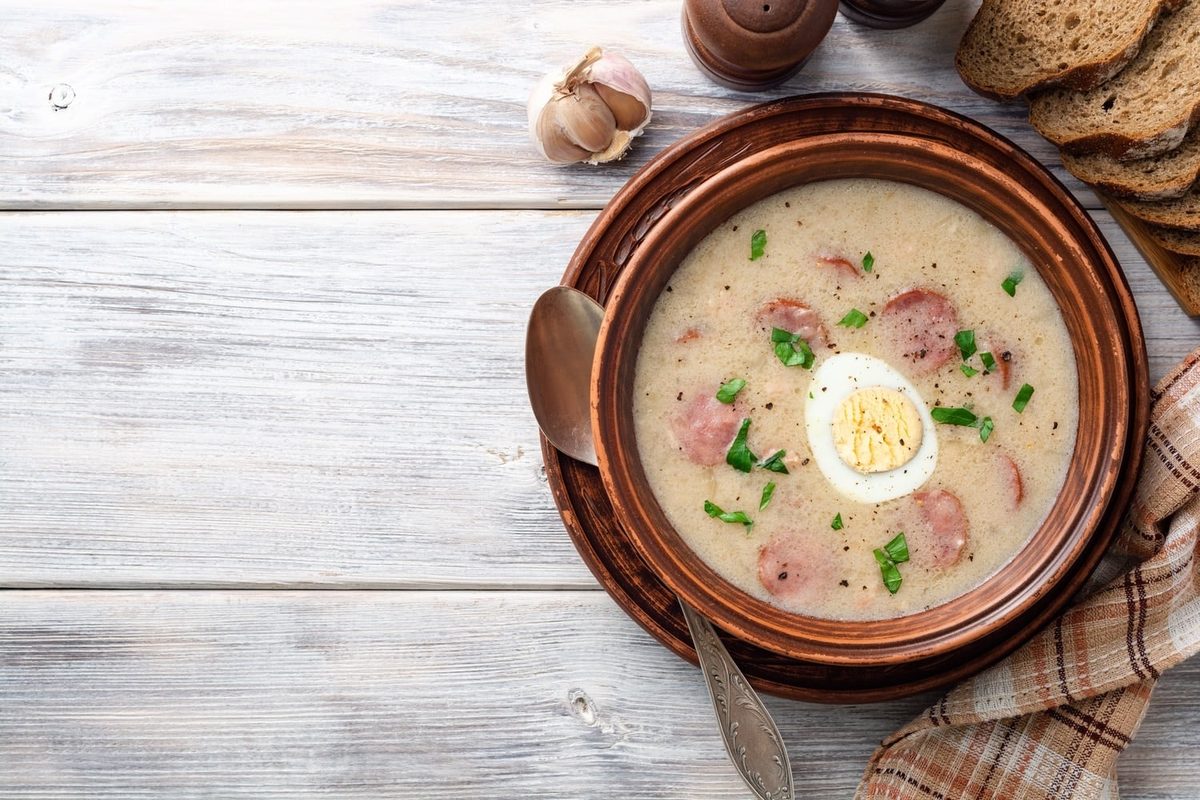
Polish cooking is seasoned more with herbs, roots and a few whole spices than with spice blends. Dill and parsley (leaf and root) dominate the herbs; marjoram, allspice, bay leaf and black pepper do most of the work in soups and stews; caraway and juniper go with cabbage, pork and game; and horseradish and garlic add bite. A single classic soup shows most of them: Anne Applebaum and Danielle Crittenden’s żurek, the sour rye soup traditionally eaten at Easter, uses dried marjoram, allspice berries, a bay leaf, black peppercorns, garlic and grated horseradish.1
At a glance
| Seasoning | Part used | What it brings | Typical use |
|---|---|---|---|
| Dill | Leaf, flower heads, seed | Fresh, slightly anise-like | Pickles,23 soups, potatoes |
| Parsley | Leaf and root | Green, earthy root | Soups, broths |
| Marjoram | Dried leaf | Sweet, herbal | Żurek1 |
| Allspice | Whole dried berry | Clove-like warmth | Żurek,1 broths4 |
| Bay leaf | Dried leaf | Herbal, eucalyptus-like | Żurek,1 stews |
| Caraway | Seed | Sharp, anise-like | Silesian bigos5 |
| Juniper | Dried berry | Piney | Game and cabbage dishes6 |
| Horseradish | Grated root | Sharp heat | Żurek1 |
Dill
Britannica describes dill as especially popular in eastern European and Scandinavian cooking, used in soups, salads, sauces and fish, and particularly in pickles.2 PROSEA notes that the flower heads and ripe seeds flavor pickled cucumbers.3 Dill over new potatoes, in cucumber salads and in dill soup (zupa koperkowa) is common Polish practice. See dill, cooking with dill, dill seed vs. dill weed and too much dill.
Parsley, leaf and root
Polish cooks use both parts of the parsley plant. Britannica notes that one form of parsley has a parsnip-like root that is popular in Europe,7 and PROSEA says the thick-rooted forms were probably developed around 1500 in northern Germany.8 The root goes into broths such as rosół, the chicken soup, and the chopped leaf on top; that is common practice. See parsley, flat-leaf vs. Italian parsley and parsley substitutes.
Marjoram
Applebaum and Crittenden’s żurek calls for a tablespoon of dried marjoram.1 It is also the usual seasoning for Polish sausage and for tripe soup (flaki); that is common practice. See marjoram, cooking with marjoram and marjoram vs. oregano.
Allspice
Allspice is the dried berry of Pimenta dioica, native from southern Mexico to Central America and the Caribbean.9 PROSEA notes that the whole fruits are used in meat broths, gravies and pickling liquids.4 Polish cooks drop a few whole berries into soups and stews; that is common practice. Applebaum and Crittenden use three in their żurek.1 See allspice, allspice vs. cloves and allspice substitutes.
Bay leaf
Bay laurel is native to the Mediterranean,10 and a single leaf goes into Applebaum and Crittenden’s żurek.1 A bay leaf in soups and braises is common Polish practice. Its use in cabbage rolls (gołąbki) and cucumber soup (zupa ogórkowa) is common practice. See bay leaves and cooking with bay leaves.
Caraway
Poland is one of the main producers of winter-type caraway, along with the Netherlands, Hungary and Russia, according to PROSEA.11 In the kitchen it goes with cabbage and pork: the Polish Ministry of Agriculture’s entry for Silesian bigos, a stew of sauerkraut, meat and dumplings, describes the smell of meat braised with garlic and caraway.5 See caraway seeds and cooking with caraway seeds.
Juniper
Katzer writes that juniper is much used in the traditional cooking of Central Europe and considered indispensable for venison.6 Juniper in bigos and with game is common Polish practice. See juniper berries.
Horseradish and garlic
Grated horseradish and garlic both go into Applebaum and Crittenden’s żurek.1 See horseradish, cooking with horseradish and garlic.
Celery
Celery is native to a wide band from Macaronesia and North Africa across Europe to the western Himalaya.12 Both the root (celeriac) and the leaves go into Polish broths and stews; that is common practice. See celery leaves and celery leaves uses.
Related pages
Footnotes
-
Anne Applebaum and Danielle Crittenden, “White Barszcz (Żurek)”, The Splendid Table, from From a Polish Country House Kitchen (2012). splendidtable.org · Publication ↩ ↩2 ↩3 ↩4 ↩5 ↩6 ↩7 ↩8 ↩9
-
Melissa Petruzzello, “Dill”, Encyclopaedia Britannica. britannica.com · Reference work ↩ ↩2
-
Anethum graveolens, PROSEA, via PlantUse. uses.plantnet-project.org · Reference work ↩ ↩2
-
Pimenta dioica, PROSEA, via Pl@ntUse. uses.plantnet-project.org · Reference work ↩ ↩2
-
“Bigos śląski”, Lista produktów tradycyjnych, Ministerstwo Rolnictwa i Rozwoju Wsi, 2008. gov.pl · Regulator ↩ ↩2
-
Gernot Katzer, Juniper (Juniperus communis), Gernot Katzer’s Spice Pages. gernot-katzers-spice-pages.com · Reference work ↩ ↩2
-
“Parsley”, Encyclopaedia Britannica. britannica.com · Reference work ↩
-
Petroselinum crispum, PROSEA, via PlantUse. uses.plantnet-project.org · Reference work ↩
-
Pimenta dioica, Plants of the World Online, Royal Botanic Gardens, Kew. powo.science.kew.org · Reference work ↩
-
Laurus nobilis, Plants of the World Online, Royal Botanic Gardens, Kew. powo.science.kew.org · Reference work ↩
-
Carum carvi, PROSEA, via Pl@ntUse. uses.plantnet-project.org · Reference work ↩
-
Apium graveolens, Plants of the World Online, Royal Botanic Gardens, Kew. powo.science.kew.org · Reference work ↩