Cooking · Dish guide
Good Spices for Pork: The Classics, What Each Does, and Pork Dishes from Around the World
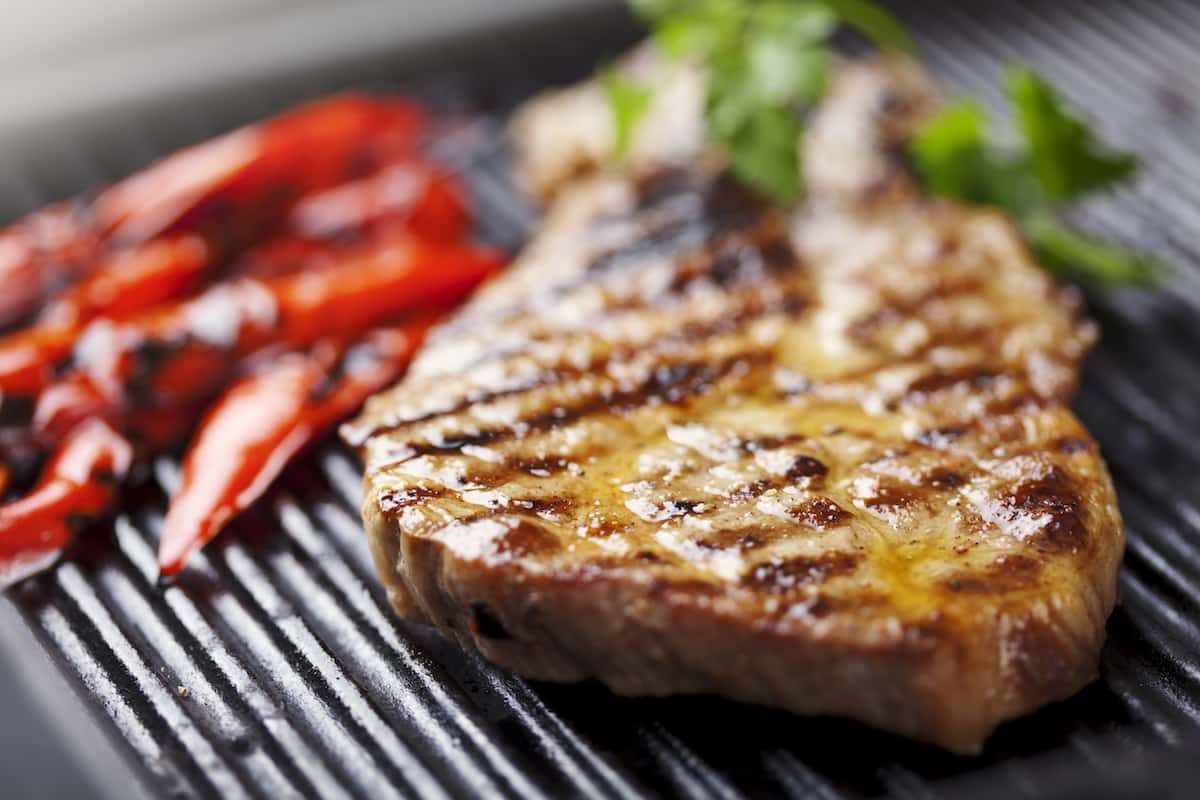
Pork takes a wide range of spices, and the best way to choose is by the dish you are making. Nearly every pork tradition has its own signature: fennel and herbs in Italian porchetta, juniper with sauerkraut in Alsace, star anise in Chinese red braising, allspice in Jamaican jerk, garlic and bitter orange in Cuban mojo. This page covers the spices most often paired with pork, what each brings, the named dishes that use them, and the safe cooking temperatures. Quantities appear only where a named recipe gives them.
At a glance
| Spice | What it brings | A named pork dish that uses it |
|---|---|---|
| Garlic | Pungent, savory base | Cuban mojo marinade1 |
| Fennel seed and fennel pollen | Sweet anise note | Italian porchetta2 |
| Sage | Bitter, pungent herb | Porchetta;2 sausages and stuffings3 |
| Rosemary | Pungent, slightly bitter herb | Porchetta2 |
| Caraway | Anise-like aroma, warm taste | Central European sauerkraut and meat4 |
| Juniper berries | Resinous, piney | Alsatian choucroute garnie5 |
| Allspice | Like cinnamon, cloves and nutmeg together | Jamaican jerk6 |
| Star anise | Licorice-like sweetness | Chinese red-braised pork belly7 |
| Ginger | Pungent warmth | Many Asian dishes8 |
| Cumin | Warm, earthy | Sausages; Cuban mojo91 |
| Smoked paprika | Smoke and color | Spanish pork and cured sausages10 |
The classic pork spices
Garlic
Garlic underpins many pork marinades. Maricel Presilla’s Cuban mojo for Saveur starts by pounding garlic and salt to a fine paste, and she notes the sauce can be used as a marinade for pork, beef or seafood.1 Fresh garlic for braises and wet marinades and garlic powder for dry rubs is a reasonable kitchen rule rather than a tested one; see garlic powder vs. garlic.
Fennel, sage and rosemary: the Italian roast
Saveur’s porchetta, a boneless pork loin wrapped in skin-on pork belly, seasons the belly with fennel seeds, fennel pollen, fennel fronds, parsley, sage and rosemary.2 Each herb has its own character. Sage combines a nice aroma with a bitter, pungent taste, and PROSEA lists sausages and stuffings among its main uses.3 Britannica describes rosemary’s taste as pungent and slightly bitter and lists meats among its common uses.11 See cooking with sage, cooking with rosemary and fennel pollen uses.
Caraway and juniper: the Central European pair
Caraway has an aroma reminiscent of anise and a warm, slightly sharp taste, according to Britannica.12 Gernot Katzer’s Spice Pages call it the characteristic flavor of Southern German and Austrian food, whether meat, vegetables or rye bread, and note that sauerkraut is always flavored with it.4 Katzer also warns that caraway does not harmonize with most other spices;4 in our reading, that makes it a lead spice rather than one of many.
Juniper berries are fleshy, berry-like cones, typically bluish and waxy.13 Britannica notes its use with game meats, in sauces and for pickling, and Katzer says it is indispensable for venison and that sauerkraut is seasoned with juniper, caraway and sometimes bay leaves.1314 Saveur’s Alsatian choucroute garnie, sauerkraut braised with pork and sausages, ties juniper berries, cloves, garlic and bay leaf in cheesecloth.5 Katzer advises crushing the berries just before use.14 See cooking with caraway seeds and German spices.
Allspice: the jerk spice
Allspice got its name because the dried berry’s flavor resembles a combination of cinnamon, cloves and nutmeg.15 It is the backbone of Jamaican jerk: the Smithsonian’s history of the dish names pimento (allspice) and Scotch bonnet pepper as essential, describes how the Maroons traditionally hunted wild boar and seasoned it with pimento, and notes that chicken, sausage and pork are now most common on the island.6 See jerk seasoning and allspice vs. cloves.
Star anise and ginger: Chinese braising
Kew notes that in China star anise is generally used in pork and chicken dishes.16 The Woks of Life’s red-braised pork belly uses 2 star anise.7 Ginger is the other workhorse: Kew says the fresh rhizome is essential to many Asian dishes, while the dried, powdered spice is more popular in European cooking,8 and Katzer notes that Chinese cooks both boil and fry fresh ginger.17 See cooking with star anise, Chinese five-spice powder, cooking with ginger and fresh vs. ground ginger.
Cumin
PROSEA lists sausages and sauerkraut among cumin’s uses.9 Presilla’s Cuban mojo uses 1/4 teaspoon ground cumin.1 A common claim that cumin “cuts” the fattiness of pork belly has no source we could find. See cumin uses.
Celery seed
Katzer describes celery fruits (sold as celery seed) as having an aroma similar to the leaf but much stronger, and slightly bitter.18 We found no named pork recipe built around it; it is a common ingredient in barbecue blends instead. See celery seed uses.
Mustard, mint and smoked paprika
McCormick says ground mustard goes well with pork, chicken, beef and seafood.19 North Dakota State University Extension notes that mint is a frequent accompaniment to pork or lamb.20 Spain’s Pimentón de la Vera specification names pork among the meats it seasons.10 See mustard powder uses and mint uses.
Pork dishes and their spices, side by side
| Dish | Key spices | Source |
|---|---|---|
| Porchetta (Italy) | Fennel seeds, fennel pollen, fennel fronds, parsley, sage, rosemary | Saveur2 |
| Choucroute garnie (Alsace) | Juniper berries, cloves, garlic, bay leaf | Saveur5 |
| Red-braised pork belly (China) | Star anise (2 in the recipe) | The Woks of Life7 |
| Jerk (Jamaica) | Pimento (allspice), Scotch bonnet | Smithsonian6 |
| Mojo-marinated pork (Cuba) | Garlic, bitter orange juice, cumin | Saveur (Presilla)1 |
Cutting fat, matching cuts
Many guides say certain spices “cut through” the fattiness of pork belly or shoulder. None of the sources we opened supports that as a mechanism. Matching the spice to the dish, as in the table above, is the more reliable guide. In our kitchen judgment, lean cuts like loin and tenderloin take well to herb rubs and short marinades, and fatty cuts like belly and shoulder to long braises with whole spices that can be fished out.
Safe internal temperatures for pork
USDA FSIS sets these minimums:21
| Pork | Minimum internal temperature |
|---|---|
| Steaks, chops, roasts | 145°F (62.8°C), then rest at least 3 minutes |
| Ground pork | 160°F (71.1°C) |
| Fresh or smoked uncooked ham | 145°F, then rest at least 3 minutes |
Related
- Best spices for ribs and BBQ spices
- Spices for ham and spices for lamb
- Best spices for steak and good spices for chicken
- Cuban spices and Jamaican spices
- The master list of herbs and spices
Footnotes
-
Maricel Presilla, “Mojo (Cuban Garlic-Citrus Sauce)”, Saveur. saveur.com · Publication ↩ ↩2 ↩3 ↩4 ↩5
-
“Porchetta Sandwiches With Marinated Onions and Salsa Verde”, Saveur, 2017. saveur.com · Publication ↩ ↩2 ↩3 ↩4 ↩5
-
U.A. Dasuki, “Salvia officinalis”, PROSEA. uses.plantnet-project.org · Reference work ↩ ↩2
-
“Caraway (Carum carvi L.)”, Gernot Katzer’s Spice Pages. gernot-katzers-spice-pages.com · Reference work ↩ ↩2 ↩3
-
“Sauerkraut With Pork and Sausages (Choucroute Garnie)”, Saveur. saveur.com · Publication ↩ ↩2 ↩3
-
Vaughn Stafford Gray, “A Brief History of Jamaican Jerk”, Smithsonian Magazine, 2020. smithsonianmag.com · Publication ↩ ↩2 ↩3
-
Judy Leung, “Chairman Mao’s Red Braised Pork Belly”, The Woks of Life. thewoksoflife.com · Publication ↩ ↩2 ↩3
-
“Zingiber officinale Roscoe”, Plants of the World Online, Royal Botanic Gardens, Kew. powo.science.kew.org · Reference work ↩ ↩2
-
P.C.M. Jansen, “Cuminum cyminum”, PROSEA. uses.plantnet-project.org · Reference work ↩ ↩2
-
Pimentón de la Vera PDO product specification. assets.publishing.service.gov.uk · Regulator ↩ ↩2
-
“Rosemary”, Encyclopaedia Britannica. britannica.com · Reference work ↩
-
“Caraway”, Encyclopaedia Britannica. britannica.com · Reference work ↩
-
“Common juniper”, Encyclopaedia Britannica. britannica.com · Reference work ↩ ↩2
-
“Juniper (Juniperus communis L.)”, Gernot Katzer’s Spice Pages. gernot-katzers-spice-pages.com · Reference work ↩ ↩2
-
“Allspice”, Encyclopaedia Britannica. britannica.com · Reference work ↩
-
“Illicium verum Hook.f.”, Plants of the World Online, Royal Botanic Gardens, Kew. powo.science.kew.org · Reference work ↩
-
“Ginger (Zingiber officinale Roscoe)”, Gernot Katzer’s Spice Pages. gernot-katzers-spice-pages.com · Reference work ↩
-
“Celery (Apium graveolens)”, Gernot Katzer’s Spice Pages. gernot-katzers-spice-pages.com · Reference work ↩
-
“About Ground Mustard: Uses, Pairings and Substitutes”, McCormick. mccormick.com · Merchant ↩
-
Julie Garden-Robinson and Tom Kalb, “Field to Fork: Mint”, NDSU Extension. ndsu.edu · Reference work ↩
-
“Safe Minimum Internal Temperature Chart”, USDA Food Safety and Inspection Service, 2025. fsis.usda.gov · Regulator ↩