Blog · Dish guide
The Best Spices for Ribs: What Goes in a Rib Rub and What Each Spice Does
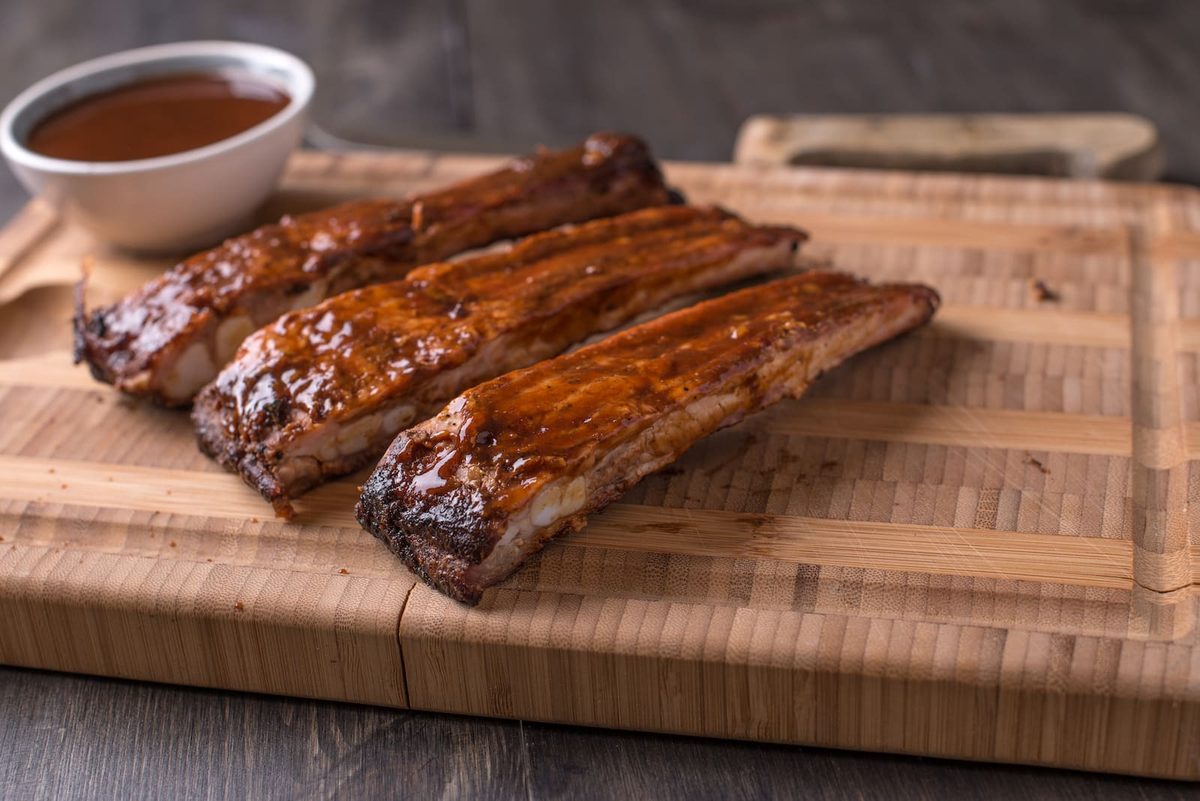
Pork ribs are usually seasoned with a dry rub: a mix of ground spices, salt and often sugar pressed onto the meat before a long, low cook. Texas A&M’s meat science program names paprika, brown sugar, garlic powder, onion powder, salt and pepper as the base of many barbecue rubs, with salt and black pepper as the foundation of most seasonings.1 This page covers the job each of those spices does on ribs, how named rib and rub recipes differ, and the safe cooking temperature for pork. Quantities appear only where a named recipe gives them.
At a glance
| Spice | Job on the ribs | Notes |
|---|---|---|
| Salt (kosher salt) | Seasons the meat itself | In every rub on this page12 |
| Black pepper | Pungency | Foundation of most seasonings1 |
| Paprika or smoked paprika | Red color, mild pepper flavor; smoke if smoked | In Texas A&M’s base and the USDA spec13 |
| Brown sugar | Sweetness | Texas A&M pork rub; Saveur’s Memphis rub12 |
| Garlic powder and onion powder | Savory depth | Texas A&M base1 |
| Cumin | Warm, earthy note | USDA barbecue seasoning spec; Memphis rub32 |
| Cayenne or other chile | Heat | Optional1 |
| Allspice | Warm spice | Jamaican jerk4 |
The core spices and what each one does
Salt: the one that seasons inside
Salt works differently from the other rub ingredients. America’s Test Kitchen explains that salt draws juices to the surface of raw meat, dissolves in them, and forms a brine that the meat eventually reabsorbs.5 Most other rub ingredients stay put: ATK’s marinade testing found that oil-soluble herbs and spices only flavor the exterior.6
That is why salt timing matters more than spice timing. Saveur’s Memphis-style recipe mixes the salt into the rub, then lets the coated ribs sit for an hour at room temperature or overnight in the refrigerator.2 Salting or brining separately before the rub goes on is also an option; we found no tested comparison of the two for ribs, so that choice is kitchen preference.
Black pepper: the other half of the foundation
Texas A&M calls salt and black pepper the foundations of most seasonings and the primary flavorings of Central Texas barbecue.1 Black pepper’s flavor comes principally from piperine.7 Grinding whole peppercorns fresh is common practice; a widely repeated claim that toasting peppercorns wakes “dormant” flavors has no source we could find. See cracked vs. ground black pepper and white vs. black pepper.
Paprika: color, and smoke if you want it
Paprika gives most rib rubs their red color and is part of both Texas A&M’s base and the USDA’s purchasing specification for barbecue seasoning.13 Smoked paprika adds smoke flavor in the rub itself: Spain’s Pimentón de la Vera is described in its protected-origin specification as having a smoky, intense and penetrating flavor and aroma.8 See paprika vs. cayenne.
Brown sugar: sweetness
Texas A&M’s simple pork rub is equal parts paprika, black pepper, garlic powder, salt and brown sugar,1 and the USDA describes barbecue seasoning as spicy, salty and slightly sweet.3 Two common claims about brown sugar on ribs have no source we could find: that it tenderizes the meat, and that it burns more slowly than white sugar. Tasting Table notes that ground spices don’t fare well under intense heat and can turn bitter;9 in our judgment that is one reason sugary rubs suit low, indirect heat. See too much sugar.
Garlic and onion powder: savory depth
Both are on Texas A&M’s base list.1 Garlic’s sharp flavor comes from allicin, which forms when the compounds alliin and the enzyme alliinase meet; ATK notes that garlic powder straight from the jar has not developed its full flavor until water activates that reaction.10 In ATK’s test, powder stirred in dry tasted harsh and garlicky but not particularly complex.11 On a rub, the meat’s moist surface supplies some of that water; that is our inference, not something ATK tested. See garlic powder vs. garlic and too much garlic powder.
Cumin: warm and earthy
Cumin is in the USDA barbecue seasoning specification and in Saveur’s Memphis rub, though not in Texas A&M’s base.321 Britannica describes its taste as warm and reminiscent of caraway.12 Toasting whole seeds before grinding is common practice; we found no measured comparison. See cumin seeds vs. ground cumin and too much cumin.
Chile for heat
Texas A&M suggests cayenne or other chile peppers for a hotter rub.1 Saveur’s Memphis rub uses 1/2 teaspoon cayenne.2 Chili powder brings chile, cumin and garlic together in one jar, since the USDA spec lists ground chili pepper, cumin, oregano, salt and garlic powder.3
Rib and rub styles compared
| Style | Seasonings | Amounts | Source |
|---|---|---|---|
| Central Texas rub (written for brisket) | Salt, black pepper | Equal parts | Texas A&M1 |
| Simple pork rub | Paprika, black pepper, garlic powder, salt, brown sugar | Equal parts | Texas A&M1 |
| Memphis-style dry ribs | Kosher salt, dark brown sugar, paprika, oregano, black pepper, garlic powder, onion powder, thyme, marjoram, parsley, cumin, dry mustard, celery seed, cayenne, fennel, white pepper | 2 tbsp each of salt, brown sugar and paprika; 1 tbsp each oregano and black pepper; 2 tsp garlic powder; 1 tsp each of the next seven; 1/2 tsp each cayenne and ground fennel; 1/4 tsp white pepper; plus a mop of apple juice, water and more salt | Saveur2 |
| USDA barbecue seasoning | Celery seed, coriander, black pepper, red pepper, white pepper, paprika, salt, onion, garlic, brown sugar, cumin, smoke flavor | Not given | USDA AMS3 |
| Jamaican jerk | Pimento (allspice), Scotch bonnet pepper; modern recipes add thyme, scallions, garlic, ginger | Not given | Smithsonian4 |
Each row is the named source’s formula, not a house standard. The Memphis recipe shows how far a rub can go beyond the basic six: it adds four dried herbs plus mustard, celery seed and fennel.2 McCormick suggests its jerk blend for ribs among other meats.13 See jerk seasoning, celery seed uses and mustard powder uses.
Cooking ribs: low heat, and when they’re safe
Saveur’s Memphis ribs cook over apple wood at 225 to 275°F for 2 to 4 hours, turned once and mopped every 20 minutes, and are done when the tip of a small knife slips easily in and out of the meat.2 That tenderness test, not a thermometer, is how the recipe judges doneness.
For safety, USDA FSIS sets 145°F with at least a 3-minute rest as the minimum internal temperature for whole cuts (steaks, chops and roasts) of pork, beef, veal and lamb, and 160°F for ground meats.14 Treat that as the safety floor; the recipe’s tenderness test decides when the ribs are ready to eat.
Related
- BBQ spices and spices for pork
- Best spices for steak and spices for hamburgers
- Korean BBQ spices
- Smoked sea salt
- The master list of herbs and spices
Footnotes
-
“Seasonings”, Texas A&M Meat Science, Texas A&M University. meat.tamu.edu · Reference work ↩ ↩2 ↩3 ↩4 ↩5 ↩6 ↩7 ↩8 ↩9 ↩10 ↩11 ↩12 ↩13 ↩14 ↩15
-
“Memphis-Style Dry Ribs”, Saveur, 2011. saveur.com · Publication ↩ ↩2 ↩3 ↩4 ↩5 ↩6 ↩7 ↩8 ↩9
-
Commercial Item Description A-A-20001C, Spices and Spice Blends, USDA Agricultural Marketing Service, 2023. ams.usda.gov · Regulator ↩ ↩2 ↩3 ↩4 ↩5 ↩6 ↩7
-
Vaughn Stafford Gray, “A Brief History of Jamaican Jerk”, Smithsonian Magazine, 2020. smithsonianmag.com · Publication ↩ ↩2
-
“Salting Meat”, America’s Test Kitchen. americastestkitchen.com · Publication ↩
-
“Marinating Myths”, America’s Test Kitchen. americastestkitchen.com · Publication ↩
-
“Black pepper”, Encyclopaedia Britannica. britannica.com · Reference work ↩
-
Pimentón de la Vera PDO product specification. assets.publishing.service.gov.uk · Regulator ↩
-
Marco Rossi, “How To Improvise Instant Pot Seasoning Without Burning Your Spices”, Tasting Table, 2023. tastingtable.com · Publication ↩
-
Carolyn Grillo, “For Great Garlic Bread, Hydrate Your Garlic Powder First”, America’s Test Kitchen, 2021. americastestkitchen.com · Publication ↩
-
“Experiment: Bringing Out the Best in Garlic Powder”, America’s Test Kitchen. americastestkitchen.com · Publication ↩
-
“Cumin”, Encyclopaedia Britannica. britannica.com · Reference work ↩
-
McCormick Gourmet Jamaican Jerk Seasoning, product page, Club House. clubhouse.ca · Merchant ↩
-
“Safe Minimum Internal Temperature Chart”, USDA Food Safety and Inspection Service, 2025. fsis.usda.gov · Regulator ↩