Spice 101 · Profile
Must-Have Spices: A Starter Spice Rack, Spice by Spice, and How to Buy It
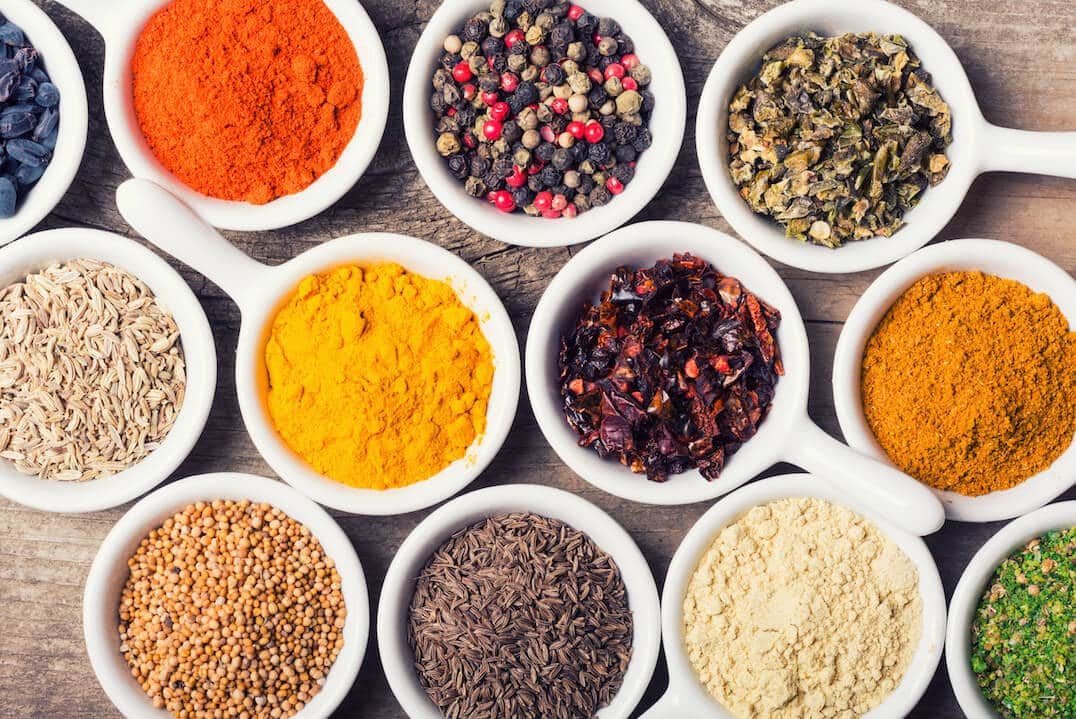
There is no official list of must-have spices; the right rack depends on what you cook. A practical starting point is a dozen or so spices that cover the main jobs: heat, earthy warmth, sweet warmth, herbal notes, color and salt. America’s Test Kitchen names eight savory spices its cooks reach for over and over: paprika, cumin, coriander, ground mustard, black peppercorns, cayenne, red pepper flakes and turmeric.1 The list below builds on that with the baking spices, dried herbs and two blends that most home cooking calls for, with a note on what each does and how to buy it.
The starter rack at a glance
| Spice | Job in the dish | Worth knowing |
|---|---|---|
| Black pepper | Heat and sharpness | ATK: grind your own peppercorns just before use for the best flavor1 |
| Cumin | Earthy warmth | ATK: an earthy, warm flavor; whole seeds ground at home are more potent1 |
| Paprika | Color, mild sweetness | ATK: a generic term for a spice made from ground dried red peppers1; US labels must declare it as “spice and coloring” unless named2 |
| Smoked paprika | Smoke | ATK: made by drying peppers over smoldering embers; best for grilled meats or boldly flavored dishes, not every paprika use1 |
| Cayenne pepper | Heat | ATK: usually contains other ground dried chiles besides cayenne; its volatile oils lose potency within a few months1 |
| Red pepper flakes | Heat in pockets | ATK: dried, crushed red chiles that, unlike cayenne, don’t make every bite hot1 |
| Coriander | Sweet, almost fruity warmth | ATK: a sweet, almost fruity flavor1 |
| Turmeric | Yellow color, earthy bitterness | Also a coloring: declared on US labels as “spice and coloring” unless named2 |
| Mustard powder | Sharpness | ATK: made by grinding mustard seeds and sifting to a fine powder1 |
| Cinnamon | Sweet warmth | Baking, and savory stews and curries |
| Nutmeg | Sweet warmth | Custards, eggnog, cream sauces; buy whole and grate |
| Cloves | Strong, sweet, slightly bitter | A little goes a long way; baking, ham, mulled drinks |
| Allspice | Cinnamon-clove-nutmeg in one | Britannica: named because its flavor resembles a combination of cloves, cinnamon and nutmeg3 |
| Ginger (ground) | Warm heat | Baking and spice rubs; see is ginger spicy? |
| Oregano | Herbal, slightly bitter | Tomato sauces, pizza, grilled meats |
| Thyme | Woody, herbal | Roasts, soups, stews |
| Bay leaves | Background depth | Stocks, soups, braises; remove before serving |
| Rosemary | Piney, resinous | Lamb, potatoes, focaccia |
| Sage | Savory, slightly peppery | Stuffing, sausage, brown butter |
| Basil (dried) | Sweet, herbal | Tomato dishes, though fresh basil is a different ingredient |
| Garlic powder, onion powder | Savory base | Rubs, dips and breading where fresh would be wet or harsh |
| Chili powder | Ready-made chili seasoning | A blend; see below |
| Curry powder | Ready-made curry base | A blend; see below |
| Kosher salt and table salt | Salt | Not interchangeable by the spoon; see below |
The descriptions in the “Job” column, and the uses not attributed to a source, are our cooking judgment.
Start smaller if you cook one cuisine
A rack built for one kitchen can be much shorter. These groupings are suggestions, not a sourced rule:
- Mexican and Tex-Mex: cumin, chili powder, oregano, cayenne or red pepper flakes, garlic powder. See Mexican oregano.
- Italian and Mediterranean: oregano, basil, thyme, rosemary, red pepper flakes, bay leaves. Or a blend: Italian seasoning, herbes de Provence.
- Indian: cumin, coriander, turmeric, cayenne, mustard seed, plus garam masala. See the best spices for curry.
- Baking: cinnamon, nutmeg, ginger, cloves, allspice, or a pumpkin pie spice blend.
The two blends: what’s actually in them
Blends save space, but read the label, because neither has a fixed recipe.
- Chili powder. The USDA’s purchase specification lists ground chili pepper, cumin, oregano, salt and garlic powder for chili powder.4 It is a seasoning blend, not plain ground chile.
- Curry powder. The same specification says curry powder should include, but is not limited to, turmeric, coriander, fenugreek, cinnamon, cumin, black pepper, ginger and cardamom.4 Nutmeg is not on that list. Whether a curry powder is hot depends on added chile; see is curry powder spicy?.
Salt: kosher and table salt are not the same by the spoon
Kosher salt is much coarser-grained than ordinary table salt, according to the Tufts Health & Nutrition Letter.5 That changes how much salt fits in a spoon. America’s Test Kitchen weighed a teaspoon of Morton kosher salt at 4.8 grams and Diamond Crystal kosher salt at 2.8 grams, against about 6 grams for table salt regardless of brand.6 So a recipe written for table salt needs more kosher salt by volume, and the two kosher brands differ from each other too. Many cooks keep coarse kosher salt for seasoning by hand and fine table salt for baking, where it measures consistently; that is common practice rather than a sourced rule. For the conversions and the disagreement between published ratios, see kosher salt and best salt for cooking.
Two labeling quirks
US food labeling treats some of these differently from the rest. Under FDA rules, onions, garlic and celery are excluded from the definition of “spice” because they are traditionally regarded as foods, so garlic powder and onion powder fall outside the legal term.2 Paprika, turmeric and saffron, which also color food, must be declared as “spice and coloring” unless listed by their own name.2
How to buy and keep a starter rack
- Buy small. The University of California Cooperative Extension advises buying a smaller container until you know how fast you use a spice.7
- Buy whole where it matters. America’s Test Kitchen advises buying spices whole when possible and grinding them just before use;8 McCormick similarly suggests whole nutmeg over ground and peppercorns over ground pepper.9 Black pepper, cumin and nutmeg are the easiest to start with.
- Store them away from the stove. Keep jars tightly closed in a dark cupboard or drawer, not above the stove.7
- Date the jar. McCormick suggests noting the date you open a new jar.9
How long each lasts is covered in how long can spices last?, and what to keep them in is in the best containers for spices.
Related
- The master list of herbs and spices
- Winter spice rack: must-have spices for cold days
- Do spices go bad?
- Dried herbs vs. fresh
- The most expensive spices
Footnotes
-
Savory Spices, America’s Test Kitchen. americastestkitchen.com · Publication ↩ ↩2 ↩3 ↩4 ↩5 ↩6 ↩7 ↩8 ↩9
-
21 CFR 101.22, Electronic Code of Federal Regulations. ecfr.gov · Regulator ↩ ↩2 ↩3 ↩4
-
“Allspice”, Encyclopaedia Britannica. britannica.com · Reference work ↩
-
Commercial Item Description A-A-20001C: Spices and Spice Blends, USDA Agricultural Marketing Service, 2023. ams.usda.gov · Regulator ↩ ↩2
-
Tufts Health & Nutrition Letter, “What’s the difference between kosher salt and other salt?”, 2013, updated 2019. nutritionletter.tufts.edu · Publication ↩
-
Kate Shannon Levine, “The Best Kosher Salt”, America’s Test Kitchen, 2019. americastestkitchen.com · Publication ↩
-
Add a Little Spice to Your Life! Part II, University of California Cooperative Extension, 2002. ucanr.edu · Reference work ↩ ↩2
-
Keeping Spices and Dried Herbs Fresher Longer, America’s Test Kitchen. americastestkitchen.com · Publication ↩
-
How Long Do Spices Last?, McCormick, 2025. mccormick.com · Merchant ↩ ↩2